Looking for liver transplant in Chennai? Learn how to choose an experienced liver transplant surgeon based on expertise, transplant team, technology and care.
Why Kidney Stone Pain Increases During Monsoon: Hydration,Diet & Early Warning Signs
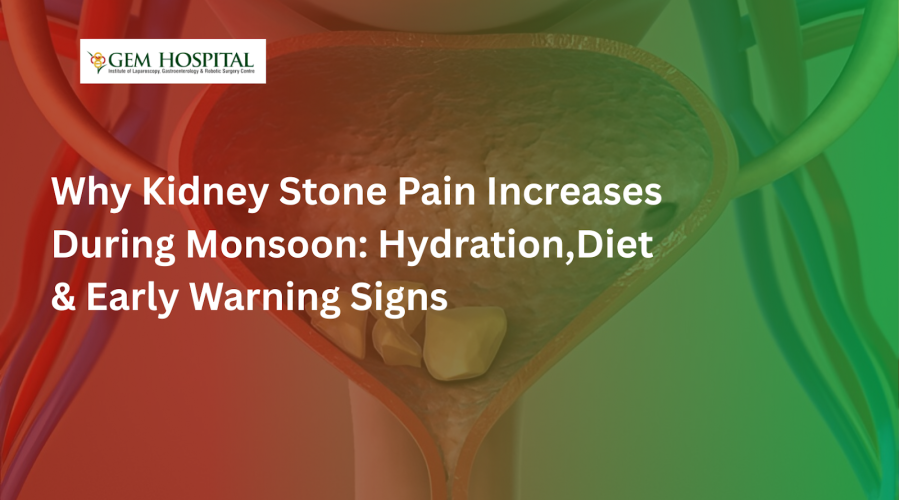
Kidney stones are a common health condition that often become exacerbated by the arrival of monsoon season. As the weather cools off, people tend to drink less water and therefore have very concentrated urine, which increases the possibility of developing kidney stones as well as aggravating the pain associated with them. This is one of the main reasons why Kidney Stone Pain Increases in Monsoon, making awareness and prevention extremely important. Understanding why and how this happens, as well as knowing what the signs are early on will give you a better chance of preventing any serious complications and dealing with your pain effectively.
Impact of Monsoon Season on Kidney Health
The impact of monsoon season on kidney health can be seen through two major aspects: the way people consume less water and the way they will typically consume many more oily or ‘street-style’ foods when it rains. The cyclical nature of dehydration and eating a diet that promotes an increase in kidney stones as well as making the pain associated with them much worse, can lead to greater frequency and intensity of kidney stones form and therefore the ability to eliminate them naturally through urination will be much less frequent as well. Additionally, because of increased amounts of rain, most people will decrease their level of physical activity, which also slows down the body’s metabolism and kidneys, which leads to creating even greater amounts of kidney stone material due to a lack of proper nutrients from one’s diet. This further explains why Kidney Stone Pain Increases in Monsoon for many individuals.
Environmental and Lifestyle Risk Factors
Common environmental and lifestyle factors that may cause a significant increase in the intensity of kidney stones. The heavy and oily foods contain high levels of sodium as well as low levels of water, and this type of diet works against the proper formation of kidney stones. So, urinary tract infection (UTI) can occur due to contamination of food or water due to UTI caused by kidney stone pain.
Other risk factors of kidney stones that can cause kidney stone pain are prolonged periods of inactivity or little movement. Reduced movement causes urine flow to be slowed and increases kidney stone pain. During this period, Kidney Stone Pain Increases in Monsoon because the body is unable to flush out minerals efficiently.
By knowing what causes kidney stone pain, a person can avoid kidney stone pain during this rainy season.
Symptoms to Look For
Recognizing signs early is important in preventing more serious complications from developing. Kidney stone pain usually begins as a dull constant ache that can be felt in the lower back or side and may extend into the groin area.
Other symptoms to look for are:
- Constant or sharp cramping pain in your abdomen, side, or back
- Nausea and vomiting
- Blood in urine (dark red or brown), or urine that looks dark brown/red and/or cloudy
- Frequent urination, or a burning sensation while urinating
- Fever or chills, especially if there is an infection
If you are experiencing any of these symptoms, and especially if Kidney Stone Pain Increases in Monsoon, contacting a healthcare professional as soon as possible is very important. Failure to seek medical attention promptly can result in severe damage to your kidneys.
What You Can Do to Prevent Kidney Stone Pain This Rainy Season
Taking action to prevent the development of kidney stones, and kidney stone pain:
- Drink enough clean water – It is essential to drink at least two to three litres (8 to 12 cups) of clean water a day to help take out the minerals that cause kidney stones out of your body.
- Eat a balanced diet – If you want to prevent the formation of kidney stones, you must reduce your intake of processed foods, reduce your salt intake, and keep your oily meals to a minimum. You should also eat plenty of vegetables, fruits, and high-fiber foods.
- Be active – You can take light exercise and do indoor workouts, as that can help increase your metabolism and improve your urine flow.
- Monitor your symptoms – If you feel pain or any other signs of kidney stones, get treatment quickly; the sooner you detect the symptoms, the sooner you will get treatment, and the sooner you will be free of any complications.
These steps are essential because Kidney Stone Pain Increases in Monsoon when hydration and lifestyle are neglected.
Medical Treatment and Care
In addition to lifestyle changes, medical care may also be helpful for people who have kidney stones already or are in excessive pain from kidney stones. Gem Hospital provides complete kidney stone diagnosis and treatment through advanced imaging and minimally invasive surgical methods.
Seeing a medical specialist as soon as possible for kidney stone treatment can help avoid more excruciating pain and serious damage to your kidneys. Depending on how large the kidney stones are or where they are located, possible treatment options may include lithotripsy (breaking the stones with ultrasound waves), ureteroscopy (removing the stones via the tube going to the kidney), or stone medication management.
Don’t allow the rainy season to be a time for excruciating pain for you. Be diligent in drinking enough water, eat a well-balanced diet, and be aware of the early signs of kidney stone pain. If you are having symptoms that persist, get help from your physician immediately, especially when Kidney Stone Pain Increases in Monsoon.
Gem Hospital has specialized treatment options and the latest technologies for effective kidney stone management. Don’t wait until it’s too late make your appointment today and have your stones diagnosed early and treated immediately.
Book a consultation with GEM Hospital’s today.