Looking for liver transplant in Chennai? Learn how to choose an experienced liver transplant surgeon based on expertise, transplant team, technology and care.
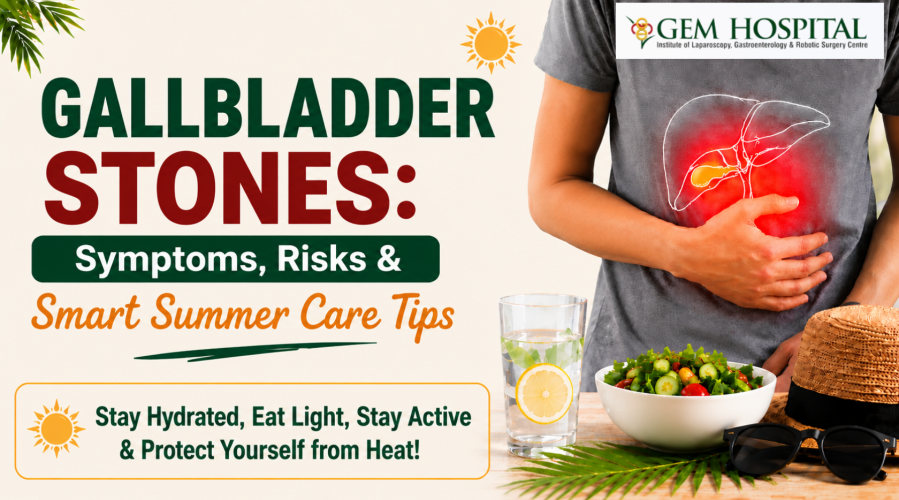
Gallbladder Stones: Symptoms, Risks & Smart Summer Care Tips
What are gallstones?
The gallbladder is a small organ beneath the liver that stores bile, a fluid that helps digest fats. Gallstones form when substances in bile (primarily cholesterol or bilirubin) harden into stone-like deposits. They can be as small as a grain of sand and as large as a golf ball, and there can be one or many.
Understanding the condition early helps in seeking the right Gallbladder Stone treatment, especially when symptoms begin to appear.
Many people have gallstones and don’t know it. But if a stone gets stuck in the bile duct, it causes a “gallbladder attack” a sudden, sharp pain that can last from a few minutes to several hours. In such cases, timely Gallbladder Stone treatment is essential to relieve pain and prevent complications.
Typical Symptoms
- Sharp pain in the upper right side of the belly, often after eating.
- Pain in the back or right shoulder blade radiating to
- Nausea, vomiting and loss of appetite
- Indigestion & bloating after fatty foods
- Fever and shivering (sign of infection - urgent attention needed)
- If the stone blocks the bile duct, the skin or eyes become yellow.
Causes & Risks Factors
- High fat low fibre diet: Raises cholesterol levels in bile
- Obesity: Excess body weight raises cholesterol in bile
- Rapid weight loss Upsetting the balance of bile, encouraging stone formation
- Hormonal factors Oestrogen increases the amount of cholesterol in bile more common in women
- Lack of exercise: Delays gallbladder emptying
- Family history Gallstones have a strong genetic link

Treatment choices
The good news is that gallstones are very treatable. The team at GEM Hospital provides:
- Laparoscopic cholecystectomy: The gold standard. Keyhole surgery to remove the gallbladder through small incisions. Most patients go home the same day or the next morning and recover within a week.
- ERCP: An endoscopic technique used when a stone has migrated into the bile duct that clears the duct without the need for surgery
- Diet management: If the case is mild, symptoms will be controlled with a low-fat diet until surgery
It’s very normal to live without a gallbladder. The liver still produces bile and the body adapts quickly.
Water supply
Dehydration leads to thicker bile, which increases the likelihood of stone formation – drink lots of water throughout the day
Replenish fluids and electrolytes lost through sweating with coconut water or ORS
Don't skip meals erratic eating patterns disturb bile flow and gallbladder function
Diet Tips
- Eat smaller, more frequent meals to keep the gallbladder active and bile flowing
- Reduce fried, oily and spicy foods common triggers of gallbladder attacks
- Eat more fibre from fruits, vegetables and whole grains
- Don’t go on crash diets rapid weight loss is one of the biggest risk factors for new stone formation
Lifestyle Care
- Maintain a healthy weight excess weight greatly increases the risk of gallstones
- Take short, regular walks physical activity keeps the digestive system, including the gallbladder, working well
- Recurring right side abdominal pain should not be ignored early evaluation prevents full blown attack
When to seek medical advice
If you have gallbladder pain that lasts more than a few hours, or if you develop a fever or notice yellowing of your skin or eyes, seek medical attention immediately these are medical emergencies. Prompt Gallbladder Stone treatment is crucial in such situations to prevent serious complications and ensure timely care.
Book a consultation with GEM Hospital’s today.