Learn about gallbladder stone symptoms, diagnosis, treatment options, surgery and recovery at GEM Hospital, Chennai.
Accurate Diagnosis Starts Here: Advanced Endoscopy in Chennai You Can Trust
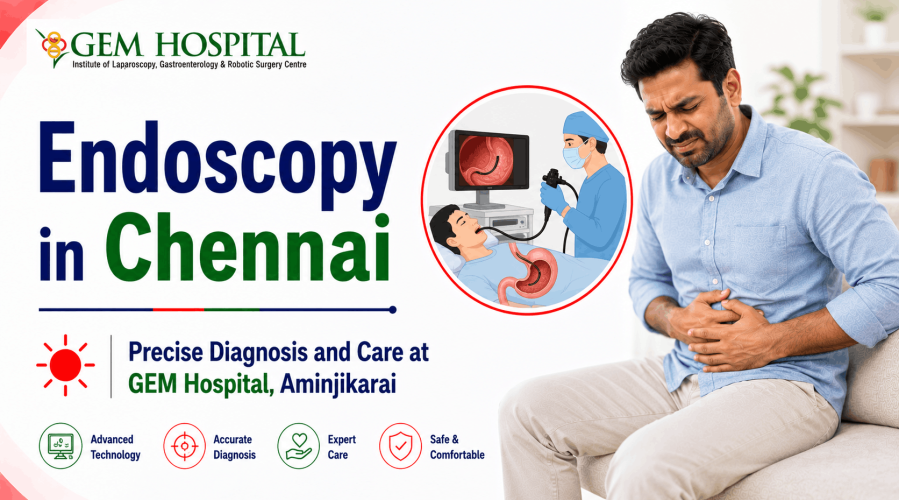
Endoscopy in Chennai: Get the Answers Your Stomach Has Been Waiting For GEM Hospital, Aminjikarai
Digestive problems are the great silent sufferers of Indian healthcare. Patients live with chronic acidity for years, adjust their diet around pain, take antacids by the packet, and tell themselves it's just stress. And then, months or years later, something is found that could have been caught and treated much earlier. Endoscopy in Chennai at GEM Hospital, Aminjikarai gives you the direct, definitive answer to what is happening inside your digestive tract something no blood test, X-ray, or ultrasound can provide. If your gut has been troubling you, it is time to actually look.
What Is an Endoscopy?
An endoscopy is a procedure in which a thin, flexible tube fitted with a high-definition camera at its tip called an endoscope is gently passed into the body to directly visualise the lining of the digestive tract. Upper GI Endoscopy (also called OGD Scopy or Gastroscopy) passes the scope through the mouth to examine the oesophagus, stomach, and first part of the small intestine. Colonoscopy passes the scope through the rectum to examine the large intestine. Both procedures are performed under light sedation at GEM Hospital, so patients feel minimal discomfort and often don't remember the procedure at all. Critically, endoscopy is not only diagnostic biopsies can be taken, polyps removed, bleeding controlled, and narrowed passages widened all within the same sitting.
When Is an Endoscopy Recommended?
- Your gastroenterologist may recommend endoscopy for any of the following situations:
- Persistent acidity, heartburn, or GERD that does not respond adequately to medication
- Difficulty swallowing or a sensation of food sticking in the throat or chest
- Unexplained weight loss with digestive symptoms always requires investigation
- Vomiting blood or passing black, tarry stools endoscopy is urgent in these cases
- Chronic abdominal pain, bloating, or indigestion lasting more than two weeks
- Blood in the stools or unexplained iron-deficiency anaemia
- Screening for stomach or colon cancer recommended for those above 45 or with a family history
- Follow-up after treatment for ulcers, polyps, or Barrett's oesophagus
- Digestive Symptoms That Deserve More Than Antacids
These symptoms, particularly if they have been present for more than two weeks, should not be managed with self-medication alone:
- Burning in the chest or throat persistent or worsening despite medication
- Stomach pain that wakes you from sleep or is present first thing in the morning
- A feeling of food getting stuck when swallowing
- Persistent nausea without an obvious cause
- Changes in bowel habits chronic diarrhoea, constipation, or alternating both
- Unexplained weight loss and a decline in appetite
- Rectal bleeding or blood mixed with or coating the stool

Why Early Endoscopy Can Be Life-Saving
Gastric cancer, oesophageal cancer, and colon cancer are all highly treatable potentially curable when detected in their early stages. The window for curative treatment is often wide early on and narrows dramatically once the disease advances. H. pylori infection a bacterial cause of stomach ulcers and gastric cancer is easily detected and treated through endoscopy. Polyps found during colonoscopy can be removed before they become cancerous. The point is this: endoscopy catches problems when they are still fixable. Waiting until symptoms become severe almost always means a more advanced, harder-to-treat disease.
Endoscopy Services at GEM Hospital, Aminjikarai
Our gastroenterology unit at GEM Hospital, Chennai, is equipped with high-definition endoscopic technology and experienced specialists who perform the full range of diagnostic and therapeutic endoscopic procedures:
- Upper GI Endoscopy (OGD Scopy) examines oesophagus, stomach, and duodenum for ulcers, GERD, H. pylori, and early malignancy
- Colonoscopy full examination of the large intestine; polyp removal, cancer screening, and diagnosis of inflammatory bowel disease
- ERCP endoscopic management of bile duct stones, strictures, and pancreatic conditions
- Endoscopic Ultrasound (EUS) combines endoscopy with ultrasound imaging for deep-tissue assessment of the pancreas and nearby structures
- Capsule Endoscopy a swallowable camera that photographs the small intestine an area traditional scopes cannot reach
- Therapeutic Endoscopy haemostasis for bleeding, polypectomy, stricture dilation, and stent placement without surgery
Why Choose GEM Hospital, Aminjikarai for Endoscopy in Chennai?
- State-of-the-art high-definition endoscopy suites with narrow-band imaging technology
- Experienced gastroenterologists and GI surgeons with subspecialty training
- All procedures performed under monitored sedation most patients feel nothing
- In-house pathology lab for rapid biopsy processing and same-day or next-day reporting
- Strict infection control and sterilisation protocols between every procedure
- Walk-in availability for urgent cases, with no long waiting period
- How to Prepare for Your Endoscopy Practical Tips
- For upper GI endoscopy: fast completely for at least 6–8 hours before the procedure
- For colonoscopy: follow the prescribed clear-liquid diet and bowel preparation the day before
- Inform your doctor about all medications especially blood thinners or diabetes medications
- Bring a companion sedation means you should not drive for several hours afterwards
- Wear loose, comfortable clothing on the day of the procedure
When to Seek an Endoscopy Without Waiting
If you are vomiting blood, passing black tarry stools, experiencing sudden severe abdominal pain, or losing weight unexpectedly do not wait for a routine appointment. These are red flag symptoms that require urgent endoscopic evaluation. Come to GEM Hospital, Aminjikarai, and our gastroenterology team will assess and schedule you promptly.
Frequently Asked Questions
1.What does an endoscopy feel like? Is it painful?
Most patients experience minimal to no discomfort.
Upper endoscopy and Colonoscopy are done under light sedation at GEM Hospital. The majority of patients are comfortable during the procedure and often have no memory of it afterward. You might have some mild bloating or irritation in the throat afterwards, it goes away quickly.
2.How to prepare for an Endoscopy at GEM Hospital?
Upper GI endoscopy Fast 6–8 hours before the procedure. For colonoscopy, eat a clear-liquid diet the day before and do a bowel cleansing preparation prescribed by your doctor. Your GEM Hospital team provides detailed written preparation instructions well in advance of your scheduled procedure.
3.Why is endoscopy better than an X-ray or CT scan for digestive problems?
Endoscopy directly visualises the mucosal lining of the digestive tract including subtle inflammation, small ulcers, early tumours, and polyps that imaging cannot detect. It also allows biopsies to be taken in real time, which is essential for diagnosing H. pylori, cancer, and inflammatory bowel disease.
4.How long after an endoscopy will I get my biopsy results?
Biopsy samples taken during the endoscopy are processed in the in-house pathology lab of the GEM Hospital. Your gastroenterologist will review the results with you at your follow-up appointment and talk about any next steps that might be needed.
5.How often should I be screened by endoscopy?
In adults with no symptoms, a baseline colonoscopy is generally recommended over 45. If you have a family history of colon or stomach cancer, chronic GERD or prior polyps, you may need to be screened more often. Your gastroenterologist at GEM Hospital will create a screening program that is tailored to your personal risk profile.
Don’t Miss Digestive Symptoms – Book Your Endoscopy Now at GEM Hospital, Aminjikarai, Chennai! Early Detection Saves Lives.
Book a consultation with GEM Hospital’s today.