Learn about gallbladder stone symptoms, diagnosis, treatment options, surgery and recovery at GEM Hospital, Chennai.
Esophagogastric Surgery: Conditions Treated and Surgical Options
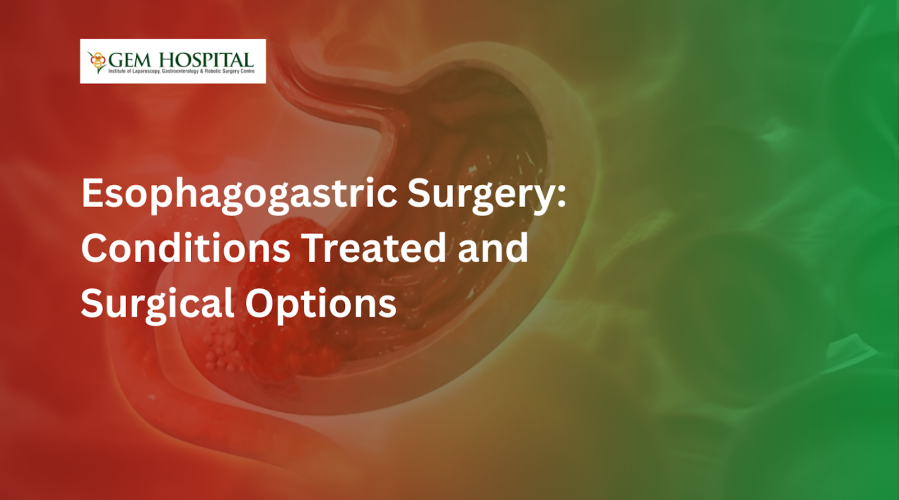
Esophagogastric surgery is a specialized branch of gastrointestinal surgery that focuses on treating diseases affecting the esophagus and stomach. These organs play a vital role in digestion, and when conditions such as cancer, reflux disease, strictures, or motility disorders develop, timely surgical intervention becomes essential. Advances in surgical techniques have made esophagogastric surgery safer, more precise, and less invasive, leading to faster recovery and better outcomes for patients.
What Is Esophagogastric Surgery?
Esophagogastric surgery involves surgical procedures performed on the esophagus, stomach, or the junction between them. These surgeries may be required for both benign (non-cancerous) and malignant (cancerous) conditions. Depending on the diagnosis, surgery may aim to remove diseased tissue, restore normal swallowing and digestion, or prevent complications such as bleeding, obstruction, or cancer progression.
Modern esophagogastric surgery often uses minimally invasive approaches like laparoscopy or robotic-assisted surgery, reducing pain, scarring, and hospital stay compared to traditional open surgery.
Conditions Treated With Esophagogastric Surgery

1. Gastroesophageal Reflux Disease (GERD)
Chronic GERD occurs when stomach acid frequently flows back into the esophagus, causing heartburn, inflammation, and damage to the esophageal lining. When medications and lifestyle changes fail, esophagogastric surgery such as fundoplication may be recommended to strengthen the valve between the esophagus and stomach.
2. Hiatal Hernia
A hiatal hernia develops when part of the stomach pushes up through the diaphragm into the chest cavity. This condition often worsens reflux symptoms and may require surgical repair, especially in large or complicated hernias.
3. Esophageal Cancer
Esophageal cancer is a serious condition that often requires surgical removal of part or all of the esophagus. Esophagogastric surgery plays a central role in cancer treatment, often combined with chemotherapy or radiotherapy for better outcomes.
4. Gastric (Stomach) Cancer
Stomach cancer may require partial or total gastrectomy, depending on the tumor’s location and stage. Surgical removal of cancerous tissue helps prevent spread and improves survival rates.
5. Achalasia and Motility Disorders
Achalasia is a condition where the esophagus has difficulty moving food into the stomach due to nerve dysfunction. Surgical procedures such as Heller myotomy help relax the muscles and improve swallowing.
6. Peptic Ulcer Disease and Complications
Severe or complicated ulcers that cause bleeding, perforation, or obstruction may need surgical intervention when medical treatment is ineffective.
7. Esophageal Strictures
Narrowing of the esophagus due to scarring, chronic reflux, or injury can cause difficulty swallowing. In severe cases, esophagogastric surgery may be required to restore normal passage of food.
Types of Esophagogastric Surgical Options
1. Laparoscopic Esophagogastric Surgery
This minimally invasive approach uses small incisions and a camera to perform surgery with high precision. It is commonly used for GERD, hiatal hernia repair, and early-stage cancers. Benefits include reduced pain, quicker recovery, and shorter hospital stays.
2. Open Surgery
Open esophagogastric surgery may be necessary for advanced cancers or complex cases. Although recovery time is longer, it allows surgeons better access for extensive disease management.
3. Robotic-Assisted Surgery
Robotic systems provide enhanced visualization and fine control, especially in complex esophagogastric procedures. This approach improves surgical accuracy and minimizes complications.
4. Endoscopic Procedures
Certain early-stage conditions can be treated using endoscopic techniques without external incisions. These procedures are less invasive and often performed as day-care surgeries.
5. Resection and Reconstruction
In cancer cases, removing affected portions of the esophagus or stomach may require reconstruction using remaining stomach tissue or intestinal segments to restore digestive continuity.
Recovery and Post-Surgical Care
Recovery after esophagogastric surgery depends on the type of procedure performed. Patients may initially follow a liquid or soft diet, gradually returning to normal foods under medical guidance. Pain management, nutritional support, and follow-up appointments are crucial for smooth recovery. Most patients experience significant improvement in symptoms and quality of life after successful surgery.
Importance of Choosing the Right Surgical Center
Because esophagogastric surgery involves complex anatomy and vital digestive functions, choosing an experienced surgical team and advanced medical facility is critical. A multidisciplinary approach involving surgeons, gastroenterologists, oncologists, and nutrition specialists ensures comprehensive care and better outcomes.
Esophagogastric surgery plays a crucial role in treating a wide range of esophageal and stomach conditions, from chronic reflux and hernias to complex cancers. With advancements in minimally invasive and robotic techniques, patients today benefit from safer procedures, faster recovery, and improved long-term results. Early diagnosis and timely surgical intervention can significantly enhance quality of life and survival rates.
At GEM Hospital, expert gastrointestinal surgeons provide advanced esophagogastric surgery using state-of-the-art technology and a patient-centered approach. If you or your loved one is experiencing persistent digestive symptoms or has been advised surgery, Book Appointment at GEM Hospital today for expert evaluation and personalized treatment care.
Is this conversation helpful so far?
Book a consultation with GEM Hospital’s today.