
Learn about gallbladder stone symptoms, diagnosis, treatment options, surgery and recovery at GEM Hospital, Chennai.
Urinary Infections in Monsoon: When to Seek Kidney Treatment
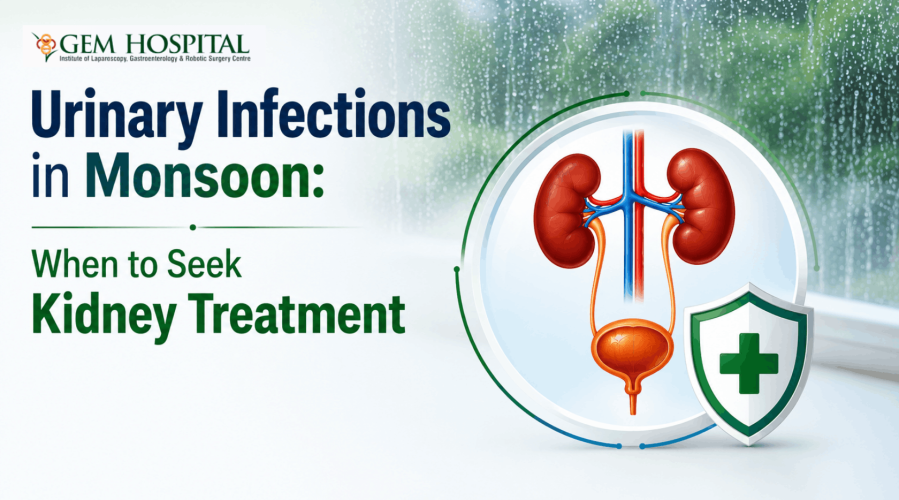
A urinary infection during the monsoon is something many people try to manage on their own a glass of cranberry juice, some extra water, and a bit of hope. Sometimes that works. Often, it doesn’t. And in some cases, what begins as a simple bladder infection can travel upward to the kidneys, where it becomes far more serious.
Kidney infection symptoms rainy season patterns are seen frequently by doctors across Chennai. The combination of high humidity, damp clothing, reduced water intake, and a temporary dip in immunity creates the perfect environment for urinary infections to develop and worsen. When left untreated, these infections can spread and lead to complications that require immediate medical attention.
If you’ve been experiencing any urinary discomfort during the monsoon, it’s important to understand what your body may be signaling. Recognizing kidney infection symptoms rainy season early can help you take timely action, prevent complications, and protect your overall kidney health.
Why Urinary Infections Rise During Monsoon
The rainy season creates multiple overlapping risk factors for urinary tract infections and together, they significantly increase the chances of complications, including kidney involvement. Understanding these triggers can help you recognize kidney infection symptoms rainy season early and take action before the condition worsens:
Humidity and warmth:
The warm, humid monsoon environment accelerates bacterial growth both in the surroundings and on the skin near the urinary opening. Bacteria that would normally remain inactive become more aggressive, increasing infection risk.
Wet and damp clothing:
Staying in wet clothes after getting caught in the rain creates a moist, warm environment that bacteria thrive in. This is one of the most common yet overlooked triggers for urinary infections during the monsoon.
Reduced water intake:
With cooler weather, people tend to drink less water because they don’t feel as thirsty. This leads to less frequent urination, allowing bacteria to remain in the urinary tract longer instead of being flushed out a key factor behind kidney infection symptoms rainy season cases.
Waterborne contamination:
Flooding and poor drainage can contaminate water sources, increasing the bacterial load in the environment. This raises infection risk through multiple exposure points.
Seasonal immunity dips:
Monsoon-related factors such as viral illnesses, sleep disruption, dietary changes, and stress can slightly weaken the immune system. This makes it harder for the body to fight off bacteria before an infection takes hold.
When these factors combine, a simple urinary infection can progress faster than expected. Recognizing these risks early is essential to prevent more serious kidney complications.

Understanding the Difference: Bladder Infection vs Kidney Infection
This distinction genuinely matters because the seriousness, the treatment, and the urgency are all different.
A bladder infection (cystitis) affects the lower urinary tract. It's uncomfortable and needs treatment, but it typically stays contained when addressed early and properly.
A kidney infection (pyelonephritis) happens when bacteria travel up from the bladder into one or both kidneys. This is a significantly more serious condition. Left untreated, it can cause permanent scarring of kidney tissue, chronic kidney disease, or sepsis a potentially fatal body-wide infection.
Kidney infection symptoms during rainy season can develop and worsen within hours. Knowing which situation you're in is not a detail it determines how quickly you need to act.
Symptoms of a Bladder Infection
- Burning or stinging during urination
- A constant urge to urinate, even when very little comes out
- Urine that looks cloudy or slightly pink
- Urine with a strong, unpleasant smell
- Pressure or mild aching in the lower abdomen
These symptoms warrant a doctor's visit but within a day or two, not necessarily the same hour.
Kidney Infection Symptoms During Rainy Season
These symptoms indicate the infection has moved beyond the bladder and into the kidneys:
- High fever typically above 38.5°C with or without shaking chills
- Pain in the back, sides, or flanks the area below the ribs and above the hips
- Nausea and vomiting alongside urinary symptoms
- Deep fatigue and general weakness that feels disproportionate to a regular fever
- Urine that looks cloudy, bloody, or dark
- A constant urge to urinate with burning but now accompanied by fever and back pain
- In elderly patients: confusion, disorientation, or sudden cognitive changes sometimes the most visible sign
If you have fever, flank pain, and urinary symptoms together seek medical care the same day. This combination does not wait.
Who Is at Higher Risk This Monsoon
Kidney infection symptoms during rainy season tend to be more severe and progress faster in:
- Women the shorter urethra makes ascending infections anatomically easier
- Pregnant women UTIs escalate faster during pregnancy and carry risks for both mother and baby; any urinary symptom during pregnancy needs same-day evaluation
- People with diabetes elevated blood sugar creates a more hospitable environment for bacterial growth throughout the urinary tract
- Those with kidney stones stones can trap bacteria and create pockets of infection that are difficult to clear with antibiotics alone
- Individuals with a history of recurrent UTIs monsoon conditions often trigger another episode
- Elderly patients whose immune response is slower and whose symptoms can present atypically
- People with urinary catheters or recent urological procedures
What Happens When a Kidney Infection Is Left Untreated
This is the part people most need to understand:
Permanent kidney scarring: Repeated or prolonged kidney infections damage kidney tissue gradually and irreversibly reducing the kidney's functional capacity.
Sepsis: The bacterial infection enters the bloodstream and triggers a system-wide inflammatory response that can cause organ failure and is life-threatening without immediate treatment.
Kidney abscess: A pocket of pus forms within the kidney. This may require drainage procedures or surgery beyond standard antibiotic treatment.
Accelerated kidney disease: In people with pre-existing kidney conditions, repeated infections during monsoon can meaningfully speed up the decline in kidney function.
The good news is equally clear: kidney infections caught and treated early respond very well to antibiotics, and full recovery is the expected outcome in most cases. The window between "manageable" and "serious" is wide if you act within it.
Treatment Options
For bladder infections: A short antibiotic course typically three to seven days clears most uncomplicated cases. Increased water intake, avoiding bladder irritants like caffeine, and urinary analgesics for symptom relief support recovery.
For kidney infections: A longer antibiotic course is needed typically 10 to 14 days. In moderate to severe cases, or in high-risk patients, intravenous antibiotics in a hospital setting provide faster, more reliable results. The antibiotic is chosen based on a urine culture identifying the specific bacteria responsible.
For recurrent infections: If UTIs are a recurring pattern, your doctor may recommend a longer-term low-dose antibiotic approach, a urine culture at the start of monsoon, or investigation for any structural abnormality in the urinary tract that may be perpetuating the cycle.
For high-risk patients: Pregnant women, diabetics, and those with chronic kidney disease should not manage urinary symptoms at home with self-treatment. Every episode needs a proper evaluation every time.
Tips to Reduce UTI Risk During Monsoon
- Drink two to three litres of water daily consistent hydration is the most effective preventive measure available
- Change out of wet or damp clothing as quickly as possible don't let monsoon exposure sit
- Maintain careful personal hygiene, particularly during humid months
- Never hold the urge to urinate for extended periods regular emptying reduces bacterial build-up
- Women should always wipe front to back this simple habit prevents a significant proportion of UTIs
- Wear breathable, cotton underwear rather than synthetic fabrics during monsoon months
- Avoid harsh soaps or perfumed products around the genital area they disrupt the natural protective environment
- If you're prone to UTIs, discuss with your doctor whether a urine culture at the start of monsoon season makes sense for you
A urinary infection during the monsoon can feel like a minor inconvenience and sometimes it is. But kidney infection symptoms rainy season can escalate much faster than most people expect. Ignoring early signs or delaying treatment can lead to serious complications that are far more difficult to manage.
Take urinary symptoms seriously from the very beginning. Stay well hydrated, even if you don’t feel thirsty. And if symptoms such as fever, back pain, or nausea appear along with urinary discomfort, seek medical attention the same day not later.
Recognizing kidney infection symptoms rainy season early and acting quickly can make all the difference in preventing the infection from spreading to the kidneys.
For expert kidney care, accurate diagnosis, and timely treatment of urinary infections in Chennai, you can visit GEM Hospitals. Their experienced nephrologists and urologists ensure you receive the right care at the right time helping protect your kidneys through the monsoon and beyond.
Book a consultation with GEM Hospital’s today.