Looking for liver transplant in Chennai? Learn how to choose an experienced liver transplant surgeon based on expertise, transplant team, technology and care.
Less Pain, Faster Healing: Benefits of Minimally Invasive Hernia Surgery in Chennai
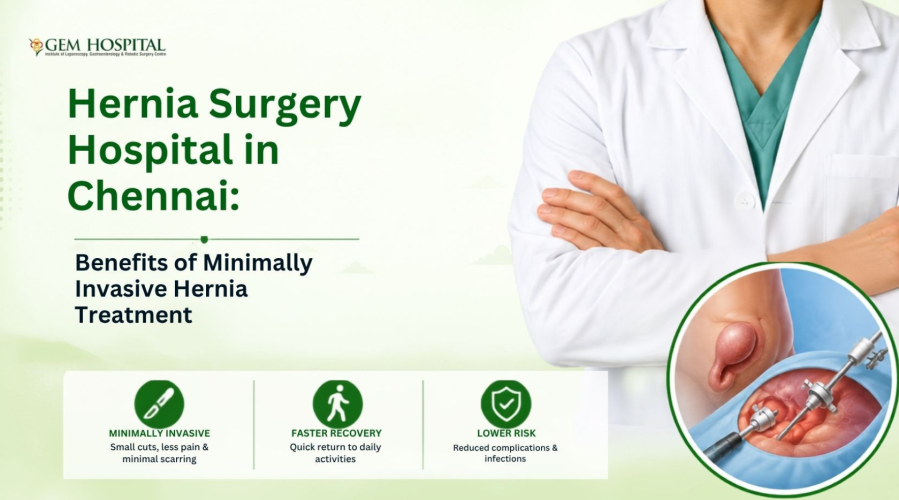
There was a time not so long ago when hearing the words "you need hernia surgery" meant bracing yourself for a large incision, a week in hospital, six weeks of recovery, and a scar that served as a lasting reminder. That version of hernia surgery still exists in some places. But at a leading hernia surgery hospital in Chennai, the experience today looks almost nothing like that.
Minimally invasive hernia repair has transformed what was once a procedure patients dreaded into something far more manageable often completed as a day-care procedure, with patients walking the same evening and back to desk work within days. The technology exists. The expertise exists. What patients need to know is how to find it, what to expect, and why it matters.
What Is a Hernia, and Why Does It Need Surgery?
A hernia forms when an internal structure typically the intestine or a portion of fatty tissue pushes through a weakened spot in the muscle or connective tissue that normally contains it. The result is a bulge, often visible and sometimes painful, that will not resolve on its own.
The most frequently seen types in clinical practice are:
- Inguinal hernia: Found in the groin region, these account for the majority of all hernia cases. Men are significantly more susceptible due to anatomical differences in the groin. The bulge may extend into the scrotum in some cases and is often more noticeable when standing, coughing, or straining.
- Umbilical hernia: Centred around the navel, these are common in infants (where they often resolve without intervention) but also appear in adults particularly those who are overweight, have had multiple pregnancies, or have a history of abdominal surgeries.
- Incisional hernia: Develop along the scar line of a previous abdominal surgery. Sutured tissue can become weaker over time, particularly in patients with post-operative complications, obesity or multiple surgeries in the same area.
- Femoral hernia: Less common but important to identify these occur just below the groin crease and have a higher risk of strangulation than inguinal hernias. More common in women.
- Epigastric hernia: Appear between the breastbone and navel, in the upper abdomen. Often contain only fatty tissue and are frequently asymptomatic, discovered incidentally.
The common thread across all types: a hernia will not shrink or disappear without intervention. The only permanent solution is surgical repair.
Why the Choice of Hospital for Hernia Surgery Truly Matters
Not all hernia surgeries are equal, and the facility where you have the procedure has a significant impact on your outcome both in the short term (pain, recovery, complications) and the long term (recurrence).
A hernia surgery hospital in Chennai that invests in minimally invasive surgical infrastructure, trains its surgeons in the latest laparoscopic and robotic techniques, and has a dedicated perioperative care team delivers measurably different results compared to a general hospital where hernia surgery is an occasional procedure.
Why should this matter to you in practice?
Recurrence rates are correlated with the surgical technique and the placement of the mesh. Experienced laparoscopic surgeons have lower recurrence rates than those who do open surgery or perform fewer procedures per year.
Higher-volume centres with dedicated surgical teams have lower complication rates (wound infections, nerve damage, urinary complications) .
Specialist centres offer more sophisticated pain management, using multimodal approaches that reduce opioid dependence and accelerate recovery.
Infrastructure quality the type of laparoscopic equipment, mesh materials used, and the anaesthesia team's experience all affect your surgical experience and outcome.
The Case for Minimally Invasive Hernia Repair: What the Evidence Shows
Minimally invasive hernia repair encompassing both laparoscopic and robotic approaches has been studied extensively over the past three decades. The evidence consistently shows specific advantages over traditional open repair.
Less Post-Operative Pain Because the surgeon works through small incisions rather than a large open cut, there is significantly less tissue disruption. Patients consistently report lower pain scores after laparoscopic repair compared to open surgery, and the need for strong pain medication is reduced.
Shorter Hospital Stay Most laparoscopic hernia repairs can be performed as day-care procedures patients arrive in the morning and go home the same day. Even for more complex cases, a one-night stay is typically sufficient. Open repair for large hernias can require three to five days of hospitalisation.
Faster Return to Normal Activity Patients who undergo laparoscopic repair typically return to light desk work within five to seven days and resume full activity, including exercise and lifting, within three to four weeks. Open surgery patients often require six to eight weeks before returning to full activity.
Better Cosmetic Outcome Three tiny incisions (each less than a centimetre) versus a single large incision of 5–10 cm. For patients who care about the aesthetic outcome and many do laparoscopic repair is clearly superior.
Lower Infection Risk Smaller incisions mean less exposure of internal tissue to environmental contaminants. Wound infection rates are significantly lower with laparoscopic repair.
Lower Recurrence Rates When performed by an experienced surgeon, laparoscopic hernia repair using a synthetic mesh has recurrence rates comparable to or lower than open repair particularly for inguinal hernias. The posterior placement of the mesh in laparoscopic repair provides reinforcement across a wide area, reducing the likelihood of future defects.
Simultaneous Bilateral Repair A significant advantage of the laparoscopic approach is that both sides can be repaired in the same operation, through the same small incisions. For patients with bilateral inguinal hernias a common finding this means one anaesthetic, one recovery, and no need for a second procedure.
Laparoscopic vs. Robotic Hernia Repair: Is There a Difference?
For many patients, both deliver excellent outcomes. But understanding the distinction is useful.
Laparoscopic Hernia Repair The established gold standard. The surgeon operates using a camera (laparoscope) and thin instruments inserted through two to three small incisions. The surgeon views the operative field on a monitor and works with the instruments manually. This approach works excellently for most inguinal, umbilical, and many incisional hernias.
The two most common laparoscopic approaches for inguinal hernias are:
TEP (Totally Extraperitoneal) the repair is done entirely outside the abdominal cavity, which avoids entering the peritoneum and reduces certain risks
TAPP (Transabdominal Preperitoneal) the surgeon enters the abdominal cavity briefly, which allows better visualisation in some complex cases
Robotic Hernia Repair Uses a robotic surgical system (such as the da Vinci system) where the surgeon operates from a console, controlling robotic arms with instruments attached. Key advantages include:
- True 3D, magnified visualisation of the operative field
- Instruments with a greater range of motion ("wristed" instruments) compared to standard laparoscopic tools
- Reduced surgeon hand tremor
- Particularly useful for complex, large, or recurrent hernias where precise dissection and suturing are critical
For straightforward inguinal hernias, laparoscopic and robotic approaches produce very similar outcomes. The increased dexterity of robotic surgery is a real advantage in complex incisional or recurrent hernias.
Selecting the Appropriate Mesh for Hernia Repair
A key component of modern hernia surgery is the mesh, a biological or synthetic implant that reinforces the repair site. All meshes are not created equal. Mesh choice matters for the long term.
The most common are synthetic meshes, based in polypropylene. They combine well with body tissue, are durable and have predictable outcomes.
Nursing staff checks – blood pressure, pulse, temperature, consent documentation. You meet the anaesthetist who reviews your history and the anaesthetic plan.
In the Operating Theatre: Administered general anaesthesia. The operative site is prepared by the surgical team. Small incisions are made for the laparoscope and instruments.
Lightweight meshes are associated with lower rates of post-operative groin discomfort (a known complication called chronic groin pain) while maintaining structural integrity.
Biological meshes made from processed human or animal tissue are reserved for contaminated fields (such as infected incisional hernias) where synthetic mesh carries higher infection risk.
A surgeon who takes time to discuss mesh selection with you explaining why a particular type is recommended for your case is demonstrating the depth of attention your treatment deserves.
What the Day of Hernia Surgery Looks Like
Knowing what to expect dramatically reduces pre-operative anxiety. Here's a typical day for laparoscopic hernia repair:
Arrival and Preparation (Morning): You arrive at the hospital on an empty stomach (fasting for six to eight hours). Routine checks are done by nursing staff - blood pressure, pulse, temperature, consent documentation. You will meet the anaesthetist who will discuss your history and the anaesthetic plan.
In the Operating Theatre: The patient is given a general anaesthetic. The surgical team cleans the operating site. Small cuts are made and the instruments and laparoscope are inserted. Depending on the type and complexity of the hernia, surgery takes between 45 minutes and two hours. You feel nothing and are completely unaware throughout.
Recovery Room You wake up in the recovery room. Nurses watch your vitals, take care of any discomfort you may have and make sure you are oriented and stable.Most patients are fully awake and comfortable within 30 to 60 minutes of the procedure ending.
Discharge (Afternoon): For day-care cases, you'll be discharged with an escort you cannot drive yourself home after general anaesthesia. You'll receive written instructions on wound care, activity restrictions, what symptoms to watch for, and how to reach the team if needed.
The First Week at Home: Mild soreness at the incision sites and some abdominal bloating (from the gas used during laparoscopy) are normal and resolve within two to three days. Most patients are comfortable with paracetamol and ibuprofen. Walking is encouraged from day one. Avoid heavy lifting and strenuous activity for four to six weeks, but normal daily tasks are generally fine within days.
Hernia Recurrence: What Causes It and How to Prevent It
Despite excellent modern techniques, hernia recurrence remains a possibility and patients deserve an honest conversation about it.
Factors that increase recurrence risk:
- Surgeon inexperience or technical error during original repair
- Poor quality mesh or incorrect mesh placement
- Post-operative wound infection affecting mesh integration
- Patient factors: obesity, smoking, chronic cough, or straining that puts ongoing pressure on the repair
- Very large hernias (loss of domain), where recurrence is inherently more challenging to prevent

How to protect your repair:
- Follow your surgeon's activity restrictions faithfully during recovery
- Maintain a healthy weight excess abdominal pressure strains the repair
- Treat chronic cough or constipation that causes sustained straining
- Quit smoking smoking impairs wound healing and tissue integration significantly
A second hernia repair (for recurrence) is technically more demanding than the first, which is why getting the initial surgery right at a skilled centre like GEM Hospital with the right technique is so important.
Minimally invasive hernia treatment has changed the story for thousands of patients in Chennai. What was once a surgery dreaded for its pain and downtime is now at the right hernia surgery hospital in Chennai a streamlined, day-care procedure with a fast, comfortable recovery and excellent long-term outcomes.
The key is choosing a centre with genuine expertise, high surgical volume, and access to the latest laparoscopic and robotic platforms. Your hernia deserves more than an adequate repair. It deserves the best one available.
Frequently Asked Questions
1.Is laparoscopic hernia surgery available as a day-care procedure in Chennai?
Yes. At leading hospitals offering minimally invasive hernia repair, most straightforward inguinal and umbilical hernias are performed as day-care procedures. Patients go home the same day.
2.How do I know if I need laparoscopic or open surgery?
This will be determined by your surgeon based on the type, size and complexity of the hernia, your previous surgical history and your overall health.
Most hernias are suitable for laparoscopic repair; very large incisional hernias or emergency cases may require open surgery.
3.Can I exercise after hernia surgery?
Light walking is encouraged from day one. Gentle activity resumes within the first week. More vigorous exercise running, gym, swimming is typically cleared at four to six weeks post-operatively.
4.Is there a risk of nerve damage during hernia surgery?
Nerve injury is a recognised risk, particularly in inguinal hernia repair where several nerves run close to the operative field. Experienced surgeons identify and carefully preserve these nerves. Chronic groin pain from nerve involvement, while possible, is less common with laparoscopic approaches and meticulous surgical technique.
5.What if my hernia has come back after previous surgery?
Recurrent hernias are more challenging technically but are routinely managed at specialist centres. Robotic surgery is particularly well-suited to recurrent hernias because of its enhanced visualisation and dexterity.
Book a consultation with GEM Hospital’s today.