Looking for liver transplant in Chennai? Learn how to choose an experienced liver transplant surgeon based on expertise, transplant team, technology and care.
Get Back to Life Faster with Advanced Hernia Surgery in Chennai
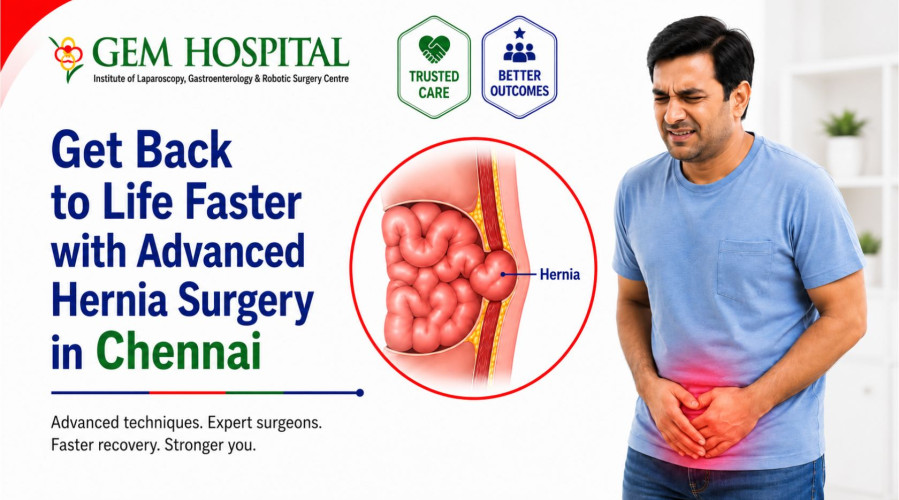
A hernia can quietly limit your daily activities, whether it is a nagging ache in the groin when you lift something heavy, a visible bulge in your abdomen, or sharp pain that makes it difficult to stand straight. While hernias are among the most common surgical conditions in the world, they do not resolve on their own. The good news is that advanced hernia surgery in Chennai offers minimally invasive solutions with much faster recovery times, helping patients return to work, exercise and normal life faster than ever before.
This guide explains all you need to know about hernias from identifying symptoms to learning about the latest surgical techniques and selecting the right centre in Chennai.
Understanding a Hernia
What Is a Hernia?
A hernia is when an internal organ or fatty tissue squeezes through a weak spot or hole in the muscular tissue or connective tissue that normally contains it. While hernias can develop in different areas of the body, the most common types are. Understanding these conditions is important when considering Advanced Hernia Surgery in Chennai for effective and long-term treatment.
- Inguinal Hernia This is the most common type of hernia and occurs in the groin. More common in males.
- Femoral hernia: Hernia of the upper thigh/groin, more common in females
- Umbilical Hernia: Near the navel, common in infants and overweight adults.
- Incisional Hernia: Occurs through a scar from a prior abdominal surgery.
- Hiatal Hernia Portion of the stomach pushes up through the diaphragm into the chest cavity.
- Epigastric Hernia Usually contains fat rather than bowel, between the belly button and chest.
Causes and Risk Factors Common

- Chronic cough (especially in smokers)
- Heavy lifting or strain.
- Obesity, or rapid weight gain
- Pregnancy increased abdominal pressure
- Previous abdominal surgery with a weak scar
- Constipation and straining to pass stool
- Ageing loss of strength of abdominal muscles
- Genetic predisposition to poor connective tissue
Hernia: Symptoms and Signs
Not all hernias have obvious symptoms but most will eventually be visible. If you get any of the following
Get medical help.
- Swelling or bulge in the abdomen, groin, or belly button that may go away when lying down
- A dull ache or sharp pain at the site of the bulge that gets worse with bending, coughing or lifting
- A sense of weakness, pressure or heaviness in the abdomen
- inguinal hernia in men (pain and swelling around the testes)
- Heartburn, regurgitation or difficulty swallowing (Hiatal hernia)
A “strangulated” hernia in which the blood supply to the herniated tissue is cut off is a medical emergency. Symptoms include sudden, severe pain, nausea, vomiting and an inability to push the bulge back in. If this occurs, get medical help right away.
Diagnosis and Assessment
Most hernias can be diagnosed on clinical examination. Your doctor will:
Ask about your symptoms and when the bulge first showed up
Perform a physical exam (sometimes asking you to cough to make the hernia more visible)
If diagnosis is uncertain or to determine hernia size and content, order ultrasound or CT scan
Suspected hiatal hernia: Recommend Upper GI Endoscopy or Barium Swallow.
Early diagnosis prevents complications and helps decide the best surgical approach before the hernia gets bigger or becomes complicated.
Hernia Treatment Options
For very small hernias with no symptoms, especially in older or high-risk patients, a “watch and wait” approach may be appropriate. But all hernias carry the risk of growing in size and strangulation over time and surgery is the definitive treatment.
Laparoscopic (Keyhole) Repair of Hernia
Laparoscopic surgery is the gold standard for most hernias. 2–3 small incisions are made, and a camera and instruments are used to repair the hernia from the inside, reinforcing the weakened area with a lightweight synthetic mesh. Advantages:
Significantly less post-op pain
- Better cosmesis and smaller scars
- Decreased length of stay often less than 24 hours
- Quicker return to work and daily activity
- Reduced risk of wound infection
- Robotic-Assisted Hernia Surgery
Advanced Hernia Surgery in Chennai includes cutting-edge techniques such as robotic-assisted procedures that provide even greater precision and dexterity than standard laparoscopy, especially important for complex or recurrent hernias. The robotic platform provides 3D magnified visualisation and articulated instruments that reach difficult angles with minimal trauma to surrounding tissue.
Open Hernia Surgery
In some cases, open surgery is still the safest option—very large hernias, emergencies, or complex anatomy. There is only one larger incision and the hernia is repaired with or without mesh. Advanced Hernia Surgery in Chennai offers both open and minimally invasive approaches, depending on the patient's condition.
Non-Mesh Repair vs Mesh Repair
There are modern lightweight, biologic and absorbable mesh options to reinforce the repair and greatly reduce recurrence rates. Non-mesh (tissue) repairs are used in select cases, especially in children or contaminated fields. The availability of these techniques is one of the reasons why many patients choose Advanced Hernia Surgery in Chennai for effective and long-lasting hernia treatment.
Hernia Surgery: Advanced Technologies
- 3D Laparoscopy: Depth perception and enhanced visualisation for safer mesh placement.
- da Vinci Robotic Platform: For complex multi-quadrant hernia repair with wristed instrumentation.
- Component separation techniques for complex abdominal wall reconstructions after large incisional hernias
- Biologic Mesh: Used in contaminated or infected fields where use of synthetic mesh is contraindicated.
Fluorescence Imaging Allows the surgeon to see the planes of tissue and blood supply in real time.
Advantages of early operative treatment
Delaying hernia repair may result in:
- Hernia size increasing gradually, difficulty in surgery increasing
- Risk of incarceration when the herniated organ gets trapped
- Strangulation life-threatening emergency requiring immediate surgery.
- Chronic pain impacting work, exercise and quality of life
Planned elective surgery is always safer, less complicated and has better outcomes than emergency repairs.
Recovery After Complex Hernia Surgery
- Laparoscopic Surgery Recovery
- Most patients are discharged within 24 h after laparoscopic hernia repair and can return to sedentary work within 5–7 days.
- Full recovery with return to heavy lifting and vigorous exercise typically takes 3-4 weeks.
- Recovery after Robotic or Open Surgery
If you have a complex or open repair of hernia, recovery may take 4-6 weeks. Physical therapy might be recommended to help build core strength and avoid a recurrence of the hernia.
- Instructions for Post-Operative Care
- Do not lift anything heavier than 5 kg for the first 2-4 weeks.
- Regular walks from day one to prevent blood clots and help you heal
- Take any prescribed pain medication as directed. Avoid NSAIDs if you are told to do so.
- Look at the incision for signs of infection such as redness, warmth, discharge or fever
- All follow-up appointments should be maintained usually at 1 and 4 weeks post-surgery
Why Hernia Surgery In Chennai
Expert Surgeons: General and laparoscopic surgeons in Chennai have vast experience in managing all types of hernias, including complex and recurrent hernias.
- Advanced Surgical Infrastructure: Robotic theatres, 3D laparoscopic equipment and premium mesh products.
- Same-day and short-term options: Most of the laparoscopic repairs are day care or 23 hour admissions.
- Affordable Low Cost Hernia Surgery in Chennai Affordable Hernia Surgery in Chennai without compromising on quality and technology.
- Pre and post operative support is holistic and includes anaesthesiology assessment, physiotherapy and nutritional counselling.
A hernia should not mean months of pain or a prolonged absence from work and daily life. The advanced hernia surgery in Chennai offers patients shorter procedures, less post-operative discomfort, faster recovery and excellent long-term outcomes.
At GEM Hospital, patients benefit from advanced surgical expertise, minimally invasive treatment options, and comprehensive care designed to support faster recovery and long-term success.
Have your hernia checked professionally by a qualified general surgeon today. Timely treatment is the quickest, surest road back to life.
Frequently Asked Questions FAQs
1. Do You Always Need Surgery for a Hernia?
All hernias can have complications over time, not necessarily right away.Your surgeon will advise on the best time for you, taking into account size, symptoms and risk factors.
2. Will the hernia return after surgery?
Modern mesh repair has a very low recurrence rate (generally <1–3% for laparoscopic procedures). You can reduce this risk by keeping a healthy weight, avoiding excessive straining and following your post-operative advice.
3. How long will I be out of work after hernia surgery?
Most patients are back to work within 5–7 days after laparoscopic surgery. It usually takes 4-6 weeks to recover from physical or manual labour.
4. How safe is laparoscopic hernia surgery?
Laparoscopic hernia repair is a safe, well-established procedure with a very low complication rate when done by an experienced surgeon. It is the treatment of choice for most hernias.
5. Can both sides be repaired simultaneously?
Yes. “Bilateral inguinal hernias (hernias on both sides of the groin) can be repaired laparoscopically at the same time in one procedure without any additional recovery time.
6. What type of anaesthesia is used?
Laparoscopic hernia repairs are performed under general anaesthesia. In some cases for inguinal hernias, spinal or local anaesthesia with sedation may be used.
Book a consultation with GEM Hospital’s today.