Looking for liver transplant in Chennai? Learn how to choose an experienced liver transplant surgeon based on expertise, transplant team, technology and care.
Symptoms of Kidney Stones: Early Warning Signs, Diagnosis & Treatment
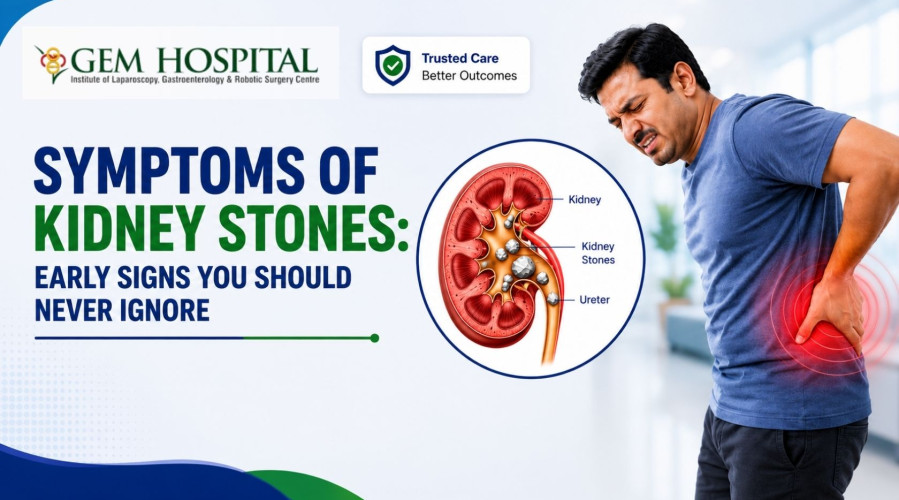
Most people don't know they have a kidney stone until it starts moving and when it does, it announces itself in no uncertain terms. That sudden, agonising pain in your back or side is one of the most common symptoms of Kidney Stones. Understanding the symptoms of kidney stones early can make the difference between a simple outpatient procedure and a serious medical emergency.
If you are in Coimbatore and see any of the warning signs mentioned below, do not ignore them as muscle strain or digestive problems. If you recognize the symptoms of kidney stones and can get medical attention promptly, you can avoid complications and accelerate your recovery.
What You Should Know About Kidney Stones: How to Get Started
Kidney stones are hard deposits of minerals and salts that form inside the kidneys. They may develop anywhere in the urinary tract, from the kidneys to the bladder.
Kidney stones are classified according to their composition as different types:
The most common stone type calcium oxalate
- Uric acid stones – often linked to high protein diets and gout
- Struvite stones – often associated with urinary tract infections
- Cystine stones – rare stones caused by a genetic disorder

The size of the stone is very important to determine symptoms and treatment. Smaller ones often pass on their own . Larger ones can block the flow of urine and require medical intervention .
Why are kidney stones so prevalent in this region?
Several environmental and lifestyle factors are responsible for the higher incidence of kidney stones in Coimbatore and many parts of South India.
Shared risk factors include:
- Hot weather causes dehydration
- Hard water with a higher mineral content
- High-oxalate diets
- Not drinking enough water daily
- Family history of kidney stones
- Obesity and physical inactivity
- Too much of some supplements and medications
These factors can increase the concentration of minerals in the urine and, over time, stones can form. You Should Not Ignore Common Symptoms of Kidney Stones. Symptoms of kidney stones depend on the size and location of the stone. Some people may not have any symptoms at first, while others feel severe discomfort.
The most common symptoms of kidney stones are:
- Back or Side Pain That’s Bad
- Severe pain in the back, side or below the ribs is one of the classic symptoms of kidney stones.The pain is usually intermittent and its intensity can vary.
- Pain that spreads to the lower abdomen
Blood in the urine is another common symptom of kidney stones. The stone can irritate the urine making it pink, red or brown in colour.
- Nausea and Vomiting
- Many patients have nausea and vomiting with the attacks of severe pain.
- More frequent urination
- You may need to urinate more often even if you do not make a lot of urine.
- Burning During Urination
- Lower tract – when a stone is in the lower urinary tract, urination can be painful or burning.
- Fever and Shivering
If a kidney stone is accompanied by infection, fever and chills may occur. This needs urgent medical attention.
Early detection of kidney stone symptoms can help to prevent complications and get prompt treatment.
Signs You May Have Kidney Stones
If you have symptoms of kidney stones, your doctor may run a number of tests to confirm the diagnosis and to find the stone.
Urine Examination
- A urine test can identify blood, crystals and signs of infection.
- Blood Tests
- Blood tests are done to assess kidney function and calcium and uric acid levels.
- Ultrasound
- Ultrasound is often the first imaging test performed because it is safe, painless and non invasive.
CT KUB Scan
A non-contrast CT KUB scan is considered the gold standard for detecting kidney stones of all sizes and locations.
X-Ray KUB
Certain stone types can also be identified through a standard X-ray examination.
Symptoms of Kidney Stones: What to Do When You Have Them
Modern medicine has a number of effective and minimally invasive treatments for patients with symptoms of kidney stones.
Hydration And Medicine
Small stones, particularly under 5mm, can pass naturally with increased fluid intake and medication.
- Recommended by doctors:
- Pain killer medicine
- Alpha-blockers relax the ureter muscle
- Drink More Water
ESWL (Extra-corporeal Shock Wave Lithotripsy)
The treatment uses shock waves to break up the stones into smaller pieces that can then pass out of the body in the urine.
Benefits are:
- No surgery required
- Minimal recovery period
- Effective for small kidney stones
- Ureteroscopy (URS) + Laser
A thin scope is passed up the urinary tract to locate and fragment the stone with laser energy.
This is a very effective procedure for stones in the ureter and small stones in the kidney.
Percutaneous Nephrolithotripsy (PCNL)
In some cases, such as larger or more complex stones, we may need to use a procedure called PCNL. This procedure involves making a small hole through your back and directly accessing and removing the stone.
The mini-PCNL techniques reduce the size of the incision and the recovery time as well.
Retrograde intrarenal surgery (RIRS)
RIRS is a procedure where a flexible ureteroscope is inserted up the kidney to treat stones, without any cuts to the outside.
These advanced techniques greatly relieve the symptoms of kidney stones and involve very little discomfort and recovery time.
Why Choose Coimbatore for Kidney Stone Treatment?
Coimbatore has become a trusted destination for advanced urology treatment.
Benefits to patients are:
- Urologists with experience
- Technology for advanced stone extraction
- Modern diagnostic equipment
- Low-cost treatment
- Complete range of kidney care services
Many patients from Erode, Tiruppur, Nilgiris and nearby districts visit Coimbatore for expert evaluation and treatment for their kidney stones symptoms.
Preventing the Return of Kidney Stones
- Having a kidney stone once greatly increases your risk of having another.
- To decrease your risk of developing stones in the future:
- Drink 3 litres of water per day at least
- Cut down on salt intake
- Limit animal protein
If you are advised to do so, limit high oxalate foods
- Take preventive medications as prescribed
- Make regular follow-up appointments
- Making these lifestyle changes can significantly reduce your chances of developing kidney stones again.
Kidney stones can cause mild pain or severe pain that makes it hard to live an everyday life. If you notice early warning signs and seek medical attention quickly, you may be able to avoid complications and recover more quickly.
Gem Hospital Urologists are trained with latest technologies and diagnostic tools for removal of stones and providing holistic care for Kidney stones. We are dedicated to providing compassionate, individualized care for early symptoms of kidney stones or aggressive treatment for complex stone disease at any stage.
Say No To Kidney Stone Symptoms Affecting Your Quality Of Life Contact the experts at Gem Hospital and start your journey to lasting relief and improved kidney health.
Frequently Asked Questions
1. How long do symptoms of kidney stones last?
Small stones may pass within one to four weeks. Larger stones may continue causing symptoms until treated.
2.How long do the symptoms of kidney stones last?
Little stones can pass in one to four weeks. Larger stones may cause symptoms until they are treated.
3. Does kidney stone surgery hurt?
Most of the procedures today are done under anaesthesia and discomfort after the procedure is generally manageable with medication.
4. Can kidney stones be in both kidneys at the same time?
Yes. Kidney stones can be bilateral. Management may be staged depending on the severity.
5. Do I need stent post kidney stone surgery?
After treatment, a temporary ureteral stent is often placed to allow proper drainage of urine and healing.
Book a consultation with GEM Hospital’s today.