Learn about gallbladder stone symptoms, diagnosis, treatment options, surgery and recovery at GEM Hospital, Chennai.
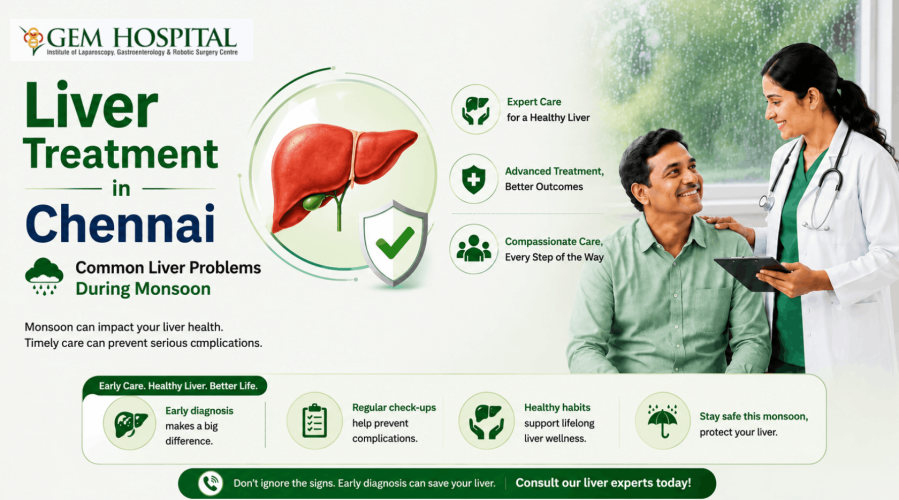
Liver Treatment in Chennai: Common Liver Problems During Monsoon
Ask someone in Chennai what health risks the monsoon brings, and you’ll likely hear dengue, typhoid, skin infections, or maybe malaria. The liver rarely makes that list.
But it should.
The demand for liver treatment in Chennai monsoon season rises consistently every year. With contaminated water, waterborne infections, dietary changes, increased alcohol intake, and reduced physical activity, the liver comes under significant stress during the rainy months. Despite this, the early warning signs are often overlooked or mistaken for general monsoon fatigue, leading many people to delay seeking medical care.
If you’ve been feeling unusually tired, experiencing abdominal discomfort, or noticing a yellowish tint in your skin or eyes during the rains, it may not be something to ignore. These could be early signs that your liver is under strain and needs attention.
Why the Monsoon Is Genuinely Hard on Your Liver
The liver sits at the centre of your body’s processing system. Everything you eat, drink, and absorb passes through it. During the monsoon, the safety and quality of what enters your body can drop significantly.
Contaminated water becomes a major concern, carrying viruses that directly affect liver cells. Food prepared without proper hygiene, vegetables washed in unsafe water, and fruits handled without clean hands all become common pathways for infection. As the body’s primary filter, the liver takes on the burden of processing these harmful exposures.
This is why liver treatment in Chennai monsoon season often focuses on managing the impact of these risks. The most common conditions include viral hepatitis infections, alcohol-related liver flare-ups linked to seasonal habits, and the progression of previously undiagnosed fatty liver disease.
With increased exposure and reduced awareness, the liver faces more strain during this time making early attention and preventive care especially important
The Most Common Liver Problems During Monsoon
Hepatitis A and Hepatitis E These are water-borne viral infections that attack liver cells directly. Hepatitis A spreads through contaminated food and water. Hepatitis E follows the same route and is particularly dangerous for pregnant women, in whom it can progress rapidly to severe liver failure.
Symptoms include fever, nausea, loss of appetite, deep fatigue, and jaundice. Most healthy adults recover with rest, hydration, and dietary support. But in people with existing liver disease or those who seek liver treatment in Chennai too late in the illness complications can be serious.
Alcoholic Liver Disease Flare-Ups Alcohol consumption tends to rise during the cooler monsoon months. For people who already drink regularly, this seasonal increase can push a stressed liver toward acute alcoholic hepatitis characterised by severe inflammation, jaundice, and significant pain. Hospitalisation is sometimes required.
Non-Alcoholic Fatty Liver Disease (NAFLD) Fatty liver is more common in Chennai's population than most people realise and the majority of those who have it don't know. During monsoon, reduced outdoor activity, heavier meals, and more sedentary hours indoors can worsen fatty liver progressively. Fatigue and a dull ache under the right ribcage are the most common signs.
Leptospirosis-Linked Liver Damage Contact with Chennai's floodwater during heavy rainfall carries real leptospirosis risk. In moderate to severe cases, this bacterial infection causes jaundice and liver inflammation that requires prompt antibiotic treatment and monitoring.
Drug-Induced Liver Injury This one is avoidable but it happens every monsoon. People self-medicate for fever and body aches with over-the-counter paracetamol, often in doses that exceed the safe limit. Excessive paracetamol is one of the most preventable causes of liver injury. It requires awareness, not medical expertise just the knowledge that more is not better.

Symptoms That Tell You Your Liver Needs Attention
These are the signs to watch for during monsoon:
- Fatigue that feels deeper and more persistent than typical tiredness not improved by rest
- Loss of appetite or fullness after very small amounts of food
- Nausea, particularly in the mornings, without a clear cause
- Yellowing of the skin or eyes even faint yellowing matters
- Dark, brownish, or tea-coloured urine
- Stools that are unusually pale, grey, or clay-coloured
- A dull ache or discomfort under the right ribcage
- Abdominal bloating or visible swelling
- Itching of the skin without any rash or obvious cause
Any combination of these, particularly during monsoon when infection risk is elevated, is reason enough to see a liver specialist not a general physician, and not later in the week.
Who Needs to Be Most Careful This Monsoon
- Anyone with diagnosed fatty liver, cirrhosis, or chronic hepatitis B or C
- Regular alcohol drinkers even moderate, habitual drinkers
- People with diabetes, obesity, or high triglycerides
- Those on long-term medications that are metabolised by the liver
- Pregnant women hepatitis E during pregnancy requires immediate liver treatment in Chennai
- Residents of areas prone to waterlogging or flooding, where contamination risk is highest
Treatment Options for Monsoon-Related Liver Problems
For hepatitis A and E: Complete rest, adequate hydration, a light and nutritious diet, and complete alcohol avoidance form the core of treatment. Alcohol during hepatitis recovery is genuinely dangerous and can convert a manageable illness into serious liver failure. Severe cases need hospitalisation and close monitoring.
For alcoholic hepatitis: Treatment involves alcohol cessation immediately and completely along with nutritional support and, in select severe cases, corticosteroid therapy. Hospitalisation is needed when the condition is advanced.
For fatty liver: Lifestyle intervention is the treatment dietary changes, gradual increase in physical activity, and weight management where relevant. No medication treats fatty liver directly; the liver responds to how you live. The monsoon's cooler weather actually makes starting these changes easier.
For leptospirosis: Antibiotics are the primary treatment. Early diagnosis is crucial the earlier antibiotics start, the less liver and kidney damage occurs.
For drug-induced liver injury: Stopping the offending medication (under a doctor's guidance) and supportive care allows the liver to recover over time in most cases.
Protecting Your Liver Through Monsoon
- Drink only boiled or purified water throughout the rainy months this single habit prevents the majority of waterborne liver infections
- Avoid raw or street food during the peak monsoon weeks
- Never take paracetamol beyond the prescribed dose and never combine it with alcohol
- Limit or eliminate alcohol during monsoon, especially if you have any liver condition
- Get vaccinated against hepatitis A it's safe, widely available, and highly effective
- Avoid wading through floodwater where possible the leptospirosis risk is real and serious
- Get a liver function test done if you haven't had one recently it's a simple blood test that can identify problems before they become symptomatic
- If you have known liver disease, do not miss your scheduled appointments or medication during monsoon
The monsoon may feel refreshing, but for your liver, it can be one of the more demanding times of the year. With waterborne infections, changes in diet, and a seasonal rise in alcohol consumption, the liver is placed under more stress than most people realize.
This is why awareness around liver treatment in Chennai monsoon season is so important. When identified early, most liver conditions can be managed effectively. The key is not to overlook early warning signs or dismiss them as routine monsoon fatigue when your liver may actually need medical attention.
For expert hepatology care, accurate liver function assessment, and personalized treatment in Chennai, you can visit GEM Hospitals. Their experienced liver specialists manage everything from seasonal hepatitis to complex liver diseases with precision and care helping you protect your liver through the monsoon and beyond.
Book a consultation with GEM Hospital’s today.