Looking for liver transplant in Chennai? Learn how to choose an experienced liver transplant surgeon based on expertise, transplant team, technology and care.
Your Liver Transplant Journey in Chennai: Expert Care from Start to Finish
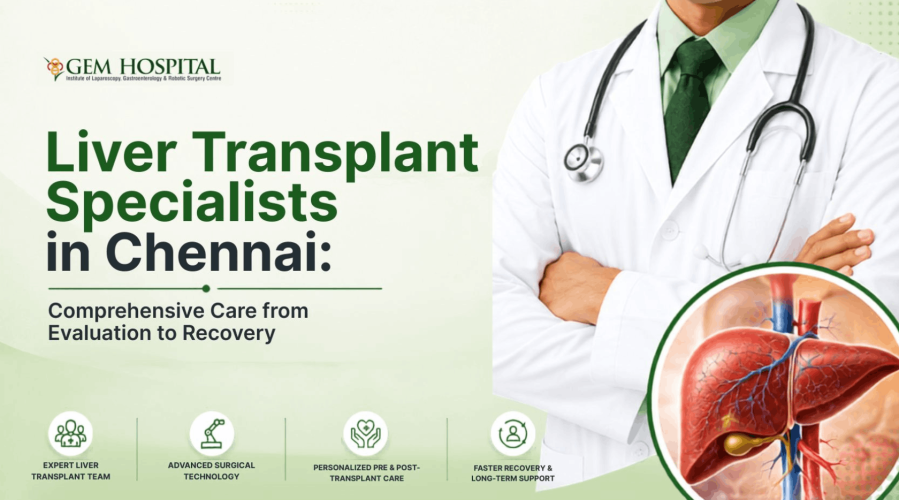
Liver Transplant Specialists in Chennai: A liver transplant is not just a surgery. It is, for most patients and families who go through it, one of the most significant and emotionally complex journeys of their lives. The weeks of evaluation, the waiting, the surgery itself, and the months of recovery that follow each stage requires a level of expertise, infrastructure, and human compassion that can only be found at genuinely specialised centres.
If you or someone you love is facing the prospect of a liver transplant, finding the right Liver Transplant Specialists in Chennai is the most important decision you will make. This guide is designed to give you a clear, honest understanding of the entire process from why transplants are needed, to what makes a specialist truly qualified, to what life looks like on the other side of surgery.
Why Would Someone Need a Liver Transplant?
One of the busiest organs in the body, the liver performs over 500 tasks, including filtering toxins, metabolising drugs, and making proteins that the blood needs to clot. When the liver has failed to the point where it cannot be reversed with medication or other interventions, a transplant is the only life-saving option. This is why consulting experienced Liver Transplant Specialists in Chennai is crucial for timely evaluation, treatment planning, and successful transplant outcomes.
Most common reasons for liver transplant:
Cirrhosis: Long-term scarring of the liver tissue, usually due to long-term alcohol use, chronic hepatitis B or C infection, or non-alcoholic fatty liver disease (NAFLD). Eventually, the liver replaces healthy working tissue with scar tissue until it can no longer perform its vital functions. In such cases, Liver Transplant Specialists in Chennai can assess whether a transplant is the most appropriate treatment option.
Acute Liver Failure: A rapid and severe loss of liver function sometimes occurring within days or weeks in a patient with no prior liver disease. Causes include drug-induced liver injury (paracetamol overdose is a leading cause), viral hepatitis, and autoimmune hepatitis. Prompt evaluation by Liver Transplant Specialists in Chennai is essential, as timely intervention can be life-saving.
Hepatocellular Carcinoma (Liver Cancer): Certain liver cancers, when within specific size and number criteria (the Milan Criteria), are best treated with a transplant, which simultaneously removes the tumour and the diseased liver. Experienced Liver Transplant Specialists in Chennai play a crucial role in determining eligibility and treatment planning.
Cholestatic Liver Diseases: Conditions like primary biliary cholangitis (PBC) and primary sclerosing cholangitis (PSC) cause progressive bile duct damage and eventually liver failure. These patients often benefit from evaluation by Liver Transplant Specialists in Chennai before complications become severe.
Accreditation and Regulatory Requirements: All transplant centres in Tamil Nadu operate under the Human Organs and Tissues Transplantation Act (HOTTA) and are monitored by the state's authorisation committee. Reputed Liver Transplant

Specialists in Chennai work within these strict regulatory guidelines to ensure patient safety and ethical transplantation practices.
Metabolic Liver Diseases: Wilson's disease, haemochromatosis, and some rare metabolic disorders can cause severe liver damage that may require transplantation. Liver Transplant Specialists in Chennai can identify the right time for transplant evaluation and treatment.
Paediatric Liver Disease: Biliary atresia is the most common indication for liver transplantation in children. Early diagnosis and timely transplant are crucial for the survival and development of the child. Dedicated Liver Transplant Specialists in Chennai and paediatric transplant teams help ensure the best possible outcomes for young patients.
Learn About the 2 Types of Liver Transplant
Deceased donor liver transplant (DDLT) The liver is from a brain-dead person whose family has agreed to donate the organ. The recipient is put on a waiting list – coordinated through TRANSTAN in Tamil Nadu – and receives an organ when a matching donor is found. The length of wait depends on your blood type, how sick you are (your MELD score) and whether organs are available.
Living Donor Liver Transplant (LDLT): A healthy family member or emotionally connected person donates about 60% of their liver. The liver has a remarkable ability to regenerate, so the donor’s remaining liver and the recipient’s transplanted liver grow to full functional size within six to eight weeks. LDLT is the most prevalent type of transplantation in India as rates of deceased donation are still low. Chennai has some of the leading centers for LDLT and outcomes are comparable to international standards.
What Makes a Liver Transplant Specialist Stand Out in Chennai?
This is where many families struggle. Every hospital with a transplant programme will tell you they are the best.
So how do you really evaluate?
Transplant Volume Annual transplant volume is one of the most reliable indicators of surgical expertise and programme maturity. Centres that perform more transplants have better-refined protocols, more experienced teams, and exposure to a broader range of complications. Ask directly:
how many liver transplants does this centre perform per year?
Multidisciplinary Team Depth A liver transplant is never the work of a single surgeon. Look for centres where hepatologists, transplant surgeons, transplant anaesthetists, critical care specialists, transplant coordinators, transplant dietitians, and psychological counsellors work as an integrated team not in silos.
Donor Evaluation Programme In LDLT, the safety of the living donor is paramount. A reputable centre has an independent team evaluating the donor completely separate from the recipient's team to ensure no conflict of interest in the decision to proceed with donation.
Dedicated Transplant ICU Post-operative management in the first 48 to 72 hours is critical. A dedicated transplant ICU with staff experienced in managing post-transplant complications rejection, infection, vascular issues, biliary complications significantly impacts outcomes.
Long-Term Follow-Up Infrastructure A transplant is the beginning of a lifelong relationship with your medical team. The best programmes have structured follow-up clinics, transplant nurse coordinators who are accessible for queries and concerns, and clear protocols for managing immunosuppression over the years.
Accreditation and Regulatory Compliance All transplant centres in Tamil Nadu operate under the Human Organs and Tissues Transplantation Act (HOTTA) and come under the state’s authorisation committee. Verify that the centre you're considering is fully compliant and accredited.
The Liver Transplant Evaluation: What Happens Before Surgery
The evaluation phase is thorough and deliberately so. Its purpose is to confirm that a transplant is the right treatment, that the patient can survive and benefit from the surgery, and in the case of LDLT, that the donor is safe to donate.
For the Recipient:
- Liver function tests, kidney function, complete blood count
- Viral serology (Hepatitis B, C, HIV, CMV, EBV)
- Imaging: CT scan of the abdomen to assess liver size, vasculature, and any complications
- Cardiac evaluation ECG, echocardiogram, stress test if indicated
- Pulmonary function tests
- Nutritional assessment
- Psychological evaluation to assess coping capacity and social support
- MELD score calculation to assess disease severity
- Consultation with all team members
For the Living Donor:
- Comprehensive blood tests and tissue typing for compatibility
- Detailed liver volumetry (CT scan to calculate exact liver volumes)
- Cardiac and pulmonary assessment
- Psychological evaluation completely independent of the recipient's team
- Meeting with the hospital's ethical committee
The evaluation process typically takes two to four weeks. The recipient and donor will both be cleared and a date for the surgery set.
What to Expect from a Transplant Surgery
Donor Surgery - Living donor is placed under general anesthesia and undergoes a right or left hepatectomy (removal of right or left lobe of the liver). The operation takes approximately six to eight hours. The donor is typically in hospital for five to seven days and returns to full activity within six to eight weeks. At expert centres, donor complication rates are very low, and serious complications are rare.
Recipient Surgery: The diseased liver is removed and the donated liver lobe is implanted with careful vascular and biliary reconstruction. Depending on the complexity, the procedure will take eight to twelve hours or longer. The patient will be transferred to the transplant ICU immediately after surgery for close monitoring.
Recovery The Long Road Back to Health
Recovering from a liver transplant is not a race. It’s a process that is handled carefully and takes place over months.
In Hospital (First 10–14 days) The transplant team looks for early complications such as primary graft dysfunction, vascular complications (hepatic artery or portal vein thrombosis), biliary leaks, rejection episodes, and infections. Immunosuppression is started immediately and adjusted according to blood levels and liver function tests.
First 3 Months: This is the highest risk time for rejection and infection. Patients see their doctor often in the outpatient clinic, sometimes twice a week to start with. They do constant blood work to check liver function and drug levels. Any fever, jaundice, or change in the patient's condition requires immediate reporting.
Long-Term: Most patients are on immunosuppression for life, though doses reduce significantly after the first year. Annual follow-up, cancer screening (immunosuppressed patients carry a higher risk of certain cancers), and monitoring for long-term side effects of medication are standard.
Quality of Life: The good news and it is genuinely good is that the vast majority of liver transplant recipients return to a normal, active life. Many go back to work, travel, pursue hobbies, and enjoy their families. Long-term survival rates at leading centres are excellent: one-year survival above 90%, and five-year survival rates of 75–80% or better.
A liver transplant is a second chance at life and the quality of that chance depends enormously on the centre and team you choose. The best liver transplant specialists in Chennai bring together surgical mastery, a deeply experienced multidisciplinary team, and a commitment to caring for patients through every phase of this journey.
If you're at the evaluation stage, don't delay. Disease severity can progress quickly, and early evaluation gives you and your team the best opportunity to plan properly. Reach out to GEM Hospital, ask the right questions, and trust the process. Life after a liver transplant for most patients is better than they dared hope.
Frequently Asked Questions
1. How long is the waiting time for a liver transplant in Chennai?
For deceased donor transplants, waiting time varies based on blood type and MELD score. Critically ill patients receive priority. Living donor transplants can be planned more predictably once evaluation is complete.
2. Who can be a living liver donor?
Donors must be between 18 and 55 years of age (some centres extend to 60), in excellent health, ABO compatible with the recipient, and willing to donate without any coercion. Close family members spouse, parent, sibling, child are typically eligible.
3. Is the donor's liver donation safe?
Yes, when performed at a high-volume centre with rigorous donor evaluation. The donated liver regenerates fully within six to eight weeks. Donor mortality risk is extremely low estimated at 0.1–0.5% at experienced centres.
4.What is the MELD score and why does it matter?
The Model for End-Stage Liver Disease (MELD) score is a numerical scale (6–40) that reflects disease severity. Higher scores indicate more urgent need for transplant. It is used to prioritise deceased donor organ allocation.
5.Can a liver transplant cure hepatitis B or C?
A transplant replaces the diseased liver, but the virus can recur in the new organ if not managed. Effective antiviral medications particularly for hepatitis C can often prevent recurrence and lead to a functional cure in the transplanted liver.
6.What lifestyle changes are needed after a liver transplant?
Recipients must take immunosuppression medication lifelong, avoid alcohol completely, maintain a healthy diet, exercise regularly, and attend all follow-up appointments. Vaccinations and cancer screening are also part of long-term care.
Book a consultation with GEM Hospital’s today.