Looking for liver transplant in Chennai? Learn how to choose an experienced liver transplant surgeon based on expertise, transplant team, technology and care.
Kidney Stone Treatment Pain Is Not Normal Here's What Your Body Is Trying to Tell You
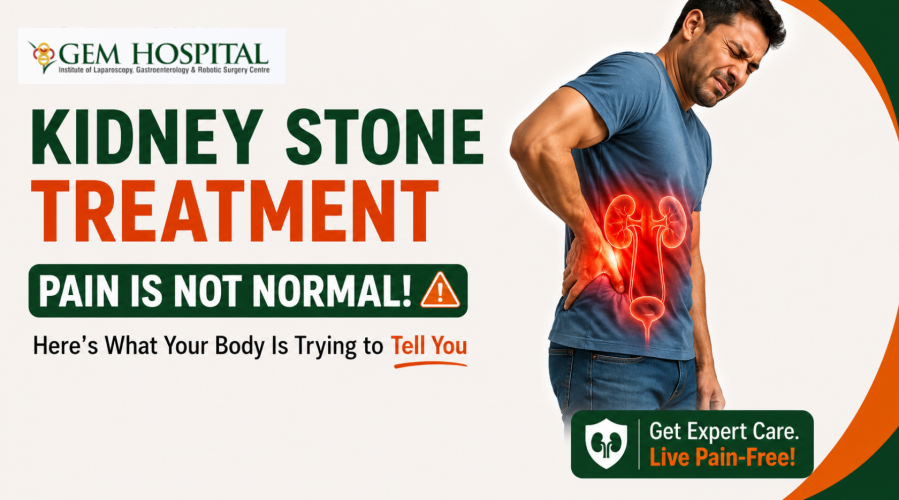
Often it comes on suddenly a sharp, stabbing pain in the lower back or side that takes your breath away. For many people this is the first sign of a kidney stone treatment and can be one of the most intense forms of discomfort the human body can experience. But surprisingly enough, though this condition is very common, many patients either ignore the early warning signs or delay going to the doctor. Knowing the causes of kidney stone treatment, the progression and when to seek expert treatment can make all the difference to your recovery and long-term kidney health.
What Exactly Is a Kidney Stone Treatment?
Kidney stone treatment are hard mineral and salt deposits that form inside the kidneys. They form when urine is very concentrated and minerals like calcium, oxalate and uric acid crystallize. These crystals slowly build up to form a stone, which can be as small as a grain of sand or as large as a golf ball.
They are of different types, including calcium oxalate stones (the most common), uric acid stones, struvite stones and cystine stones. Each type has slightly different triggers, and needs tailored management. Knowing what type you have helps your doctor recommend the best treatment options for you.
Why Does It Hurt So Much?
The pain associated with a kidney stone treatment — often called renal colic — isn't actually caused by the stone sitting in the kidney. The real pain begins when the stone moves from the kidney into the narrow ureter (the tube connecting the kidney to the bladder). This movement causes the ureter to spasm, which creates intense waves of pain radiating from the back down to the groin. These symptoms are a sign your urinary tract is under serious stress and needs prompt attention.
Who Is Most Vulnerable?
Kidney stones can happen to anyone, but some factors make you much more likely to get them. - Family history of stones - High dietary intake of sodium, protein, oxalate-rich foods (spinach, nuts) - Chronic dehydration - Obesity - Underlying diseases such as hyperparathyroidism, gout, inflammatory bowel disease
Kidney stone treatment is statistically more likely to develop in men than women. The condition is increasingly being seen in younger adults – a trend linked to dietary habits and reduced water intake. If you’ve had a stone before, if you don’t make lifestyle changes, the chance of it coming back within five to seven years is high.
Modern Treatment: More Than Just Waiting It Out
Smaller stones generally < 5mm can pass without intervention with adequate hydration and pain control. But larger stones or stones that obstruct often require medical treatment. Today, minimally invasive surgery has transformed the way urologists approach stone removal, making the surgeries safer, faster and more comfortable for patients.
Common advanced treatment options include:
- Shock Wave Lithotripsy (SWL) – This is where sound waves are used to break the stone into smaller pieces that can then pass naturally in the urine.
- Ureteroscopy (URS): A thin flexible scope is passed through the urethra to find and laser-fragment the stone – no incisions are required.
- Percutaneous Nephrolithotomy (PCNL) For very large or complicated stones, a small keyhole incision is made in the back. Thanks to laparoscopic surgery advancements, recovery times have dramatically improved.

Prevention: Small Changes, Big Impact
Preventing a kidney stone treatment from forming or returning is largely within your control. The single most effective step is increasing your daily water intake to at least 2.5 to 3 litres. Drinking lots of water dilutes urine and decreases minerals.
Dietary adjustments are also important. Reducing salt and animal protein, avoiding oxalate-rich foods and increasing citrus (citrate reduces stone formation) can significantly reduce your risk. Your doctor may also recommend certain medications, depending on the type of stone you have.
When to see a doctor
Don’t wait for the pain to become unbearable. If you experience severe flank pain, fever, chills or notice blood in your urine, seek immediate medical care. If the treatment for a kidney stone causes a blockage in the urinary tract, it can lead to infection and permanent kidney damage if not treated.
Imaging tests, such as a CT scan or ultrasound, can confirm the presence and location of a stone, and help your specialist to plan the most appropriate course of care.
Let this not be your reality – the dread of another kidney stone treatment episode. Most patients recover fully and subsequently live stone-free with the correct diagnosis, a tailored treatment plan and lifestyle advice. If you have an ongoing problem with stones or abdominal pain that has no diagnosis, and you or a family member have an ongoing problem with stones or abdominal pain that has no diagnosis, then it’s time to see a doctor who will listen to you and take your problem seriously.
GEM Hospital has a team of urology and gastrointestinal health experts who provide complete evaluation and advanced care for kidney stone treatment from accurate diagnosis to advanced minimally invasive procedures. Begin your path to lasting relief and improved kidney health today.
Book a consultation with GEM Hospital’s today.