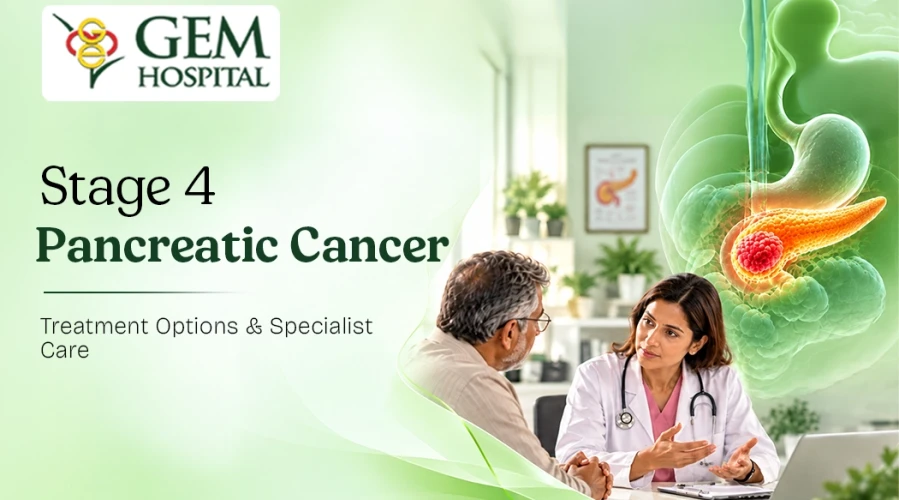
Explore stage 4 pancreatic cancer treatment options, including chemotherapy, targeted therapy, symptom relief and the role of surgery in Chennai.
How Does Jaundice Differ in Cases of Hemolysis vs. Liver Dysfunction?
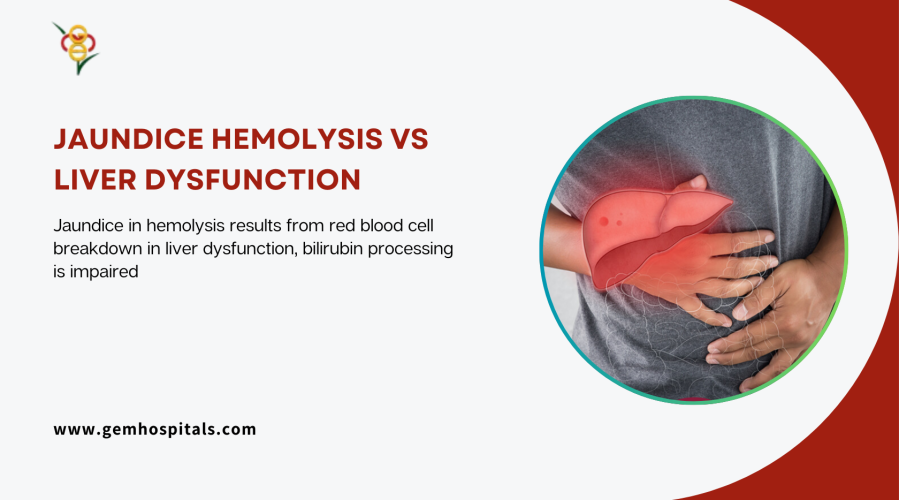
Jaundice is a condition characterized by yellowing of skin and the eyes due to accumulation of bilirubin in the body. However, the causes can be quite different. Two primary reasons include haemolysis, which is the breaking down of red blood cells and liver abnormalities. This blog also helps you to know the differences between jaundice in both conditions to help you have a better understanding of the two conditions.
What Is Hemolysis-Induced Jaundice?
Hemolysis is defined as the premature and rapid lysis of red blood cells, with consequent release of hemoglobin in the circulation. This hemoglobin is then split into bilirubin and is responsible for an overload of unconjugated bilirubin. Because the liver is unable to break down this bilirubin at a faster rate, it builds up in the body leading to jaundice.
Characteristics of Hemolysis-Induced Jaundice:

- Unconjugated Bilirubin Dominates: The jaundice here is mainly due to unconjugated (indirect) bilirubin The pigments involved in this process are mainly bilirubin.
- No Dark Urine: The color of urine is normal in haemolytic jaundice as unconjugated bilirubin is not soluble in water.
- Underlying Conditions: This type of jaundice is common in situations where there is a problem with red blood cells such as sickle cell anemia, thalassemia or autoimmune hemolytic anemia.
What Is Jaundice Due to Liver Dysfunction?
Jaundice arises when the liver fails to metabolize or clear bilirubin from the bloodstream. This results in the buildup of both unconjugated and conjugated bilirubin depending on the kind of dysfunction that is involved.
Characteristics of Liver Dysfunction Jaundice:
- Mixed Bilirubin Levels: Both total and direct bilirubin are increased.
- Dark Urine and Pale Stools: Conjugated bilirubin given out in urine causes it to turn brown while low levels of bile in the intestine leads to white coloured stools.
- Associated Symptoms: Some of the signs include fever, paleness, tiredness, stomach ache, and oedema.
Why Is Diagnosis Critical?
Proper diagnosis is important because as mentioned earlier the management approaches to these two types of jaundice are distinctly different. Failure to diagnose accurately results in wrong treatment and a slow healing period.
For more information about Jaundice Treatment in Chennai, visit GEM Hospital today as we provide the Best Jaundice Treatment in Chennai.
Diagnostic Approaches
For Hemolysis-Induced Jaundice:
- Blood Tests: Check RBC, hemoglobin and reticulocyte level.
- Peripheral Smear: Recognizes distorted RBCs, such as, those seen in sickle cell anemia.
- Indirect Bilirubin Levels: Raised levels suggest haemolysis.
For Liver Dysfunction Jaundice:
- Liver Function Tests (LFTs): Used to measure enzymes and bilirubin levels of the liver.
- Ultrasound or CT Scans: Used to diagnose liver conditions, gallstones or bile duct obstruction.
- Viral Hepatitis Tests: Diagnoses infection such as Hepatitis B or C.
Treatment Approaches
Hemolysis-Induced Jaundice:
- Underlying Condition Management: Cure diseases such as sickle cell anemia or thalassemia.
- Folic Acid Supplements: Supports RBC production.
- Blood Transfusions: May be needed in extreme cases.
Liver Dysfunction Jaundice:
- Medication: Used to manage infections or inflammation of the liver.
- Lifestyle Changes: It is a liver friendly diet and does not involve use of alcohol.
- Advanced Interventions: In severe cases, conditions that may necessitate bile duct stenting or liver transplant may be necessary.
Why Choose GEM Hospital?
Jaundice is a condition characterized by the yellowing of the skin and is treated at GEM Hospital across all its root causes. Our team of specialists and a range of modern diagnostic equipment allows an individual approach to every patient. The Best Jaundice Treatment in Chennai means that the care you get at our hospital is personalized to your needs.
Book a Consultation
Do not allow jaundice to interfere with your health. Consult with the best Jaundice Doctors in Chennai at GEM Hospital and get the best and effective Jaundice Treatment. We are available to offer you a consultation and help you start the process of healing now. Book Your appointment now!
Book a consultation with GEM Hospital’s today.