Looking for liver transplant in Chennai? Learn how to choose an experienced liver transplant surgeon based on expertise, transplant team, technology and care.
Hernia & Obesity: The Connection You Need to Know Expert Treatment in Chennai
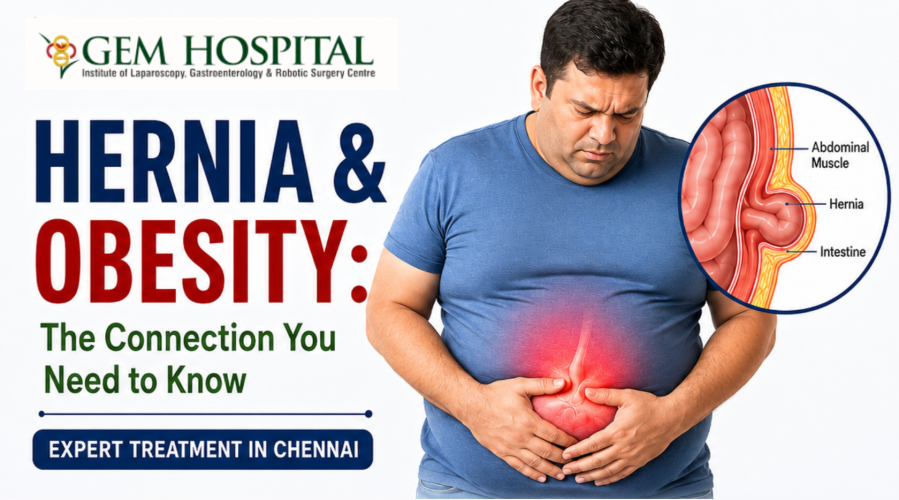
If you've been dealing with an uncomfortable bulge in your abdomen, groin, or around a previous surgical scar and you've also been struggling with your weight there's a very real chance the two are connected. Hernia treatment in Chennai at GEM Hospital is not just about fixing the bulge.It’s about figuring out why it happened and how to prevent it from happening again. We help patients treat the hernia as well as the underlying risk factors, including obesity, with our expert surgeons and multidisciplinary approach to care.
What Is a Hernia?
When an internal organ or tissue pushes through a weak spot in the muscle wall around it, that’s a hernia. This often leads to a lump that can be seen and can be painful especially when you lift, bend or cough. Common types include inguinal (groin), umbilical (belly button), incisional (around a surgical scar), and hiatal (upper stomach).
Hernias don't get better on their own. In fact, they tend to grow larger over time and in some cases, the tissue becomes trapped (strangulated), cutting off blood supply and creating a surgical emergency.
The Obesity Connection
- Obesity is one of the most significant risk factors for hernia. Here's the deal:
- Excess body weight exerts increased and continuous pressure on the abdominal wall
- Fat tissue weakens the connective tissue and muscles that normally help hold the organs in place
- Obesity increases the risk of incisional hernia after abdominal surgery
- Hiatal hernias are when the stomach pushes into the chest . There is a strong association with high BMI .
This is why our surgical team at GEM Hospital adopts a holistic approach. n patients with obesity-related hernias, in addition to surgical treatment, we may suggest a weight management plan in order to significantly reduce the risk of recurrence.
Common Signs of Hernia
A bulge in the abdomen or groin that is visible or can be felt (usually disappears when lying down)
- Pain, pressure or a feeling of heaviness in the area of the bulge
- Pain aggravated by bending, coughing or lifting
- Sudden severe pain, nausea & vomiting (signs of strangulation - urgent)
- Acid reflux or heartburn (hiatal hernia)
Treatment Options
Hernia Treatment GEM Hospital, Chennai uses the most advanced minimally invasive techniques for:
- Laparoscopic Hernia Surgery: Little pain, quick recovery, little scarring. Keyhole surgery with a camera and small instruments. Patients typically go home within 24 hours
- Robotic-assisted repair: Excellent method for complex or recurrent hernias
- Open repair: Use in emergency situations or very large hernias where laparoscopic access is not safe
- Mesh reinforcement: Usually a surgical mesh is placed to reinforce the abdominal wall and prevent recurrence.

If you are obese, our team works with bariatric specialists to plan for weight management along with the hernia treatment in Chennai we treat the cause and not the symptom.
Summer Care Tips Managing Hernia Risk in Hot Weather
Hydration
- Stay well-hydrated constipation (made worse by dehydration) increases straining, which directly worsens hernia symptoms
- Drink water consistently through the day rather than in large infrequent amounts
Diet Tips
- Eat smaller, lighter meals large meals increase intra-abdominal pressure
- Avoid very heavy, fried, or spicy foods that cause bloating and acid reflux (especially if you have a hiatal hernia)
- Increase fibre intake to keep bowel movements regular and reduce straining
- Limit alcohol and carbonated drinks in summer both contribute to bloating
Lifestyle Care
- Avoid lifting heavy objects without proper technique and avoid sudden, forceful lifting altogether if you have a known hernia
- Don't exercise vigorously in peak summer heat high-intensity exertion raises intra-abdominal pressure
- If you're overweight, work on gradual, sustainable weight loss even a 5–10% reduction significantly lowers hernia recurrence risk
- Wear supportive clothing or a hernia belt if advised by your doctor while awaiting surgery
When to See a Doctor
If you notice a new bulge, or if an existing one becomes painful, hard, or discoloured seek medical care immediately. These are warning signs of strangulation, which is a medical emergency. Don't self-diagnose or delay. Hernia treatment in Chennai at GEM Hospital includes emergency surgical assessment available around the clock.
Book a consultation with GEM Hospital’s today.