
Learn about gallbladder stone symptoms, diagnosis, treatment options, surgery and recovery at GEM Hospital, Chennai.
Hernia Care During Monsoon: Precautions & Recovery Tips
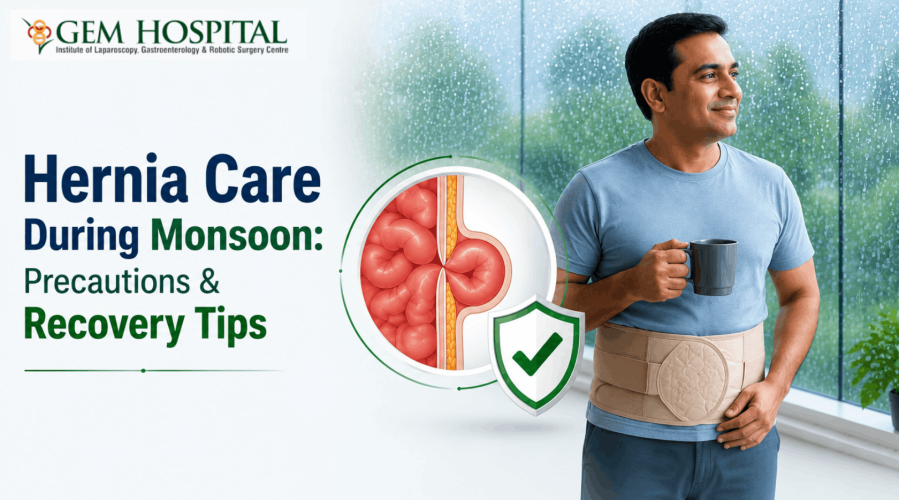
A hernia is one of those conditions that often stays quiet for a long time a small bulge, mild discomfort, nothing that feels urgent enough to address. But when the monsoon arrives, things can change quickly.
The demand for hernia treatment rainy season Chennai tends to rise consistently each year, and there are clear reasons behind it. Navigating slippery, uneven roads increases physical strain. Seasonal coughs and sneezing from respiratory infections raise abdominal pressure. At the same time, many people delay planned procedures, waiting for “better weather,” which allows the condition to worsen.
All of these factors make the monsoon a particularly challenging time for hernia patients. Whether you’re living with an untreated hernia or recovering after surgery, this season calls for extra care and attention to avoid complications.
What Is a Hernia and Why Does Monsoon Make It Worse?
A hernia occurs when an internal organ most commonly part of the intestine pushes A hernia occurs when an internal organ or tissue pushes through a weak spot in the surrounding muscle or connective tissue. The result is a visible or palpable bulge, usually in the abdomen or groin, often accompanied by discomfort that worsens with physical effort, coughing, or straining.
The monsoon season can aggravate hernia conditions in several specific ways, making hernia treatment rainy season Chennai a more common need than many expect:
Increased coughing and sneezing:
Respiratory infections such as colds, throat infections, and bronchitis are more frequent during the rains. Each cough or sneeze increases intra-abdominal pressure, directly stressing the weakened area. Repeated episodes can worsen a hernia quickly or, in severe cases, lead to complications like strangulation.
Slippery, uneven terrain:
Rain-soaked roads and waterlogged streets increase the risk of slips and sudden movements. Actions like catching yourself during a fall or stepping awkwardly over puddles can strain the abdominal wall and aggravate an existing hernia.
Constipation and straining:
Dietary changes, reduced hydration, and lower activity levels during monsoon often lead to constipation. Straining during bowel movements significantly increases abdominal pressure and accelerates hernia progression. This is a commonly overlooked factor in hernia treatment rainy season Chennai cases.
Delayed treatment:
Many patients postpone hernia surgery during the monsoon, assuming it’s not an ideal time for procedures. This delay allows the condition to worsen and increases the risk of complications that may require emergency intervention instead of planned treatment.
Understanding these triggers can help you take timely action and manage your condition more effectively during the rainy season.
Types of Hernias That Commonly Need Treatment During Monsoon
Inguinal hernia the most common type, occurring in the groin. More common in men. Can worsen significantly with repeated coughing or physical strain during monsoon.
Umbilical hernia occurs around the belly button. Common in people with obesity or those who have had multiple pregnancies. Monsoon weight gain from reduced activity can worsen pressure in this area.
Hiatal hernia occurs when the stomach pushes up through the diaphragm into the chest cavity. Monsoon dietary changes heavier, spicier foods can worsen acid reflux and discomfort associated with this type.
Incisional hernia occurs at the site of a previous surgical scar. People who have had abdominal surgery need to be particularly vigilant during monsoon, when increased coughing and constipation can strain the repair site.
Warning Signs That a Hernia Has Become an Emergency
Most hernias are uncomfortable but manageable. But these symptoms indicate a surgical emergency:
- The hernia bulge suddenly becomes hard, very tender, and cannot be pushed back in
- Severe, constant pain at the hernia site not just discomfort with effort, but persistent and worsening pain
- Nausea and vomiting alongside a painful hernia bulge
- Fever with hernia pain suggests possible infection or strangulation
- The skin over the hernia becomes red, dark, or discoloured
- Inability to pass gas or have a bowel movement suggests bowel obstruction
If any of these occur, go to the emergency department immediately. A strangulated hernia where the blood supply to the trapped tissue is cut off is life-threatening and requires emergency surgery within hours. Do not wait to call the clinic in the morning.
Why Delaying Hernia Surgery During Monsoon Is a Mistake
This is the most important thing to understand about hernia treatment rainy season Chennai: planned, elective surgery is always safer than emergency surgery.
Modern laparoscopic hernia repair is performed under controlled conditions, usually taking 30 to 60 minutes. In most cases, patients are discharged the same day or within 24 hours. Recovery is generally smooth, with a return to light activities within a week.
Emergency hernia surgery, on the other hand, is far more complex and carries higher risks. It is typically required when complications like strangulation or obstruction occur. In such situations, the bowel may already be affected, the patient is often in severe pain, and the surgical team must act quickly under less controlled conditions.
Delaying treatment and waiting for the monsoon to pass can be a risky decision. The rainy season itself does not increase surgical risk in a well-equipped hospital. What it does increase is the likelihood of complications that may suddenly require urgent intervention.
Understanding this distinction is key to making informed decisions about hernia treatment rainy season Chennai and avoiding preventable emergencies.
Monsoon Precautions for Patients With Unrepaired Hernias
If surgery has been planned but hasn't happened yet, these precautions reduce the risk of complications during the wait:
- Manage coughing aggressively: Treat any respiratory infection promptly. Use prescribed cough suppressants if needed. Support the hernia site with your hand when coughing or sneezing it sounds simple, but it reduces the pressure significantly.
- Prevent constipation: Increase fibre intake through vegetables, fruits, and whole grains. Drink at least two to three litres of water daily. Never strain during bowel movements if straining is needed, address the constipation with dietary changes or a mild stool softener your doctor recommends.
- Avoid heavy lifting: During monsoon, the temptation to help move sandbags, shift furniture away from leaking walls, or carry extra loads increases. Avoid all of this if you have an unrepaired hernia.
- Watch the bulge: Check the hernia site regularly. Any change in size, colour, or hardness or new pain that wasn't there before warrants an immediate call to your surgeon.
- Wear a hernia belt if prescribed: Some patients are advised to use a truss or hernia belt temporarily. Use it consistently, especially when going outdoors during monsoon.

Monsoon Recovery Tips After Hernia Surgery
If you've recently had hernia repair surgery, monsoon brings specific recovery considerations:
Keep the incision site dry: This is critical. Moisture around a healing surgical wound increases infection risk. Keep the area clean and dry at all times. Change dressings as instructed by your surgeon.
Watch for signs of wound infection: Redness, warmth, swelling, discharge, or fever after surgery during monsoon are signals to call your surgeon the same day not to wait and see.
Maintain indoor air quality: Damp, poorly ventilated homes during monsoon can harbour mould and humidity that slow healing. Ensure adequate air circulation in your recovery space.
Continue respiratory care: Post-surgery coughing whether from a pre-existing condition or a new monsoon cold still stresses the repair site. If you develop a cough after hernia surgery during monsoon, inform your surgeon and manage it aggressively.
Follow the lifting restriction exactly: Most hernia repairs come with a no-heavy-lifting restriction for four to six weeks. During monsoon, when there are often more physical demands around the house, this restriction needs to be followed without exception.
Eat a fibre-rich, hydrating diet: Constipation after surgery is both painful and dangerous for a healing hernia repair. Prioritise vegetables, fruits, and fluids from day one of recovery.
Attend all follow-up appointments: Monsoon disruptions flooding, transport issues, general inconvenience lead some patients to skip post-operative check-ups. Don't. These appointments exist to catch complications early, when they're still manageable.
Hernias are manageable but they are not something to indefinitely postpone. The monsoon season, with its respiratory infections, physical hazards, dietary changes, and constipation risk, adds real pressure to an already vulnerable area of the body.
Hernia treatment during rainy season in Chennai is safe, effective, and planned in advance far preferable to an emergency procedure that the monsoon itself may force. Whether you're managing a known hernia through the rains or recovering from recent surgery, the steps are clear: protect the repair site, prevent straining, treat infections early, and don't skip follow-ups.
For expert hernia evaluation, laparoscopic repair, and post-operative care in Chennai, you can visit GEM Hospitals where experienced surgeons provide personalised treatment plans and recovery support that carry you safely through monsoon and well beyond it.
Book a consultation with GEM Hospital’s today.