Looking for liver transplant in Chennai? Learn how to choose an experienced liver transplant surgeon based on expertise, transplant team, technology and care.
Are There Foods That Help Dissolve Gallstones Naturally?
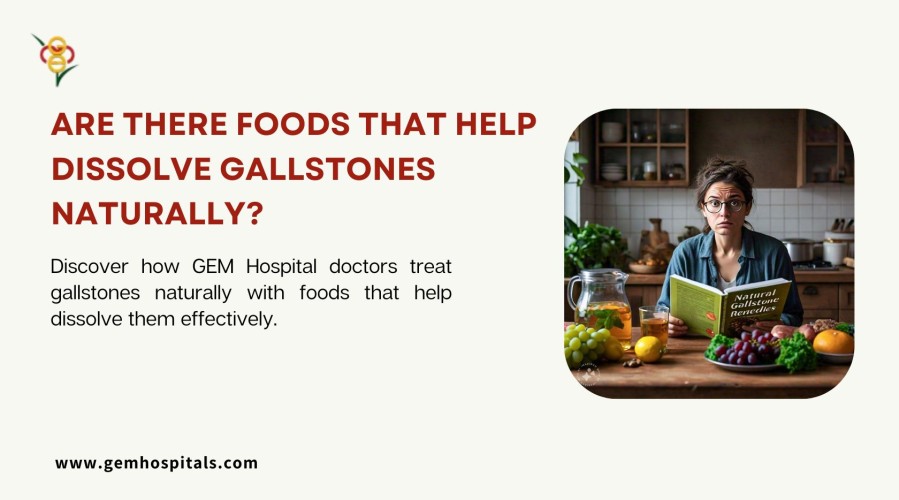
Gallstones are solid deposits that are formed in the gallbladder. Normally gallbladder is a small organ that is responsible for storing and supplying bile juice that aids in digestion. Bile will be formed by the liver but stored in the gallbladder if this bile is not properly emptied there it may form a stone that ranges from as small as a grain of sand to as large as a golf ball. The stones in the gallbladder cause significant discomfort and also lead to serious health issues. In this case, there are various medical treatments and surgeries available. There are still some natural foods that could support gallbladder health and potentially help in dissolving those gallstones. The blog explores the various foods and dietary practices that can assist you in managing and preventing gallstones.
What Are Gallstones, Really?
Your gallbladder is a small pouch tucked under your liver. Its one job is storing bile a digestive fluid your liver produces to break down fats. When the balance of cholesterol, bile salts, and bilirubin in that stored bile gets thrown off, hard deposits can form. These range from a grain of sand to, in rare cases, a golf ball.
There are two broad types:
- Cholesterol stones by far the most common, usually yellow-green, formed when bile holds more cholesterol than it can dissolve.
- Pigment stones darker stones made from excess bilirubin, often linked to liver disease or blood disorders.
Genetics, obesity, rapid weight loss, pregnancy, and a diet heavy in fried or processed food all raise your risk. Women, people over 40, and those with a family history tend to see gallstones more often too.
Foods That Support Gallbladder Health
None of these will melt away an existing stone overnight, but a consistent diet built around them can ease symptoms, slow new stone formation, and in some documented cases of small cholesterol stones, support gradual dissolution.
Fiber first. Whole grains, legumes, fruits, and vegetables keep bile flowing and bind excess cholesterol so it leaves the body instead of settling in the gallbladder. Aim for fiber at most meals rather than one big serving at dinner.
Swap bad fats for good ones. A diet loaded with fried food and saturated fat is a known driver of stone formation. Olive oil, nuts, seeds, and avocado, on the other hand, actually support healthy bile flow when used in place of those fats not stacked on top of them.
Turmeric. The curcumin in turmeric has anti-inflammatory and choleretic (bile-stimulating) properties. A pinch in your daily cooking is a reasonable habit; treating it as medicine is not.
Apple cider vinegar. Popular home remedy, thin on hard evidence. Some people find a tablespoon diluted in water before meals settles mild discomfort. If you have acid reflux or stomach ulcers, skip it.
Lemon juice. Vitamin C and citric acid are thought to help keep cholesterol in bile more soluble. Warm water with fresh lime juice in the morning is low-risk and, at worst, does nothing.
Where "Natural" Reaches Its Limit
This is the part most articles skip. Diet and home remedies work best as prevention, or as support for very small, early-stage cholesterol stones and even then, results vary widely from person to person. They will not:
- Break down large stones (over 1–1.5 cm)
- Resolve pigment stones
- Fix a gallbladder that's inflamed, infected, or blocked
- Prevent a stone from moving into the bile duct, which is a medical emergency
If you're dealing with sharp pain in the upper right abdomen, pain that spreads to your back or shoulder, nausea after fatty meals, fever, or yellowing of the skin or eyes, that's your gallbladder telling you it needs more than lemon water. Delaying care at that stage raises the risk of complications like cholecystitis or pancreatitis.
What a Doctor Can Actually Do
Modern gallbladder care isn't a straight jump to open surgery. Depending on stone size, location, and your symptoms, treatment options include:
- Watchful waiting for small, silent stones causing no symptoms
- Medication (ursodeoxycholic acid) to dissolve certain cholesterol stones over months, under supervision
- Laparoscopic cholecystectomy minimally invasive gallbladder removal, the standard fix for recurring symptomatic stones, with most patients home within a day or two
An ultrasound and a consultation are usually all it takes to know which category you fall into.
The Bottom Line
Eating well, staying active, and being mindful of fried and processed food are genuinely good moves for your gallbladder and your whole digestive system benefits too. Just don't let a home remedy routine become a reason to postpone a proper diagnosis. Gallstones that are ignored don't usually stay quiet forever.
If you're dealing with gallbladder pain or a recent gallstone diagnosis, GEM Hospital's gastroenterology and surgical team can assess your stones, walk you through medication versus surgical options, and get you a clear treatment plan. Book a consultation today.
Frequently Asked Questions
1.Can gallstones disappear on their own without treatment? Small, asymptomatic cholesterol stones sometimes stay silent for years without needing intervention, but they rarely disappear completely on their own. Regular monitoring with your doctor is the safest approach.
2.Is it safe to try apple cider vinegar or lemon juice remedies at home? For most healthy adults, small amounts are low-risk, but they aren't a substitute for medical evaluation especially if you already have symptoms like pain or nausea. Check with your doctor first if you have acid reflux, ulcers, or kidney issues.
3.How do I know if my gallstones need surgery? Surgery is usually recommended when stones cause repeated pain, block the bile duct, or lead to complications like infection. An ultrasound and consultation with a gastroenterologist or surgeon will clarify what's right for your case.
4.Does diet alone prevent gallstones from coming back after treatment? Diet lowers your risk significantly but isn't a guarantee. Maintaining a healthy weight, eating fiber-rich meals, and avoiding rapid weight loss all help reduce recurrence.
Book a consultation with GEM Hospital’s today.