Looking for liver transplant in Chennai? Learn how to choose an experienced liver transplant surgeon based on expertise, transplant team, technology and care.
From Pain to Relief: Latest Piles Treatments Available in Chennai
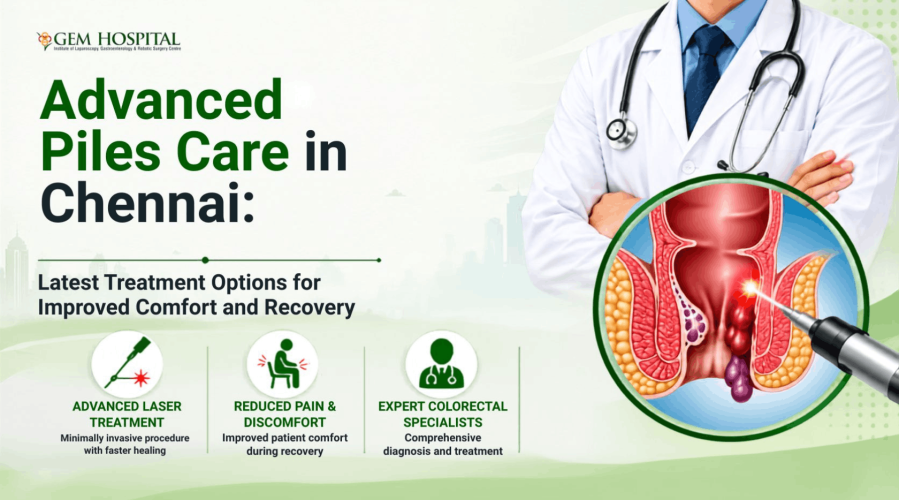
Piles or haemorrhoids affect an estimated one in three adults at some point in their lives. Yet despite being one of the most common conditions that a colorectal specialist encounters, it remains one of the most under-discussed. People live with the bleeding, the pain, the itching, and the embarrassment for months or even years before seeking help. And when they finally do, many are bracing themselves for the surgical experience they've heard about from others painful, prolonged, difficult.
Here's what those people don't know: advanced piles care in Chennai has changed completely. The treatments available today at specialist centres are less invasive, less painful, and faster in recovery than anything that existed a decade ago. If you've been holding off on treatment because of what you've heard, it's time to hear something different.
Why Piles Treatment Has Evolved So Dramatically
For most of medical history, haemorrhoid treatment came in one of two forms: medication to manage symptoms (which never addressed the underlying problem) or conventional haemorrhoidectomy surgical removal of haemorrhoidal tissue which, while effective, carried a reputation for significant post-operative pain and a recovery measured in weeks rather than days.
The shift began with better understanding of haemorrhoidal anatomy. Specialists recognised that haemorrhoids are a normal part of the body's anatomy cushions of blood vessels and connective tissue that help with continence. The problem arises when these cushions become engorged, inflamed, or prolapsed. Treatment, therefore, doesn't always mean removal. It can mean reduction, repositioning, or targeted destruction of the abnormal tissue all achievable with far less trauma than traditional surgery.
The introduction of laser technology, advanced stapling devices, and improved office-based procedures has transformed what "piles treatment" means in a modern specialist setting.
Piles: Grades, Symptoms and When to Seek Help
Haemorrhoids are graded and treatment is determined accordingly:
- Grade I: Internal haemorrhoids that bleed but do not prolapse out of the anus. Usually managed with changes in diet and office procedures.
- Grade II: Prolapse with straining or bowel movements but reduces spontaneously ( goes back inside itself).Excellent candidates for non-surgical and minimally invasive treatments.
- Grade III: Prolapse during straining that must be manually pushed back inside. Require more definitive treatment laser, stapler, or in some cases conventional surgery.
- Grade IV: Permanently prolapsed cannot be pushed back inside. Typically require surgical intervention, though laser procedures can still play a role at experienced centres.
External haemorrhoids sit outside the anus and can become acutely painful when a blood clot forms within them (thrombosed external haemorrhoid). These may require incision and drainage for immediate pain relief.
Symptoms that indicate you should see a specialist promptly:
- Rectal bleeding, even if it appears minor (always needs evaluation)
- Pain that affects your daily life or sleep
- A lump that keeps returning or won't stay reduced
- Persistent itching, mucus discharge, or soiling
- Any rectal bleeding in a patient over 40 (to exclude other causes)
The important point: the earlier you seek treatment, the simpler and less invasive the required intervention.

The Full Spectrum of Advanced Piles Treatments Available in Chennai
What sets leading centres offering advanced piles care in Chennai apart is the breadth of treatment options they offer. The right treatment depends on the grade, the patient's overall health, and, importantly, the patient's own preferences and recovery needs.
Non-Surgical Office Procedures (Grade I and II)
- Rubber Band Ligation (RBL) One of the most effective and widely used procedures for Grade I and Grade II internal haemorrhoids.A small rubber band is placed around the base of the haemorrhoid to cut off its blood supply. The haemorrhoid shrinks over the following days and detaches naturally within a week or two.
- The procedure takes minutes, requires no anaesthesia, and can be done during a standard clinic appointment.“Patients feel a mild cramping and pressure sensation for one to two days after the procedure.”Multiple haemorrhoids can be banded at different visits.
- Rubber band ligation has a success rate of approximately 70–80% for Grade I and II haemorrhoids, though some patients require repeat treatment over time.
- Sclerotherapy (Injection Therapy) A chemical agent (usually phenol in oil) is injected into the haemorrhoidal tissue to cause the blood vessels to harden and shrink. Effective in small, Grade I haemorrhoids where bleeding is the predominant symptom. Quick, painless and repeatable if necessary.
- Infrared Coagulation (IRC) A probe is used to deliver infrared light energy to the haemorrhoid, which produces small burns to coagulate blood vessels and cause the tissue to shrink.Works best for Grade I and small Grade II haemorrhoids. No anaesthesia required; mild post-procedure discomfort only.
Laser-Based Treatment (Grade II and III and Selected Grade IV)
- Laser Haemorrhoidoplasty (LHP) This is one of the most significant advances in piles treatment in recent years, and it's now available at specialist centres offering advanced piles care. Here's how it works:
- A thin fibre-optic probe is inserted into the haemorrhoidal tissue through a small entry point. Precisely controlled laser energy is delivered from within the haemorrhoid, causing the tissue to shrink from the inside out while preserving the surrounding skin and mucosa.
The advantages are compelling:
- Near-bloodless procedure the laser simultaneously cuts and coagulates
- Minimal post-operative pain most patients describe their experience as much more comfortable than they expected
- Day-care setting performed under local or light general anaesthesia, with patients going home the same day
- Rapid return to activity most patients return to desk work within two to three days
- No large wound no open incision, no packing, minimal post-operative care required
- Low complication rate when performed by an experienced surgeon
- Suitable for Grade II and III haemorrhoids and in experienced hands, for selected Grade IV cases
- For many patients with Grade II or III haemorrhoids, laser haemorrhoidoplasty offers the best combination of effectiveness and recovery experience.
- Stapled Haemorrhoidopexy Procedure for Prolapse and Haemorrhoids (PPH)
Here's what happens: the surgeon introduces the stapling device into the rectum and removes a ring of excess mucosal tissue above the haemorrhoids. This simultaneously repositions the prolapsed haemorrhoidal tissue back to its normal anatomical position and reduces its blood supply, causing it to shrink.
The key reason PPH causes less pain than conventional haemorrhoidectomy: the stapling occurs in the upper rectum, where there are few pain receptors unlike the sensitive skin around the anus where traditional surgery operates.
Benefits of PPH:
- Less post-operative pain than conventional surgery
- Shorter recovery time most patients return to normal activity within one to two weeks
- Effective for Grade III haemorrhoids with significant prolapse
- Well-studied with decades of outcome data
Considerations: PPH is not appropriate for external haemorrhoids or thrombosed haemorrhoids. The procedure is technically demanding outcomes are best at centres where surgeons perform it regularly.
Conventional Haemorrhoidectomy (Milligan-Morgan or Ferguson)
For Grade IV haemorrhoids, large external haemorrhoids, or cases where simpler procedures have failed or are not suitable, conventional surgical removal remains the most definitive option.
Modern modifications have improved the experience significantly:
- Closed haemorrhoidectomy (Ferguson technique): The wound is sutured closed after excision, which speeds healing compared to the open approach.
- LigaSure or Harmonic haemorrhoidectomy: Uses advanced energy devices to cut and seal tissue simultaneously, reducing bleeding and often post-operative pain compared to traditional scalpel and suture technique.
While recovery from conventional haemorrhoidectomy is longer than for the minimally invasive options above, at experienced centres, pain management has improved markedly and for patients with truly advanced disease, the long-term outcome is worth it.
Emergency Treatment: Thrombosed External Haemorrhoid
A thrombosed external haemorrhoid a blood clot within an external haemorrhoid causes sudden, severe anal pain and a palpable, hard lump. If treated within the first 48–72 hours, incision and drainage under local anaesthesia brings immediate relief. After this window, conservative management (sitz baths, stool softeners, analgesia) allows the clot to gradually reabsorb over two to four weeks, though pain during this period can be significant.
What Happens When You See a Piles Specialist
The consultation for piles is understandably anxiety-provoking for many patients. Here's what to expect:
- History Taking: The specialist will ask about your symptoms when they started, whether you have bleeding, pain, prolapse, or itching, what your bowel habits are like, and your dietary history. They will also ask about risk factors and any previous treatment.
- Physical Examination: A visual inspection of the anal region and a digital rectal examination (DRE) are standard. Proctoscopy using a small, lighted instrument allows direct visualisation of the internal haemorrhoids and is the definitive way to grade them accurately. The procedure is brief and, while it may feel uncomfortable momentarily, should not be painful.
- Colonoscopy: In patients older than 40, with significant bleeding, or with risk factors for colorectal disease. This rules out other causes of rectal bleeding and is an important part of responsible piles management.
- Treatment Discussion: Based on grade and symptoms, the specialist explains the appropriate treatment options, including what each involves, what the recovery looks like, and what the success rates are. You should leave the consultation with a clear understanding of your options and the freedom to ask every question.
- Diet and Lifestyle:
The Non-Negotiable Foundation No piles treatment however advanced works optimally without addressing the underlying lifestyle factors that allowed haemorrhoids to develop in the first place. - Fibre: The single most important dietary change. A high-fibre diet (25–35 grams per day) softens stool and reduces the straining that causes haemorrhoidal engorgement. Vegetables, fruits, whole grains, legumes, and nuts are all excellent sources.
- Hydration: Drink at least 2.5 to 3 litres of water daily. Inadequate hydration hardens stool regardless of fibre intake.
- Toilet Habits: Don't strain. Don't spend extended time on the toilet. Respond to the urge promptly delaying increases straining.
- Exercise: normal physical activity increases bowel motility and decreases congestion in the haemorrhoids Even 30 minutes of brisk walking daily makes a measurable difference.
- Weight: Maintaining a healthy weight reduces abdominal and pelvic pressure on the venous system.
A specialist who doesn't discuss these factors alongside your procedure is leaving you at higher risk of recurrence.
The story of piles treatment has changed and changed significantly. With the range of options available through advanced piles care in Chennai, there is no longer any justification for suffering in silence, or for dreading a treatment that is far more comfortable and convenient than most people realise.
Whether your condition is a mild Grade I haemorrhoid causing occasional bleeding or a Grade III prolapse affecting your daily quality of life, the right specialist and the right treatment exist for you. The only step left is making the appointment.
Your comfort matters. Your quality of life matters. Take the step today at GEM Hospital.
Frequently Asked Questions
1.Which is the best piles treatment option in Chennai?
The best option depends on your grade. Grade I and II haemorrhoids respond well to rubber band ligation or laser treatment. Grade III is usually treated with laser haemorrhoidoplasty or PPH.
Grade IV usually requires conventional surgery. A specialist will guide you to the most appropriate choice after proper examination.
2.Is laser piles treatment permanent?
Laser treatment is very effective and can give long term relief for most patients. But dietary and lifestyle factors are not addressed, then recurrence is possible. The majority of patients on a high fibre diet with normal bowel habits do not recur.
3.What is the recovery time after piles treatment?
With laser haemorrhoidoplasty most patients are back at their desk within two-three days. A PPH generally lasts between five and seven days. Conventional haemorrhoidectomy may need two to three weeks depending on the individual.
4.Is piles treatment covered by health insurance?
Most of the health insurance policies in India cover surgical piles procedures. Coverage for minimally invasive procedures like laser treatment varies by insurer and policy. Check your policy details or speak to the hospital billing staff.
5.Can Piles be cured completely without surgery?
Office based procedures such as rubber band ligation may be curative without formal surgery for Grade I and some Grade II haemorrhoids. In higher grades intervention is likely to be more definitive.Lifestyle changes alone cannot cure established haemorrhoids, though they reduce symptoms and prevent worsening.
6.Can children or young adults get piles?
Yes, though less commonly. Younger people with chronic constipation, a low-fibre diet, or prolonged sitting can develop haemorrhoids. Treatment principles are the same, with conservative and minimally invasive options preferred for younger patients.
Book a consultation with GEM Hospital’s today.