Looking for liver transplant in Chennai? Learn how to choose an experienced liver transplant surgeon based on expertise, transplant team, technology and care.
Transforming Lives with Advanced Kidney Transplant Care in Chennai
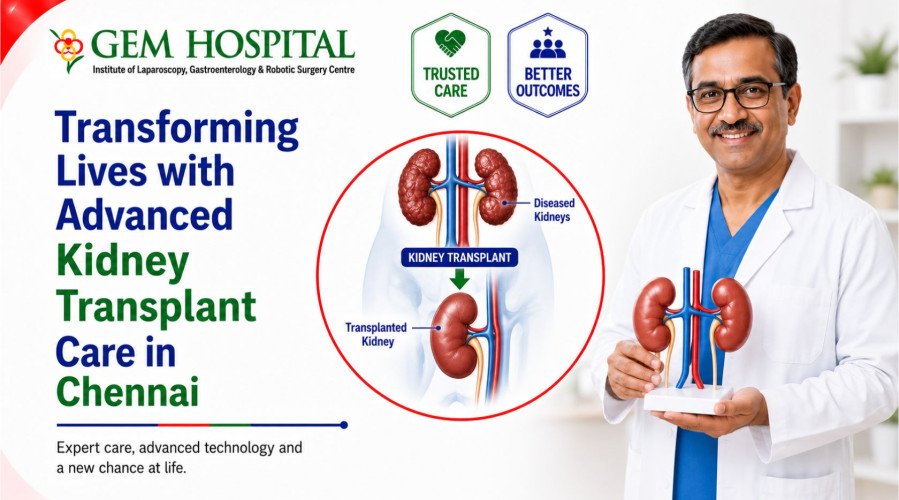
Chronic kidney disease (CKD) affects millions of people worldwide, and for those who progress to end-stage renal disease (ESRD), kidney transplantation offers the best chance for a longer, healthier, and fuller life. In Chennai, Advanced Kidney Transplant Care in Chennai offers patients and their families a world-class blend of surgical expertise, comprehensive transplant medicine, and compassionate, ongoing support that is unmatched in South Asia.
The purpose of this guide is to educate patients and families about kidney transplantation from who is a candidate through the evaluation, surgery, recovery, and living life after transplant.
Transplanting and Kidney Disease – What You Need to Know
What Is End-Stage Renal Disease (ESRD)?
The kidneys get rid of waste products, help control the level of fluid in the body and produce hormones that affect the health of bones, blood pressure, and the production of red blood cells. When the kidneys are working at less than 15% of normal, a condition known as end-stage renal disease, dialysis or transplantation is needed to sustain life.
Common Reasons of Kidney Failure in India
Diabetic nephropathy – the leading cause, due to the high prevalence of Type 2 diabetes
- Hypertensive nephrosclerosis damage from chronic uncontrolled high blood pressure
- Chronic glomerulonephritis: inflammation of kidney filtration units
- Polycystic kidney disease – a genetic condition where cysts form in the kidneys
- Obstructive uropathy: chronic obstruction of urine flow
- Kidney stones and recurrent urinary tract infections
- Kidney Failure Symptoms and Signs
The progressive kidney disease often develops in years, mostly in silence. By the time patients develop symptoms, there may already be significant damage. Signs of warning include:
- Oedema (swelling of the feet, ankles and face)
- Continued tiredness and lack of strength
- Decreased urine output or change in urine colour
- Fluid in lungs leading to shortness of breath
- Nausea, vomiting, loss of appetite
- Itching (pruritis) due to accumulation of waste products
- Confusion or trouble concentrating (uraemic encephalopathy)
- Difficult to control high blood pressure
Any of these symptoms, particularly in the setting of known diabetes or hypertension, should prompt urgent nephrology assessment.
Diagnosis and pretransplant evaluation
End Stage Renal Disease ESRD Diagnosis
Diagnosis is made with blood tests for serum creatinine and eGFR (estimated glomerular filtration rate), urine analysis for protein and blood, and imaging studies of the kidneys. In some cases, a kidney biopsy may be needed.
Pre transplantation workup
Once a patient is identified as a candidate for transplantation, a thorough evaluation is conducted:
- Cardiac assessment: ECG, ECHO, stress test – the heart has to be healthy enough to go through surgery.
- Infection screening: HIV, hepatitis B and C, TB, CMV, EBV status
- Screening for cancer: To rule out active malignancy
- blood group and tissue typing (HLA matching): important for finding compatible donors
- Cross-match testing: To search for pre-formed antibodies to the donor kidney
- Psychological and Social Evaluation: Assessment of the patient's support system and ability to take lifelong medication
- Urological assessment: Checking that the urinary tract and bladder are working
Treatment Options Kidney Replacement Therapy
- Dialysis: A Bridge to Transplantation
- Most patients waiting for a transplant are kept on either
- Hemodialysis: Blood is filtered through a machine outside the body. Usually 3 sessions a week, 4 hours each.
- Peritoneal dialysis . Fluid is exchanged through a catheter in the abdomen to remove waste products . Can often be done at home .
- dialysis is a life-sustaining procedure but not a permanent replacement for a working kidney. Transplantation offers much better quality of life and long-term survival.
Kidney Transplantation – The Gold Standard
Kidney transplantation is a surgical procedure in which a healthy kidney from a donor is placed in the lower abdomen of the recipient. The transplanted kidney is sewn into the recipient’s blood vessels and bladder, and generally begins functioning within minutes to hours. Donor kidneys are available from two sources:
Living Donor Kidney Transplant
In India, most of the kidney transplants are done from living donors who are usually close relatives (parents, siblings, spouse or children). Benefits are:
- Better kidney function outcomes – living donor kidneys last longer on average
- Planned surgery – enables detailed pre-operative planning
- Less time the kidney is out of the body (shorter cold ischaemia time)
- Shorter waiting time than in cadaveric donation
- Transplant from Deceased (Cadaveric) Donor
Kidneys from brain dead donors are allocated through the government’s transplant registry (TNOS in Tamil Nadu). Blood group, medical urgency and time on the waiting list are used to rank patients on the waiting list. Deceased donor transplants may take longer to arrange but are an important source of organs for patients who don’t have a suitable living donor. As part of Advanced Kidney Transplant Care in Chennai, this transparent allocation system helps ensure fair access to life-saving kidney transplants for eligible patients.
Kidney Transplant Procedure
The transplant operation usually takes 2–4 hours and is performed under general anaesthetic. The donor kidney is placed in the pelvis (iliac fossa) and the renal artery, renal vein and ureter are anastomosed to the recipient’s blood vessels and bladder. The patient's own kidneys are usually not removed unless they are problematic (eg, infection, uncontrolled hypertension, very large polycystic kidneys).
Chennai Advanced Technologies and Protocols (CATP)
- Desensitisation Protocols. In transplants with ABO incompatibility or positive cross-match, enable previously ineligible patients to accept a kidney from an incompatible donor via plasmapheresis and immunosuppression.
- Robotic-Assisted Donor Nephrectomy: Minimally invasive kidney removal from the living donor less pain, faster recovery, smaller scar.
- Virtual Cross-Match Testing: Reduces the time needed for compatibility testing.
- Kidney Paired Donation (KPD): Where a donor and recipient who are incompatible are matched with another incompatible pair allowing two transplants to happen simultaneously.
- Continuous Flow Perfusion Machines: Preserve deceased donor kidneys ex vivo for longer periods while maintaining organ viability.
Immunosuppression Life After Transplant
The immune system naturally tries to reject a foreign organ. To prevent this, transplant recipients take lifelong immunosuppressive medications. The usual course of treatment consists of:
- Calcineurin inhibitors Tacrolimus or Cyclosporin - the cornerstone of maintenance immunosuppression
- Antimetabolites Mycophenolate mofetil – with calcineurin inhibitors
- Corticosteroids Prednisolone – used in higher doses initially and tapered over time
- Regular monitoring of blood levels ensures the medications are effective and not toxic.
- Patients receive detailed education on adherence, recognising signs of rejection, and minimising infection risk.
Benefits of Early Transplantation

Research consistently shows that transplanting patients before they have spent prolonged periods on dialysis leads to better outcomes:
- Better graft survival (the transplanted kidney lasts longer)
- Superior quality of life freedom from dialysis sessions
- Lower cardiovascular risk
- Better nutritional status and energy levels
- More treatment options if early-stage complications arise
Pre-emptive transplantation done before dialysis becomes necessary offers the best outcomes of all and is becoming more common for patients with rapidly progressive kidney disease.
Recovery and Long-Term Aftercare
- Hospital Stay
- Patients typically remain in hospital for 7–14 days post-transplant while the kidney function stabilises and immunosuppression is optimised. Close monitoring for rejection, infection, and surgical complications is carried out by the transplant team.
- Follow-Up After Transplant
- Good follow-up care is key to long term success:
- Blood tests for creatinine, drug levels and full blood count – weekly at first, then monthly
- Blood sugar and BP monitoring
- Biopsy if acute rejection suspected – usually heralded by rise in creatinine
- Annual cancer screening – some cancers are more common in people with immunosuppression, particularly skin
- Bone density monitoring and treatment of metabolic complications
- Life After Transplantation
- With a successful kidney transplant, most patients are able to:
- Return to work and normal activities in 2-3 months
- Get regular exercise and enjoy better energy levels
- Travel both in the country and abroad with adequate safety measures
In women of childbearing age, plan a pregnancy under close supervision.
Life post-transplant hinges on a low-salt, moderate-protein diet, sun protection, strict infection avoidance and absolute medication adherence. These long-term care measures are an essential part of Advanced Kidney Transplant Care in Chennai, helping patients maintain optimal kidney function and overall health after transplantation.
Why Choose Chennai for Advanced Kidney Transplant Treatment
- Volume and Experience
Tamil Nadu has one of the most vibrant transplant ecosystems in the country. Chennai hospitals perform hundreds of kidney transplants every year and the TNOS (Tamil Nadu Organ Sharing) has a huge network of cadaveric donation. Volume is experience and results.
- World-Class Transplant Teams
Chennai's transplant units bring together nephrologists, urologists, transplant surgeons, transplant coordinators, pharmacists, dietitians, and social workers all specialised in kidney transplantation.
- Advanced Protocols
Transplant centres in Chennai are following international best practices from desensitisation for incompatible donors to robotic donor nephrectomy and ex-vivo kidney perfusion.
- Cost Benefit
The cost of kidney transplants in Chennai is significantly lower than in the West, making advanced care available to a much larger population, including international patients from South and Southeast Asia.
- Strong Legal and Registry Framework
Tamil Nadu has a well regulated system of organ donation and allocation to ensure ethical and transparent practices. Government of India and Tamil Nadu Health Systems have fully certified hospitals in Chennai.
A kidney transplant is one of the most dramatic treatments in modern medicine – able to take patients out of the restrictions of dialysis and into a full, lively and satisfying life. This transformation is possible because of the expertise, technology, ethical rigour and compassionate follow-through that makes Chennai’s advanced kidney transplant care. At GEM Hospital, patients benefit from expert transplant teams, advanced medical infrastructure, and comprehensive support throughout the transplant journey.
If you or a loved one are dealing with end-stage kidney disease, don’t delay in investigating your transplant options. A consultation with a specialist nephrologist or transplant surgeon in Chennai might be the beginning of a new chapter. GEM Hospital is committed to providing personalized kidney transplant care and helping patients achieve better long-term health outcomes.
Frequently Asked Questions FAQ's
1. Who can donate a kidney to a Chennai patient?
In India, living donors include close blood relatives (parents, siblings, children, grandparents, grandchildren) and spouses. Emotionally related donors may also be considered under the Transplantation of Human Organs Act, subject to a government authorisation committee review.
2. How long does a transplanted kidney last?
With modern immunosuppression, a living donor kidney functions on average for 15–25 years or more. Deceased donor kidneys average 10–15 years. Some patients receive more than one transplant over their lifetime.
3. What is the chance of rejection?
In 10–20% of transplants, acute rejection generally occurs within the first year. Most episodes can be successfully reversed with timely diagnosis and treatment. Chronic rejection is more insidious and can lead to progressive decline in renal function over years.
4. Are diabetics eligible for a kidney transplant?
Yes. Diabetic nephropathy is the most common indication for kidney transplantation in India. Blood sugar management is optimised before and after transplant. Some patients may be considered for a combined kidney-pancreas transplant.
5.Does donating a kidney carry health risks for the donor?
Studies show that well-screened kidney donors do not have any significant decrease in life expectancy or quality of life. Over time the remaining kidney adapts to provide sufficient function. But donors need lifelong follow up.
6. How soon after transplant can a patient travel?
Most patients can travel domestically within 2–3 months. International travel is usually recommended after the 3–6 month period, when immunosuppression is stable and risk of infection has decreased. Further precautions are required for travel to areas with high endemic infection rates.
7. What if the transplant kidney doesn’t work?
If a transplanted kidney fails, the patient can return to dialysis and may be a candidate for a second transplant, depending on his or her overall health and donor availability.
Book a consultation with GEM Hospital’s today.