









When Does Kidney Disease Require Dialysis or Transplantation?
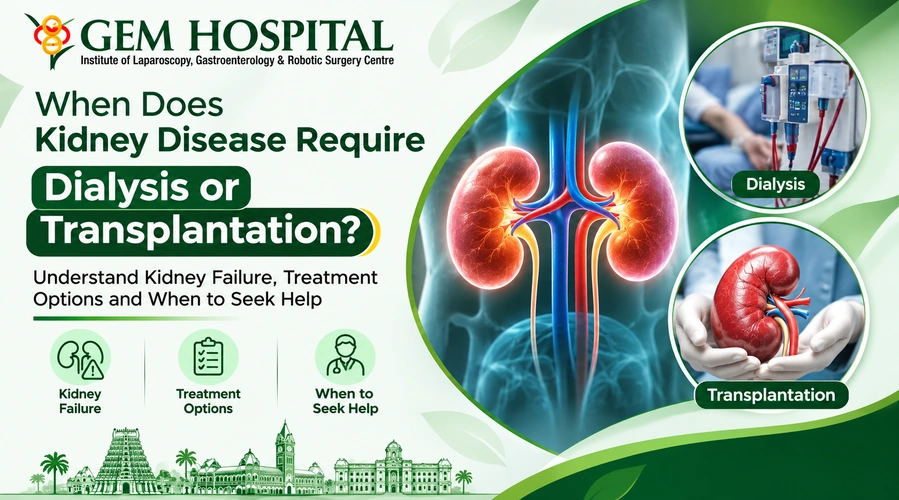
The kidneys play an essential role in maintaining overall health. They filter waste products from the blood, remove excess fluids, balance minerals and help regulate blood pressure. However, when kidney function gradually declines, these essential processes can become impaired, allowing waste products and fluids to accumulate in the body.
For some people, kidney disease can be managed through medication, dietary changes and regular monitoring. However, when kidney function becomes severely reduced, additional treatment such as dialysis or kidney transplantation may become necessary.
Kidney disease may require dialysis when the kidneys can no longer adequately remove waste products and excess fluids from the blood. A kidney transplant may be considered when kidney failure becomes advanced and the patient is medically suitable for transplantation. The decision depends on kidney function, symptoms, complications and overall health rather than a single test result.
For individuals exploring Kidney Treatment in Chennai, understanding the stages of kidney disease and the differences between dialysis and transplantation can help them make informed decisions about long-term care.
At GEM Hospital, kidney care includes evaluation, medical management, dialysis guidance and kidney transplant assessment based on the patient's condition.
What Happens When Kidney Disease Progresses?
Kidney disease can develop gradually over several months or years. In many cases, early kidney damage does not cause noticeable symptoms.
Chronic kidney disease (CKD) occurs when kidney abnormalities or reduced kidney function persist for at least three months.
As the condition progresses, the kidneys may become less effective at filtering blood and maintaining the body's fluid and mineral balance.
Can Kidney Disease Progress Without Symptoms?
Yes. Early-stage kidney disease often develops without obvious warning signs.
Some people discover reduced kidney function during routine blood or urine investigations.
As kidney damage progresses, symptoms may become more noticeable, particularly when the kidneys struggle to remove excess fluid and waste products.
This is why regular screening is important for people with diabetes, high blood pressure, cardiovascular disease or a family history of kidney problems.
What Are the Warning Signs That Kidney Disease Is Getting Worse?
Recognising changes in kidney function is important because early evaluation may help identify complications and guide treatment.
1. Does Swelling in the Legs and Feet Indicate Kidney Problems?
It can. When the kidneys cannot remove excess sodium and water effectively, fluid may accumulate in different parts of the body.
This can cause swelling around:
- Feet and ankles
- Legs
- Hands
- Face
- Area around the eyes
Persistent swelling should be evaluated, particularly when accompanied by changes in urination or breathlessness.
2. Can Kidney Disease Cause Changes in Urination?
Yes. Changes in urine output or appearance may occur as kidney function declines.
Possible symptoms include:
- Passing urine more frequently, particularly at night
- Reduced urine output
- Foamy urine due to protein leakage
- Blood in the urine
- Changes in urine colour
However, these symptoms can also occur due to urinary infections, prostate problems and other conditions.
3. Why Do People With Advanced Kidney Disease Feel Constantly Tired?
Healthy kidneys produce erythropoietin, a hormone that helps the body produce red blood cells.
When kidney function declines, erythropoietin production may decrease, contributing to anaemia.
Anaemia can cause:
- Persistent tiredness
- Weakness
- Reduced physical stamina
- Dizziness
- Difficulty concentrating
Other complications of kidney disease can also contribute to fatigue.
4. Can Kidney Failure Cause Nausea and Loss of Appetite?
Yes. As kidney function declines, waste products may accumulate in the blood.
This can cause symptoms such as:
- Nausea
- Vomiting
- Reduced appetite
- Unpleasant taste in the mouth
- Unintentional weight loss
Persistent digestive symptoms in someone with known kidney disease should be assessed by a nephrologist.
5. Can Advanced Kidney Disease Cause Breathlessness?
Yes. Severe kidney dysfunction can cause excess fluid to accumulate in the body, including around or within the lungs.
This may result in breathlessness, particularly when lying down or during physical activity.
Breathlessness may also be associated with anaemia or heart-related complications.
Sudden or severe breathing difficulty requires emergency medical attention.
When Does Kidney Disease Require Dialysis?
Dialysis is a treatment that performs some of the functions of the kidneys when they can no longer adequately filter waste products and excess fluid from the blood.
It is commonly required in advanced kidney failure, particularly when complications cannot be controlled through medical treatment.
Dialysis is generally considered when kidney failure causes significant symptoms or complications such as fluid overload, persistent electrolyte imbalance, severe metabolic acidosis or uraemic symptoms that cannot be adequately managed through other treatments.
An eGFR of around 5–10 may be associated with the need to start dialysis in some patients, but there is no single eGFR value that determines when every patient must begin treatment.
What Are the Medical Reasons for Starting Dialysis?
A nephrologist may recommend dialysis when one or more of the following problems develop.
Uncontrolled Fluid Overload: Excess fluid may accumulate in the body and cause swelling, high blood pressure or fluid in the lungs.
Persistent High Potassium Levels: Severe hyperkalaemia can affect the electrical activity of the heart and may become life-threatening.
Severe Metabolic Acidosis: When the kidneys cannot maintain the body's acid-base balance, the blood may become excessively acidic.
Uraemic Symptoms: Waste product accumulation may cause nausea, vomiting, loss of appetite, itching, confusion or other complications.
Pericarditis: Advanced kidney failure can sometimes cause inflammation around the heart due to uraemia.
In these situations, dialysis may be required to help control complications and maintain essential body functions.
Does Everyone With Stage 5 Kidney Disease Need Immediate Dialysis?
No. Although Stage 5 CKD indicates severely reduced kidney function, dialysis does not automatically begin as soon as a patient enters this stage.
Doctors consider:
- eGFR and its rate of decline
- Symptoms associated with kidney failure
- Potassium and other electrolyte levels
- Fluid balance
- Nutritional status
- Blood pressure control
- Other existing medical conditions
Some patients may continue under close medical supervision before dialysis becomes necessary.
Others may require dialysis earlier because of serious complications.
What Are the Different Types of Dialysis?
There are two main types of dialysis: haemodialysis and peritoneal dialysis.
Both treatments help remove waste products and excess fluid, but they use different methods.
1. What Is Haemodialysis?
Haemodialysis uses a specialised machine and filter to remove waste products and excess fluids from the blood.
During treatment, blood is transferred from the body through a vascular access, passed through a dialyser and returned to the body.
Many patients receive haemodialysis at a hospital or dialysis centre several times per week.
The frequency and duration depend on the patient's medical requirements and dialysis prescription.
What Are the Important Considerations?
- A suitable vascular access is required.
- Patients need to attend scheduled treatment sessions.
- Blood pressure and fluid balance are monitored.
- Dietary and fluid recommendations may need adjustment.
- Regular laboratory investigations help assess treatment effectiveness.
2. What Is Peritoneal Dialysis?
Peritoneal dialysis uses the lining of the abdomen, called the peritoneum, as a natural filtering membrane.
A special dialysis fluid is introduced into the abdominal cavity through a catheter.
Waste products and excess fluid move from the blood into this fluid, which is later drained and replaced.
Depending on the prescribed method, treatment may be performed manually throughout the day or using an automated machine at night.
What Are the Important Considerations?
- Patients require a suitable abdominal catheter.
- Proper hygiene is essential.
- The procedure requires regular fluid exchanges.
- Patients and caregivers need appropriate training.
- Peritonitis, an infection of the abdominal lining, is an important complication to watch for.
The choice between haemodialysis and peritoneal dialysis depends on medical suitability, lifestyle, home circumstances and patient preference.
When Does Kidney Disease Require a Transplant?
A kidney transplant may be considered when a person develops advanced, irreversible kidney failure and is medically suitable for surgery.
It involves placing a healthy kidney from a living or deceased donor into the recipient.
A kidney transplant is generally considered for patients with advanced kidney failure, particularly those approaching or reaching end-stage kidney disease. However, transplant evaluation can begin before dialysis becomes necessary.
This is known as pre-emptive kidney transplantation.
Can a Kidney Transplant Be Performed Before Dialysis?
Yes. A transplant does not always have to wait until a patient has started dialysis.
If kidney function is progressively declining and the patient and donor are suitable, the transplant evaluation may begin before dialysis becomes necessary.
A pre-emptive transplant may help avoid the need for prolonged dialysis.
However, the timing depends on the progression of kidney disease, donor availability, medical fitness and regulatory requirements.
Who Is Eligible for a Kidney Transplant?
Not every person with kidney failure is automatically eligible for transplantation.
The transplant team evaluates several factors before recommending surgery.
These may include:
- Severity and cause of kidney disease
- Heart and lung function
- Presence of active infections
- Cancer history and relevant screening
- Blood group compatibility
- Tissue typing and cross-match results
- Overall physical condition
- Ability to follow long-term medication and monitoring requirements
A transplant specialist determines whether transplantation is appropriate after reviewing the recipient's health and donor suitability.
What Are the Different Types of Kidney Transplants?
Living Donor Kidney Transplant
A healthy living person donates one kidney after completing the required medical, psychological and compatibility assessments.
A suitable living donor may be a family member or another legally eligible donor, subject to applicable Indian organ transplantation regulations.
Deceased Donor Kidney Transplant
A kidney may be donated by a person declared brain-dead, following the required consent and legal procedures.
In Tamil Nadu, organ allocation is coordinated through the authorised state transplantation system.
ABO-Incompatible Kidney Transplant
In selected cases, transplantation may be considered even when the donor and recipient have different blood groups.
Specialised treatment protocols may be used to reduce incompatible antibodies before transplantation. This requires detailed evaluation by an experienced transplant team.
Is Dialysis Better Than Kidney Transplantation?
Dialysis and kidney transplantation are both established treatments for advanced kidney failure, but they serve different purposes.
Dialysis helps replace some kidney functions by removing waste products and excess fluids.
A successful kidney transplant provides a functioning donor kidney that can perform many of the functions of natural kidneys.
What Is the Difference Between Dialysis and Kidney Transplantation?
Factor Dialysis Kidney TransplantTreatment methodFilters blood using a machine or peritoneal membranePlaces a healthy donor kidney in the recipientDurationOngoing, repeated treatmentOne operation followed by lifelong monitoringDonor requiredNoYesMedicationMedicines to manage kidney disease and complicationsLifelong anti-rejection medicationFollow-upRegular dialysis and medical monitoringRegular transplant and kidney function monitoringSuitabilityCan be used by many patients with kidney failureDepends on medical and donor eligibility
A transplant may offer greater independence from regular dialysis sessions for suitable patients. However, it is a major operation and requires lifelong medication and follow-up.
Dialysis remains an essential treatment for patients who are not suitable for transplantation, are waiting for a donor or require kidney replacement therapy for other reasons.
The decision should be made after discussing the benefits, risks and practical considerations of both treatments.
Can Kidney Stones Lead to Kidney Failure Requiring Dialysis?
Most kidney stones do not lead to kidney failure.
However, certain complicated or untreated urinary stone conditions can affect kidney function, particularly when they cause persistent obstruction, repeated infections or damage to both kidneys.
When Can Kidney Stones Affect Kidney Function?
Kidney stones may become a concern when they:
- Block the flow of urine from a kidney.
- Cause repeated urinary tract infections.
- Lead to persistent swelling of the kidney.
- Affect both kidneys.
- Occur in a person with an already compromised kidney.
A sudden blockage affecting both kidneys, or the only functioning kidney, can cause acute kidney injury and may require urgent treatment.
In rare cases, severe complications can contribute to lasting kidney damage.
Does Every Kidney Stone Require Surgery?
No. Treatment depends on the stone's size, location, composition and effect on urine flow.
Some small stones may pass naturally under medical supervision.
Others may require medicines, shock-wave treatment, ureteroscopy or percutaneous nephrolithotomy.
For people looking for Kidney Stone Treatment in Chennai, early evaluation can help identify obstruction and reduce the risk of complications.
Explore GEM Hospital's Kidney Stone Treatment in Chennai service page to understand the available treatment approaches.
What Tests Help Determine Whether Dialysis or a Transplant Is Needed?
Doctors use blood tests, urine tests, imaging and clinical assessment to understand the extent of kidney damage and determine the appropriate treatment.
1. What Is an eGFR Test?
The estimated glomerular filtration rate measures how effectively the kidneys filter waste products from the blood.
It is calculated using blood creatinine levels along with factors such as age and sex.
A consistently reduced eGFR can indicate chronic kidney disease.
However, a single eGFR result is not sufficient to determine the need for dialysis or transplantation.
2. Why Is a Serum Creatinine Test Important?
Creatinine is a waste product produced by normal muscle activity.
Healthy kidneys remove creatinine from the bloodstream. When kidney function declines, creatinine levels may increase.
Doctors use serum creatinine alongside eGFR and other investigations to assess kidney function.
3. What Does a Urine Albumin Test Show?
A urine albumin-to-creatinine ratio (uACR) measures the amount of albumin, a type of protein, in the urine.
Healthy kidneys generally prevent significant amounts of albumin from entering urine.
Persistent albumin in the urine may indicate kidney damage, even when eGFR is relatively normal.
4. Why Are Ultrasound and Other Imaging Tests Required?
Kidney ultrasound helps assess kidney size, structure, obstruction and certain abnormalities.
Additional imaging may be recommended when doctors need to investigate kidney stones, cysts, urinary blockage or other structural problems.
5. Are Additional Tests Needed Before a Kidney Transplant?
Yes. A transplant evaluation involves more extensive testing.
This may include:
- Blood group testing
- HLA tissue typing
- Donor-recipient cross-match
- Heart assessment
- Infection screening
- Cancer screening when appropriate
- Urological evaluation
- Donor medical and psychological assessment
These investigations help determine whether transplantation can be performed safely and whether the donor kidney is suitable.
How Can You Slow the Progression of Kidney Disease?
Although not every type of kidney disease can be reversed, appropriate medical care may help slow its progression and manage complications.
What Lifestyle Changes Support Kidney Health?
Control Blood Pressure: High blood pressure can damage the small blood vessels inside the kidneys. Follow your doctor's treatment recommendations.
Manage Diabetes: Regular blood glucose monitoring and appropriate medication can help reduce the risk of diabetic kidney damage.
Reduce Excessive Salt Intake: Limiting sodium may help manage blood pressure and fluid retention.
Follow a Suitable Diet: Dietary recommendations should be based on kidney function, potassium levels, protein requirements and other medical findings.
Avoid Unnecessary Painkillers: Frequent use of certain non-steroidal anti-inflammatory drugs (NSAIDs) can affect kidney function. Discuss suitable pain relief with your doctor.
Attend Regular Follow-Ups: Blood and urine tests can help monitor changes in kidney function.
Stay Physically Active: Appropriate physical activity can support cardiovascular health and diabetes management.
People with advanced kidney disease may require specific fluid, protein, potassium and phosphorus restrictions. These should be recommended by their nephrologist or renal dietitian rather than followed without assessment.
Kidney Treatment in Chennai at GEM Hospital
Managing kidney disease requires an approach that considers the stage of the condition, underlying cause and associated medical complications.
Patients exploring Kidney Treatment in Chennai should consider specialist evaluation that covers early kidney disease management, dialysis planning and transplant assessment when necessary.
GEM Hospital's official nephrology and renal care information describes services for acute and chronic kidney conditions, diabetes- and blood pressure-related kidney problems, haemodialysis, peritoneal dialysis and kidney transplant evaluation.
Depending on the patient's condition, the care plan may involve:
- Evaluation of kidney function through blood and urine investigations.
- Management of chronic kidney disease.
- Assessment of diabetes and hypertension-related kidney damage.
- Monitoring of fluid and electrolyte balance.
- Guidance on haemodialysis and peritoneal dialysis.
- Evaluation for kidney transplantation.
- Donor compatibility and transplant assessment.
- Post-transplant medication and follow-up monitoring.
Patients who require advanced kidney care may also benefit from coordinated evaluation involving nephrologists, transplant surgeons and other specialists.
For more information, visit GEM Hospital's Kidney Treatment and Nephrology Care page.
Kidney Transplant in Chennai at GEM Hospital
For patients with advanced and irreversible kidney failure, transplantation may be considered after a detailed recipient and donor evaluation.
GEM Hospital's kidney transplant programme describes support for living donor and deceased donor transplantation, donor compatibility testing, pre-transplant assessment and post-transplant monitoring.
Patients exploring Kidney Transplant in Chennai can discuss:
- Whether transplantation is suitable for their stage of kidney disease.
- Living donor and deceased donor options.
- Blood group and tissue compatibility.
- Medical fitness for surgery.
- Transplant preparation and statutory approvals.
- Post-transplant medication and long-term monitoring.
The hospital also describes support for selected ABO-incompatible transplantation cases.
Explore the dedicated Kidney Transplant in Chennai service page for further information.
A Documented Kidney Transplant Case at GEM Hospital
Understanding the complexity of kidney transplantation can help patients and families appreciate why multidisciplinary care and careful monitoring are important.
A publicly reported case from GEM Hospital Chennai involved a 21-year-old patient from Pattukkottai who was being treated for chronic kidney disease and required a kidney transplant.
According to the published case report, the patient experienced several serious medical complications before transplantation, including pancreatic infection, sepsis and Guillain-Barré syndrome.
His mother came forward as a living kidney donor. The transplant team, involving nephrology, surgical, anaesthesia and other specialists, completed the transplant after managing the associated medical challenges.
The published account also describes the management of a postoperative complication through further surgery.
This case illustrates the importance of individualised evaluation, multidisciplinary coordination and close monitoring throughout the transplant journey.
Source: Published report on a complex kidney transplant performed at GEM Hospital.
This is a documented hospital case, not a Google patient review or a guarantee of similar outcomes for other patients.
Frequently Asked Questions About Dialysis and Kidney Transplantation
At What Stage of Kidney Disease Is Dialysis Required?
Dialysis is commonly required in advanced kidney failure, often during Stage 5 CKD. However, the decision depends on symptoms, fluid overload, electrolyte disturbances, metabolic complications and the overall clinical condition rather than eGFR alone.
Can a Patient Avoid Dialysis Through a Kidney Transplant?
Yes, in selected cases. A medically suitable patient may undergo a pre-emptive kidney transplant before dialysis becomes necessary. This depends on disease progression, donor availability and transplant eligibility.
Is Dialysis a Permanent Treatment for Kidney Failure?
Dialysis is an ongoing treatment for people whose kidneys cannot adequately perform their functions. Some patients continue dialysis long term, while others may undergo transplantation if they are eligible.
How Long Can Someone Live on Dialysis?
Life expectancy varies considerably depending on age, general health, underlying disease, dialysis effectiveness and associated complications. Some patients remain on dialysis for many years with regular medical care.
Is Kidney Transplantation Better Than Dialysis?
For medically suitable patients, transplantation may offer greater independence and potential quality-of-life advantages compared with long-term dialysis. However, it involves major surgery and lifelong anti-rejection medication. Dialysis remains necessary for patients who cannot undergo transplantation.
Can Kidney Disease Be Reversed?
Some causes of acute kidney injury may improve when the underlying problem is treated promptly. Chronic kidney disease, however, generally involves lasting kidney damage. Treatment aims to slow progression and manage complications.
Can Diabetes Cause Kidney Failure?
Yes. Long-standing diabetes can damage the kidneys' filtering units, leading to diabetic kidney disease. If the damage progresses, it may eventually cause advanced kidney failure requiring dialysis or transplantation.
Can Kidney Stones Cause Permanent Kidney Damage?
Most kidney stones do not cause permanent kidney damage. However, untreated obstruction, repeated infections or stones affecting both kidneys may cause serious complications. Early diagnosis and appropriate treatment are important.
Can a Person With High Blood Pressure Undergo Kidney Transplantation?
Yes. Many people with hypertension can be considered for transplantation if their overall health and blood pressure are appropriately assessed and managed. The transplant team evaluates cardiovascular health and other risk factors before surgery.
Is a Living Kidney Donor Required for Every Transplant?
No. Kidney transplantation may involve a suitable living donor or a deceased donor through the authorised organ allocation system. Donor suitability and compatibility must be assessed before transplantation.
Which Doctor Should I Consult for Advanced Kidney Disease in Chennai?
A nephrologist evaluates kidney function, manages chronic kidney disease and determines when dialysis or transplant assessment may be required. A transplant surgeon and multidisciplinary transplant team become involved when transplantation is being considered.
Conclusion
Kidney disease does not always require dialysis or transplantation. Many patients can manage early and moderate stages through appropriate medication, lifestyle changes and regular monitoring.
However, when kidney function declines significantly and complications develop, dialysis may become necessary to remove waste products and excess fluids. Kidney transplantation may be considered for medically suitable patients with advanced and irreversible kidney failure, sometimes even before dialysis begins.
Understanding the condition early, monitoring kidney function and consulting a specialist can help patients make informed decisions about their treatment options.
For individuals exploring Kidney Treatment in Chennai, GEM Hospital provides kidney care information covering nephrology evaluation, dialysis and kidney transplant assessment.
Concerned about declining kidney function or have you been advised to consider dialysis? Consult a nephrology specialist to understand your condition and discuss the appropriate treatment options.