









Why Does Kidney Stone Pain Come and Go?
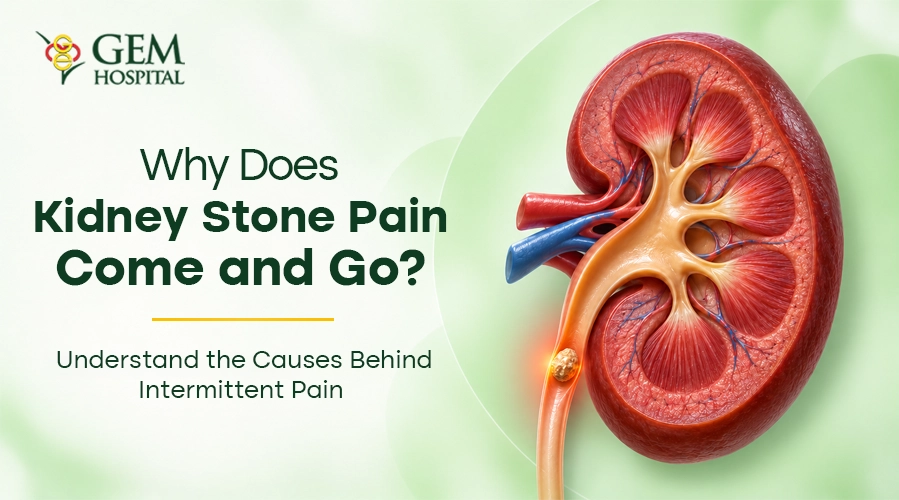
Experiencing sudden pain in your back or side that becomes severe and then gradually settles can be confusing. You may feel comfortable for some time, only for the pain to return unexpectedly. This pattern is commonly associated with kidney stones, particularly when a stone moves from the kidney into the ureter, the tube that carries urine to the bladder.
Kidney stone pain comes and goes because a stone moving through the urinary tract can cause intermittent blockage, changes in pressure and muscular contractions in the ureter. These changes can produce episodes of intense pain, followed by periods of reduced discomfort.
However, temporary relief does not necessarily mean that the stone has passed or that the problem has resolved. For people exploring kidney stone treatment in Chennai, understanding why the pain occurs in waves, recognising associated symptoms and knowing when medical attention is needed can help prevent complications.
Why Does Kidney Stone Pain Come in Waves?
The kidneys continuously produce urine, which travels through narrow tubes called ureters before reaching the bladder. When a kidney stone moves into one of these tubes, it may partially or completely obstruct the flow of urine.
This can increase pressure in the urinary system and cause the ureter's muscles to contract around the obstruction.
These muscular contractions, combined with changes in pressure and stretching of the urinary tract, can trigger sudden episodes of pain.
What Happens When a Kidney Stone Moves?
A kidney stone may remain inside the kidney without causing noticeable symptoms. However, when it moves towards the ureter, several changes can occur.
- The stone may irritate the lining of the urinary tract.
- Urine may accumulate behind the stone.
- Pressure inside the affected urinary system may increase.
- The ureter may contract in an attempt to move the stone forward.
- Pain may become intense and occur in waves.
When the stone changes position or the degree of obstruction temporarily decreases, the pain may become less severe.
However, the discomfort can return if the stone continues to obstruct urine flow.
Does the Size of the Kidney Stone Affect the Pain?
Yes, but stone size alone does not determine how painful the condition will be.
Smaller stones can cause severe pain if they become lodged in a narrow part of the ureter. Larger stones may sometimes remain within the kidney without causing immediate symptoms.
The location of the stone, the degree of obstruction and the body's response all influence the intensity of pain.
This is why imaging investigations are important for understanding the actual condition rather than judging its severity based only on symptoms.
Where Do You Feel Kidney Stone Pain?
Kidney stone pain commonly affects the side or back, particularly the area below the ribs. Depending on where the stone is located, the discomfort may spread towards the lower abdomen or groin.
Can Kidney Stones Cause Pain on One Side of the Back?
Yes. Kidney stone pain often occurs on one side of the body, corresponding to the affected kidney or ureter.
The discomfort may begin suddenly and become severe. Some people describe it as sharp, gripping or cramping pain.
Unlike ordinary muscle pain, kidney stone pain may continue regardless of changes in posture or body position.
Why Does Kidney Stone Pain Move Towards the Groin?
As a stone travels down the ureter, the location of the discomfort may change.
A stone closer to the kidney may cause pain in the side or upper back. As it moves towards the lower part of the ureter, pain may spread towards the lower abdomen, groin or genital region.
This changing pain pattern can provide clues about the stone's location, although imaging is needed to confirm it.
Can Kidney Stones Cause Lower Abdominal Pain?
Yes. Stones located in the lower ureter may cause discomfort in the lower abdomen or pelvic region.
Some patients may also experience:
- Frequent urination
- A sudden urge to urinate
- Burning or discomfort while passing urine
- A feeling that the bladder is not completely empty
These symptoms can also occur with urinary infections and other conditions, so proper evaluation is important.
What Are the Other Symptoms That Occur Along With Kidney Stone Pain?
Kidney stones can cause several symptoms apart from pain. These vary depending on the stone's size, location and effect on urine flow.
1. Blood in the Urine
A kidney stone can irritate or injure the lining of the urinary tract as it moves.
This may cause blood to appear in the urine, making it look pink, red or brown. In some cases, blood is present only in small amounts and can be detected through a urine test.
Blood in the urine should always be medically evaluated, even if it occurs only once.
2. Nausea and Vomiting
Severe kidney stone pain can trigger nausea and vomiting.
These symptoms may occur during intense episodes of pain and can make it difficult to eat or drink normally.
Persistent vomiting requires medical attention because it can lead to dehydration.
3. Frequent Urination
When a stone moves towards the lower ureter, it may irritate the bladder and create a frequent urge to urinate.
Some patients may feel the need to pass urine repeatedly, even when only a small amount comes out.
4. Pain or Burning During Urination
A stone moving through the urinary tract may cause irritation and discomfort during urination.
However, burning sensations can also indicate a urinary tract infection. A urine examination may be required to distinguish between these conditions.
5. Cloudy or Unusual-Smelling Urine
Cloudy or foul-smelling urine may indicate an infection, although other causes are possible.
If these symptoms occur alongside kidney stone pain, particularly with fever or chills, prompt medical evaluation is important.
Why Does Kidney Stone Pain Sometimes Disappear Suddenly?
One of the confusing aspects of kidney stones is that the pain may disappear without warning.
This can happen when the stone changes position, moves into a wider section of the urinary tract or temporarily stops obstructing urine flow.
However, there are several possible explanations.
The stone has moved: A change in the stone's position may reduce pressure and discomfort.
The obstruction has reduced: Urine may begin flowing more freely around the stone, temporarily reducing pain.
The stone has entered the bladder: If the stone successfully passes through the ureter into the bladder, the severe ureter-related pain may settle.
The pain is temporarily less intense: Symptoms can fluctuate even when the stone remains in the urinary tract.
Does the Disappearance of Pain Mean the Kidney Stone Has Passed?
No. The absence of pain does not confirm that a kidney stone has passed.
A stone may remain inside the kidney or ureter without producing continuous symptoms. In some cases, an obstruction can persist even when discomfort reduces.
Follow-up imaging or other investigations may be needed to confirm whether the stone has passed and whether urine is flowing normally.
Do not cancel a recommended medical evaluation simply because the pain has stopped.
When Is Kidney Stone Pain a Medical Emergency?
Although kidney stone pain can occur in waves, certain symptoms indicate that immediate medical attention is necessary.
Can Kidney Stones Cause an Infection?
Yes. A kidney stone that blocks urine flow can create conditions that allow an infection to develop or worsen.
An infected, obstructed urinary system is a medical emergency because the infection can spread and lead to serious complications.
What Warning Signs Should You Never Ignore?
Seek urgent medical attention if you experience:
- Severe or uncontrolled pain in the side, back or abdomen
- Fever or chills along with suspected kidney stone symptoms
- Persistent nausea or vomiting
- Difficulty passing urine or inability to urinate
- Blood in the urine accompanied by worsening symptoms
- Severe pain if you have only one functioning kidney or known kidney disease
Fever or chills with suspected urinary obstruction requires emergency assessment. Do not wait for the pain to settle or attempt to manage these symptoms using home remedies alone.
How Are Kidney Stones Diagnosed?
Identifying the location, size and number of stones is essential for deciding the appropriate treatment.
A doctor may review the patient's symptoms, previous history of kidney stones, medication use and other medical conditions before recommending investigations.
What Tests Can Identify the Cause of Kidney Stone Pain?
Urine Test: A urine examination can identify blood, signs of infection and other abnormalities that may be associated with kidney stones.
Blood Tests: These may assess kidney function, electrolyte levels and other relevant parameters.
Ultrasound Scan: Ultrasound can identify many kidney stones and detect swelling in the kidney that may occur due to urinary obstruction.
CT Scan: A non-contrast CT scan can provide detailed information about the stone's size, location and number. It may be recommended when more precise imaging is needed.
Not every patient requires all these investigations. The treating specialist decides which tests are appropriate based on the clinical findings.
What Are the Treatment Options for Kidney Stones?
The treatment depends on several factors, including the size and location of the stone, the severity of symptoms, the degree of obstruction and whether an infection is present.
For patients considering kidney stone treatment in Chennai, a specialist assessment helps determine whether the stone may pass naturally or requires a medical procedure.
1. Can Small Kidney Stones Pass Naturally?
Yes. Some small stones may pass through the urinary tract without requiring surgery.
Depending on the stone's size and location, the doctor may recommend observation, appropriate pain medication and follow-up imaging.
Certain medicines may also help selected patients pass ureteral stones.
Patients should maintain appropriate hydration, but excessive water intake should not be used to force a stone through an obstructed urinary tract.
2. When Is Ureteroscopy Recommended?
Ureteroscopy may be recommended when a stone is located in the ureter or when other treatment options are unsuitable.
During the procedure, a thin instrument is passed through the urinary tract to reach the stone.
The surgeon may use laser energy to break the stone into smaller fragments or remove it using specialised instruments.
3. What Is Shock Wave Lithotripsy?
Extracorporeal shock wave lithotripsy (ESWL) uses focused shock waves generated outside the body to break selected kidney stones into smaller fragments.
These fragments may then pass through the urinary tract naturally.
The suitability of ESWL depends on factors such as stone size, location, composition and the patient's overall health.
4. When Is PCNL Used for Kidney Stones?
Percutaneous nephrolithotomy (PCNL) is commonly considered for large or complex kidney stones.
The procedure involves making a small incision in the back to access the kidney and remove the stones using specialised instruments.
The choice of procedure should always be based on clinical evaluation and imaging findings.
How Can You Reduce the Risk of Kidney Stones?
People who have experienced kidney stones may have a higher risk of developing them again. Prevention involves understanding the type of stone and addressing the factors that contribute to its formation.
What Lifestyle Changes Can Help Prevent Kidney Stones?
Maintain adequate hydration: Drinking sufficient water helps dilute urine and may reduce the concentration of stone-forming substances.
Reduce excessive salt intake: High sodium intake can increase calcium levels in urine and contribute to certain types of stones.
Maintain a balanced diet: Include suitable amounts of fruits, vegetables, whole grains and dietary calcium.
Avoid excessive animal protein: Large quantities of animal protein may increase the risk of certain stones.
Follow personalised dietary advice: People with recurrent stones may need specific dietary recommendations based on stone analysis and urine test results.
Should You Get Regular Follow-Up After Kidney Stone Treatment?
Yes. Follow-up is particularly important for people with recurrent stones or those who have undergone a stone removal procedure.
Depending on the patient's condition, the doctor may recommend:
- Repeat imaging to check for remaining stones
- Urine tests to assess stone-forming substances
- Blood tests to evaluate kidney function
- Stone analysis if a fragment has been removed or passed
- A personalised prevention plan
These measures can help identify recurrence and guide long-term kidney stone management.
Kidney Stone Treatment in Chennai at GEM Hospital
Patients experiencing recurring episodes of side or back pain should not assume that the discomfort is harmless simply because it disappears between episodes.
At GEM Hospital, Chennai, the General Urology service evaluates kidney stones and other conditions affecting the kidneys and urinary passages.
The hospital's kidney stone care approach includes assessing the stone's size, location and effect on urine flow before discussing appropriate treatment options.
Depending on the clinical findings, treatment may involve medical management, observation or minimally invasive procedures for stone removal.
Patients seeking kidney stone treatment in Chennai can consult the urology team to understand:
- Whether the pain is related to a kidney or ureteral stone
- Whether urine flow is obstructed
- Which investigations are required
- Whether the stone can pass naturally
- Whether a procedure is necessary
- What follow-up and preventive care may be appropriate
The treatment plan should be individualised according to the patient's condition, medical history and investigation results.
Frequently Asked Questions About Kidney Stone Pain
Why Does Kidney Stone Pain Come and Go Instead of Staying Constant?
Kidney stone pain may come in waves because a moving stone can cause changing pressure and muscular contractions in the ureter. When the obstruction temporarily decreases, the pain may settle before returning.
How Long Does Kidney Stone Pain Usually Last?
The duration varies depending on the stone's size, location and movement through the urinary tract. Some episodes may last for minutes or hours, while discomfort can recur over several days. Persistent or severe pain requires medical assessment.
Does Kidney Stone Pain Mean the Stone Is Moving?
Not necessarily. Pain may occur when a stone moves, causes obstruction or irritates the urinary tract. However, pain alone cannot confirm the stone's location or movement. Imaging may be needed.
Can Kidney Stones Cause Pain Without Blood in the Urine?
Yes. Not everyone with kidney stones experiences visible blood in their urine. A stone may cause severe pain even when no blood is noticeable.
Can Kidney Stone Pain Stop Without Treatment?
Yes. Pain may temporarily settle when the stone changes position or urine flow improves. However, this does not confirm that the stone has passed. Medical assessment may still be necessary.
Does Drinking Water Help During Kidney Stone Pain?
Adequate hydration is important for general urinary health and prevention. However, drinking excessive amounts of water during severe pain will not necessarily move an obstructing stone and may worsen discomfort. Follow your doctor's fluid recommendations.
When Should I Consult a Urologist for Kidney Stone Pain in Chennai?
Consult a urologist if you experience recurring side or back pain, blood in the urine, painful urination or other symptoms suggesting kidney stones. Severe pain with fever, chills, persistent vomiting or inability to urinate requires urgent medical attention.
Which Treatment Is Suitable for Recurrent Kidney Stones?
Treatment depends on the stone's size, location, composition and associated complications. Options may include observation, ureteroscopy, ESWL or PCNL. Patients with recurrent stones may also need metabolic evaluation and preventive treatment.
Conclusion
Kidney stone pain often comes and goes because a stone moving through the urinary tract can cause intermittent obstruction, pressure changes and muscular contractions. Although the discomfort may temporarily disappear, this does not always mean the stone has passed.
Understanding the symptoms, identifying the stone's location and seeking timely medical evaluation are important for preventing complications and choosing the appropriate treatment.
For people exploring kidney stone treatment in Chennai, consulting a urology specialist can help determine whether the stone may pass naturally or requires a medical procedure.
Experiencing recurring side or back pain? Consult the urology team at GEM Hospital, Chennai, to understand the cause and discuss suitable treatment options.
Medical disclaimer: This article is intended for general educational purposes and does not replace professional medical advice. Diagnosis and treatment decisions should be made in consultation with a qualified healthcare professional. Severe pain accompanied by fever, chills or difficulty passing urine requires urgent medical assessment.