Looking for liver transplant in Chennai? Learn how to choose an experienced liver transplant surgeon based on expertise, transplant team, technology and care.
Looking for Painless Hernia Surgery in Chennai? Symptoms, Treatment & Recovery Guide
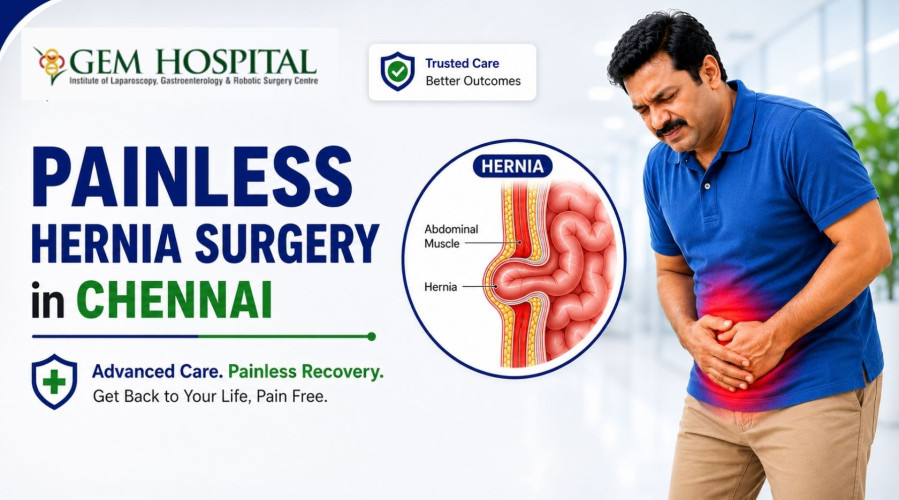
Fear of pain is one of the main reasons people put off hernia treatment. Most people think of surgery as something that involves a long hospital stay, a lot of pain and weeks of recovery But with modern painless hernia surgery in Chennai, the treatment experience has been completely transformed. With state-of-the-art laparoscopic and minimally invasive techniques, patients can often return home the same day and get back to their normal activities much sooner than anticipated.
If you have been putting off treatment because you are afraid or unsure, this guide will tell you all you need to know about painless hernia surgery, the advantages and why it is important to get treatment early.
What is a Hernia?
A hernia occurs when an organ or fatty tissue squeezes through a weak spot in a surrounding muscle or connective tissue. It’s like a little tear in the fabric that gets bigger over time.
The most frequently occurring types of hernias are:
- Inguinal hernia – is found in the inner groin and is the most common type in men.
- Umbilical hernia – Forms around the belly button.
- Femoral hernia – Found in the upper thigh or outer groin area.
- Incisional hernia – Occurs through a prior surgical scar.

Hiatal hernia. When the upper part of the stomach bulges through the diaphragm into the chest cavity.
Some hernias may be painless at first, but will not heal on their own. They can get bigger and more uncomfortable as they develop. In extreme cases a hernia can become strangulated this means that the blood supply to the trapped tissue is cut off. This is a medical emergency and requires immediate treatment.
What Causes a Hernia?
It’s like a little tear in the fabric that gets bigger over time.
The most frequently occurring types of hernias are:
Inguinal hernia is found in the inner groin and is the most common type in men.
There are many things that put you at higher risk for a hernia:
- Poor posture, heavy lifting
- Chronic constipation with straining on stool.
- Chronic cough in smokers especially
- Obesity or weight gain
- Pregnancy and increased intra-abdominal pressure
- Previous abdominal surgery
- Loss of muscle strength with aging
Knowing about these risks can help people get medical care earlier and prevent complications.
5 Signs You Should Never Ignore
A lot of people think that the symptoms of a hernia are just a muscle strain or a little discomfort.
Some common warning signs include:
- A mass in the groin, abdomen or surgical scar (prominent)
- burning, pain or discomfort in the affected area
- Pain on lifting, coughing, bending or exercise
- Lower abdominal fullness
- Sudden, intense pain with nausea or vomiting
Seek emergency medical care if the pain is severe or you vomit, as this may be a strangulated hernia.
How do you diagnose a hernia?
A hernia specialist will usually begin with a physical examination. Patients may be asked to cough or strain or to stand to help make the hernia more obvious.
Further diagnostic tests may include:
- Sound wave
- Used to evaluate soft tissue hernias and to identify abnormalities.
- Computerized Tomography Scan
- Shows detailed images of internal structures . Useful for complex hernias .
- MRI Scan MRI
Suggested if more evaluation is needed or the diagnosis is unclear.
Accurate diagnosis is required to determine the most appropriate treatment plan for painless hernia surgery in Chennai.
Treatment Options: What is Modern Painless Hernia Surgery Like
Surgery is the only permanent solution for a hernia. Thankfully with advances in surgical technology treatment has become safer, quicker and much more comfortable, especially with painless hernia surgery in Chennai.
Open Surgery for Hernia
With this traditional method, a larger incision is made to access and repair the hernia. It can work, but it may take longer to recover from it than from a minimally invasive procedure.”
Laparoscopic Hernia Surgery Painless
Today, painless laparoscopic hernia surgery is considered to be the treatment of choice for many patients.
The surgeon will make two or three small cuts during the procedure, and insert a small camera and special surgical tools. The hernia is repaired from within, and often a surgical mesh is placed to reinforce the weakened abdominal wall.
Advantages of Painless Laparoscopic Hernia operation
- Reduced length of hospital stay
- Less postoperative pain
- Fast return to work and recovery
- Little scarring
- Less risk of infection.
- Greater patient comfort
- Fast resumption of normal activities
For many patients, these benefits make Chennai’s pain-free hernia surgery the preferred choice.
Hernia Surgery with Robots
Some advanced hospitals now provide robotic-assisted procedures for complex or recurrent hernias. Robotics technology allows surgeons to perform very precise movements leading to better surgical results and faster recovery for suitable cases.
Why Chennai is a smart choice for pain-free hernia surgery
Chennai has established itself as one of the premier destinations in South India for advanced surgical care.
Why patients choose Chennai
- Hernia Surgeons experts
- Current laparoscopic and robotic technology
- Hospitals accredited by NABH
- Quality of patient care
Affordable treatment cost compared to many other metro cities
Chennai is an ideal destination for people from all over Tamilnadu and neighbouring states seeking advanced painless hernia surgery and expert surgical care, especially for painless hernia surgery in Chennai.
The TRUE Cost of Deferred Painless Hernia Surgery
Many patients don't seek treatment because symptoms seem manageable. Unfortunately, hernias tend to get worse over time.
What happens if you don’t get treatment:
- Hernia dilated
- More hurt
- More complications
- More complex surgical procedures
- Longer healing period
There are many benefits to having hernia surgery early when it is painless:
- Lower cost of treatment
- Faster recovery
- less complications
- Minimal interruption to day-to-day life
- Improved long-term outcomes
Treating it early can prevent unnecessary complications and improve quality of life overall.
- Recovering from Painless Hernia Surgery
- Recovery following minimally invasive surgery is typically rapid and comfortable.
Most patients will be able to:
- Walk within hours after surgery
- Same day or within 24 hours return home
- Return to light activities in a few days
- Back to work in 1-2 weeks
- Full recovery can take four to six weeks
It is important to follow your surgeon’s recommendations for the best possible outcome.
Why Should You Opt for Painless Hernia Surgery at Gem Hospital, Chennai?
You should not consider it normal to live with hernia discomfort every day. If you have an umbilical hernia, inguinal hernia or incisional hernia, treatment can help you feel comfortable and confident again.
Gem Hospital has well trained hernia specialists who perform advanced minimally invasive procedures for hernia surgery in Chennai which are painless, with less discomfort, faster recovery and long lasting results. From diagnosis to post-operative support, we offer our patients a complete programme of care with you at the centre of it.
FAQs
1. Do hernias heal on their own?
Nope. A hernia will not go away by itself. The only permanent treatment is surgery.
2. Is laparoscopic hernia repair without pain safe?
Yes. It is a very safe procedure and routinely done by experienced surgeons.
3. How long does it take to recover from painless hernia surgery?
Most patients are able to return to light activities within 1-2 weeks, and are fully recovered in 4-6 weeks.
4. Does my hernia get better after the surgery?
Recurrence is rare but possible, particularly when mesh repair is done and post operative instructions are strictly followed.
5. What will my health insurance cover for hernia surgery with no pain?
Most health insurance companies will cover medically necessary hernia repairs including the laparoscopic approach .
Book a consultation with GEM Hospital’s today.