Looking for liver transplant in Chennai? Learn how to choose an experienced liver transplant surgeon based on expertise, transplant team, technology and care.
Stop Suffering in Silence: When to Visit the Best Piles Doctors in Chennai
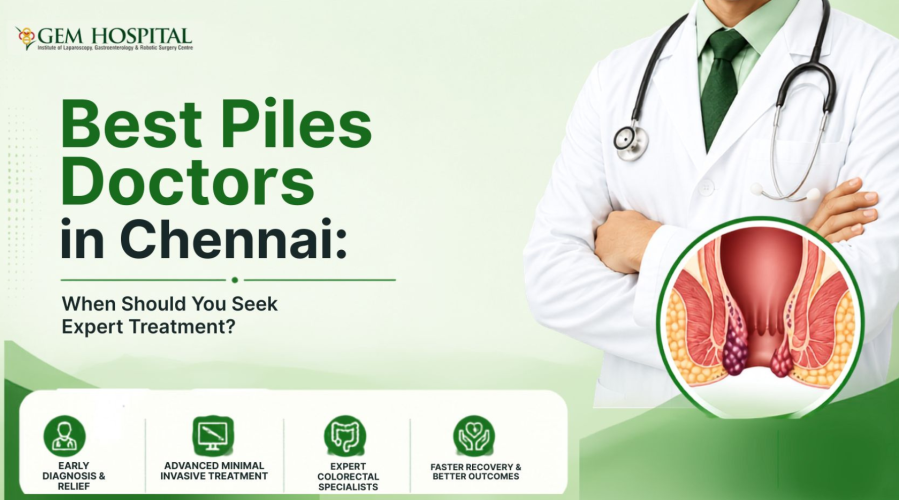
There's a particular kind of suffering that happens quietly the kind you don't mention at the dinner table, to your colleagues, or even sometimes to your family. Piles, or haemorrhoids, sit firmly in that category. Millions of people across India deal with the pain, bleeding, and embarrassment of this condition every single day, often for years before finally seeing a doctor.
If you're reading this, you've probably already endured more than you should have. And here's the honest truth: the best piles doctors in Chennai have treated thousands of patients just like you. This is a common, highly treatable condition and modern medicine has made the treatment far less intimidating than most people fear.
This guide will walk you through everything: what piles actually are, when to stop home remedies and see a specialist, and what treatment options are now available in Chennai.
Understanding Piles: What's Actually Happening?
Piles Swollen or inflamed veins in and around the rectum and anus. They form in the same way as varicose veins – the walls of the veins weaken due to constant pressure.
There are two main types:
Internal hemorrhoids are located inside the rectum. They are usually painless, but may bleed bright red blood with bowel movements.In more advanced cases, they can prolapse meaning they protrude outside the anus, especially during straining.
External haemorrhoids develop under the skin around the anus. These tend to be more painful, particularly when a blood clot forms inside one (a condition called thrombosed haemorrhoid), which can cause sudden, severe pain and a hard lump.
Piles are graded from I to IV based on severity:
- Grade I Internal haemorrhoids with bleeding but no prolapse
- Grade II Prolapse during straining but returns on its own
- Grade III Prolapse that needs to be manually pushed back in
- Grade IV Permanently prolapsed; cannot be pushed back
Understanding your grade helps determine the best course of treatment.
Common Causes and Risk Factors
Piles don't develop overnight. They typically result from prolonged pressure on the rectal veins, often linked to:
- Chronic constipation or diarrhoea
- Straining during bowel movements
- Low-fibre diet (very common in urban Indian eating patterns)
- Prolonged sitting particularly on the toilet
- Obesity
- Pregnancy the growing uterus places significant pressure on pelvic veins
- Sedentary lifestyle
- Family history of haemorrhoids

The lifestyle connection is important, because treating piles without addressing dietary and lifestyle factors leads to recurrence something the best piles specialists will counsel you on alongside any procedure.
When Should You Stop Home Remedies and See a Doctor?
This is the question most people struggle with. Warm sitz baths, increased fibre intake, and topical creams can help manage mild symptoms and for early-stage piles, they often do.
But there are clear signals that it's time to see a specialist:
- Rectal bleeding that doesn't stop after a few days even if it appears minor
- Significant pain that interferes with daily life
- A lump that doesn't reduce or keeps prolapsing
- Itching, mucus discharge, or persistent discomfort
- Symptoms that have been ongoing for more than two weeks despite home care
- Any bleeding in someone over 40 because rectal bleeding should always be investigated to rule out other conditions
The concern about rectal bleeding in older adults is particularly important.Piles Swollen or inflamed veins in and around the rectum and anus. They form in the same way as varicose veins – the walls of the veins weaken due to constant pressure. There are two main types:
Internal hemorrhoids are located inside the rectum. They are usually painless, but may bleed bright red blood with bowel movements.
Piles are the most common cause but bleeding can be a sign of colorectal polyps or cancer. A qualified specialist will ensure there is a proper examination and, if needed, a colonoscopy to rule these out.
The right specialist will:
- Examine you properly using proctoscopy or anoscopy
- Grade your haemorrhoids accurately
- Explain all treatment options and let you choose with full information
- Address dietary and lifestyle factors alongside any procedure
- Have experience in the full range of treatment modalities from banding to laser
Key Qualities to Look for in a Piles Specialist
- Colorectal or Gastroenterological Expertise: Piles fall under the scope of colorectal surgeons and gastroenterologists. A doctor with specific training in anorectal conditions will deliver better outcomes than a general practitioner treating piles on the side.
- Diagnostic Thoroughness: If your doctor prescribes cream for your symptoms without doing a good rectal examination, they are not doing you justice. Proper diagnosis requires a physical exam, and sometimes a colonoscopy.
- Patient-Centred Communication: Piles is a delicate subject.
A good specialist creates a comfortable, non-judgmental environment where you can speak openly about your symptoms.
Latest Treatment Options for Piles in Chennai
The landscape of piles treatment has shifted dramatically. What was once a procedure most patients dreaded is now, in many cases, a comfortable outpatient experience.
Rubber Band Ligation
A small elastic band is placed around the base of the internal haemorrhoid, cutting off its blood supply. The haemorrhoid shrinks and falls off within a few days. This is effective for Grade I and II haemorrhoids and requires no anaesthesia. Mild discomfort is common for 24–48 hours.
Infrared Coagulation ( IRC )
The probe applies infrared light to the haemorrhoid tissue, causing it to clot and shrink. Quick, painless, and effective for early-grade internal haemorrhoids.
Sclerotherapy
A chemical solution is injected into the haemorrhoid to shrink the blood vessels. Used for smaller internal haemorrhoids, this is another non-surgical approach that works well when correctly indicated.
Laser Hemorrhoidoplasty
This is one of the most significant advances in piles treatment in recent years. A precisely controlled laser energy is directed into the haemorrhoid tissue, causing it to shrink from within.
Benefits include:
- Near-bloodless procedure
- Minimal post-operative pain
- Day-care setting patients go home the same day
- Return to normal activity within two to three days
- Very low risk of complications
This is now increasingly the preferred option for Grade II and III haemorrhoids at leading centres offering advanced piles care in Chennai.
Stapled Haemorrhoidopexy (PPH Procedure for Prolapse and Haemorrhoids)
A circular stapling device repositions prolapsed haemorrhoidal tissue and removes a ring of excess tissue, restoring normal anatomy. It's particularly effective for Grade III haemorrhoids with significant prolapse. Pain is considerably less than traditional haemorrhoidectomy because the stapling occurs in an area of the rectum with fewer pain receptors.
Conventional Haemorrhoidectomy
Surgical removal of haemorrhoidal tissue is reserved for severe Grade IV haemorrhoids or when other treatments have failed. While it carries a longer recovery and more post-operative discomfort, it remains the most definitive treatment for complex cases. At skilled centres, this is now often performed as a modified, less painful procedure.
What to Expect at Your First Consultation
Walking into a piles specialist's clinic for the first time can feel daunting. HThis is what usually happens:
History and Symptom Review. The doctor will ask about your symptoms, how long you’ve had them, your diet, bowel patterns and any treatment you’ve tried. Be as honest and specific as you can – this information directly guides diagnosis.
- Physical Examination. Routine visual inspection and digital rectal examination. Proctoscopy (insertion of a small instrument a few centimeters into the rectum to visualize the lower rectum) is frequently performed to accurately grade the haemorrhoids.
- Other tests: If you’re over 40 and have risk factors for colorectal disease, you may be advised to have a colonoscopy. Blood tests may be requested if there has been a lot of bleeding leading to anemia .
- Treatment Discussion: Based on findings, your specialist will recommend the most appropriate option and explain what the procedure involves, how long it takes, what recovery looks like, and how to prevent recurrence.
- Recovery and Prevention: Life After Piles Treatment
- Regardless of which treatment you undergo, dietary and lifestyle changes are essential to prevent recurrence:
Increase daily fibre intake vegetables, fruits, whole grains, legumes
- Drink at least 2–3 litres of water daily
- Never ignore the urge to have a bowel movement delaying increases straining
- Avoid prolonged sitting, especially on the toilet
- Exercise regularly to improve bowel regularity
- Limit processed, low-fibre, and spicy foods
A good specialist will build this counselling into your post-treatment plan. Piles that are treated without lifestyle changes have a significantly higher recurrence rate.
Piles may be a sensitive topic, but suffering with it in silence is never the answer. The best piles doctors in Chennai are treating patients just like you every day effectively, compassionately, and with treatment options that have never been more comfortable or convenient.
The longer you wait, the more advanced the condition becomes and the more extensive the treatment required. A Grade I haemorrhoid managed with simple banding today is far easier than a Grade IV haemorrhoid requiring surgery six months from now.
Reach out to a specialist. Have the conversation you've been putting off. You deserve to be comfortable in your own body.
At GEM Hospital, experienced colorectal specialists offer comprehensive evaluation and advanced treatment options for piles, helping patients find relief with the most appropriate and effective approach. Early diagnosis and timely intervention can reduce discomfort, prevent complications, and improve your quality of life.
Frequently Asked Questions About Piles Treatment
1.Is piles treatment painful?
Modern treatments, particularly laser haemorrhoidoplasty and stapled haemorrhoidopexy, are significantly less painful than traditional surgical options. Most patients are surprised by how comfortable the recovery is.
2.How long is the recovery time after laser piles treatment?
Most patients return to normal daily activity in two to three days.The procedure is performed under daycare, meaning no overnight hospital stay is required.
3.Can piles be completely cured?
Yep. The right procedure and lifestyle changes can cure piles effectively and permanently. If you don’t work on your diet and bowel habits, it can come back.
4.Is rectal bleeding always due to piles?
Not always. While haemorrhoids are the most common cause of rectal bleeding, other conditions including fissures, polyps, and colorectal cancer can also cause bleeding. Always get bleeding properly investigated, especially if you're over 40.
5.When should I see a doctor for piles immediately?
Seek medical attention promptly if you have heavy rectal bleeding, severe anal pain or a lump that cannot be reduced. These can indicate a thrombosed haemorrhoid or other serious condition.
Book a consultation with GEM Hospital’s today.