Looking for liver transplant in Chennai? Learn how to choose an experienced liver transplant surgeon based on expertise, transplant team, technology and care.
Say Goodbye to Piles: Advanced Treatment Options in Chennai
Millions of people around the world have haemorrhoids, medically known as piles, but the embarrassment and discomfort they cause means they are one of the least talked about health conditions. Chennai has some of the best piles treatment options ever, with Advanced Treatment Options in Chennai offering minimally invasive procedures that promise quick recovery and long-lasting relief. The good news is:
Whether you’ve been experiencing mild discomfort for months or are dealing with severe bleeding hemorrhoids, this guide covers everything you need to know, from understanding the condition to selecting the appropriate treatment. It also explores why Advanced Treatment Options in Chennai have made the city a top destination for proctological care.
The Piles (Haemorrhoids)
What are the stacks?
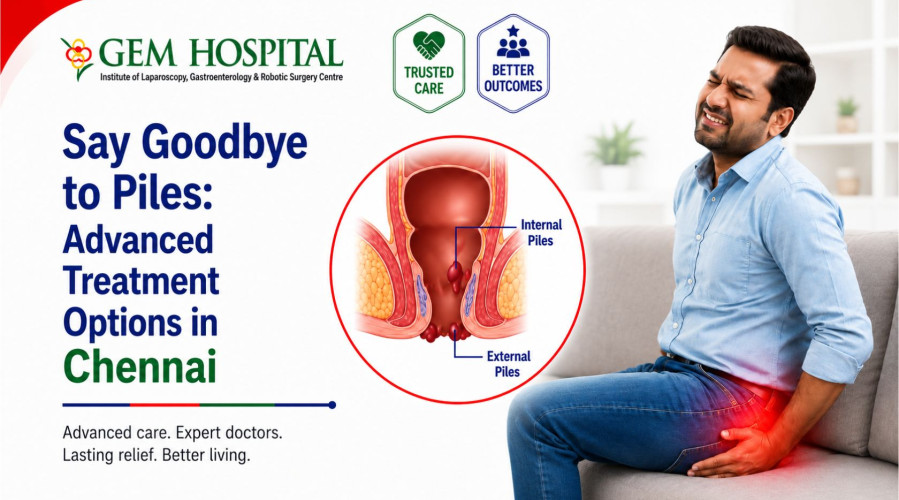
Hemorrhoids are swollen, inflamed veins in the rectum or around the anus. Depending upon their location they are classified into two types:
Internal Hemorrhoids: Found inside the rectum. They are invisible from the outside . They usually do not hurt , but they may bleed .
External Hemorrhoids: These are located beneath the skin around the anus. These can be painful and itchy and may swell noticeably.
Haemorrhoids are categorized by severity from Grade I to Grade IV , which also determines treatment options.
Common Risk Factors and Causes
- Chronic constipation or straining to pass stools
- High in refined and processed foods Low-fibre diet
- Sitting on the toilet for a long time
- Pregnancy and childbirth – due to increased pressure on the veins of the pelvis
- Obesity – extra weight puts pressure on the rectal area
- Agingweakening of tissues supporting the rectum
- Genetic susceptibility
Signs & Symptoms of Piles

Piles can be uncomfortable, painful, or both, depending on the type of pile and the grade. Watch out for:
- Bright red blood on toilet paper or in the toilet bowl after a bowel movement
- Itching, irritation or soreness around the anus
- Pain or discomfort, especially when sitting
- A lump near the anus that may be painful to the touch
- Stool with mucus
A sensation of incomplete evacuation of the bowels.
If you see blood in the stool, it is important to see a doctor to rule out other conditions like colorectal cancer, fissures or inflammatory bowel disease. Early evaluation can help patients access Advanced Treatment Options in Chennai and receive the most appropriate care based on their condition.
Diagnosis and Assessment
Identification of piles is usually made on clinical examination and, if necessary, further examination of the rectum and colon.
Digital Rectal Examination (DRE): The doctor gently examines the lower portion of the rectum.
Proctoscopy / Anoscopy A small tube is placed in the anus and used to look at the rectum for internal hemorrhoids.
Colonoscopy or Sigmoidoscopy Indicated if there is a significant amount of rectal bleeding or if there is suspicion of other colorectal disease.
Early diagnosis prevents unnecessary suffering and complications such as anaemia from chronic bleeding or thrombosis.
How to Treat Piles?
- Conservative treatment (Grade I II)
- Mild haemorrhoids often respond to lifestyle modifications and medical therapy:
- High fibre diet and plenty of fluids to soften stools
- Creams and suppositories to relieve inflammation and itching (over the counter)
- Sitz baths: Sit in warm water for 10 to 15 minutes several times daily
- Stool softeners and laxatives for short-term relief
Minimally Invasive Office Procedures (Grade II-III)
These are procedures done in the clinic, no need for general anaesthetic and you can go home the same day.
Rubber Band Ligation (RBL): A rubber band is placed around the base of the haemorrhoid to stop the blood supply, and the haemorrhoid drops off. Suitable for internal haemorrhoids of grade II-III.
Sclerotherapy: A chemical solution is injected into the tissue of the haemorrhoid to cause it to shrink. Good for small internal hemorrhoids.
Infrared Coagulation (IRC) -This uses heat to coagulate the blood supply to the haemorrhoid.
Surgical intervention (grade III–IV)
- Haemorrhoidectomy: Traditional operative removal of haemorrhoid tissue. Very effective but has a longer recovery time.
- Stapled Haemorrhoidopexy (PPH) A circular stapler is used to lift and secure the prolapsed internal haemorrhoids. Less painful than traditional surgery.
- Laser Haemorrhoidoplasty A laser fibre is inserted into the haemorrhoid, coagulating its blood supply. Minimally invasive, virtually bloodless, and associated with faster recovery.
- HALO (Haemorrhoid Artery Ligation Operation): Doppler-guided ligation of arteries feeding the haemorrhoid no excision, minimal discomfort.
Advanced Treatment Technologies
The proctology centres in Chennai have the latest tools for safe, accurate and patient friendly haemorrhoid care:
- Laser Proctology Modern laser systems permit day-care treatment with less bleeding and pain.
- High-Definition Anoscopy – Enhances magnification for more accurate diagnosis and focused therapy.
- Fluorescence-Guided HALO: Integrates Doppler and fluorescence for enhanced precision in arterial ligation.
Advantages of early treatment
Many put off seeking help for piles because it is embarrassing and they hope it will pass. It is always better to intervene early:
- Grade I and II haemorrhoids are reliably managed by office procedures, obviating the need for surgery.
- If it is not treated, prolonged bleeding can cause iron deficiency anaemia
- Prolapsed or thrombosed piles are more painful and need more invasive treatment
- Early treatment improves quality of life normal activity, comfortable sitting, and pain-free
Post Treatment & Recovery
Following minimally invasive procedures
- Most patients are able to return to light work within 1-2 days post office based procedures. Key recovery guidelines are as follows:
- Eat a high-fibre diet and drink at least 8 glasses of water a day
- Don’t strain during a bowel movement. If you have to, use stool softeners.
- Use prescribed pain relief and anti-inflammatory medication
- Sitz baths 2-3 times/day during the first week
Post-Surgical Treatment
Recovery from haemorrhoidectomy or stapling usually takes 1-3 weeks. Patients are advised not to lift heavy objects or do vigorous activity during this time. Follow-up visits are typically 2 and 6 weeks after the procedure.
Why Piles Treatment at Chennai?
- Expert Proctologists :
Chennai has some of the best experienced colorectal and proctological surgeons in India.Laser and minimal invasive procedures are day surgeries – no long hospital stays.
- Convenience of Day-Care:
Affordable care at competitive prices as compared to other metropolitan cities is available in Chennai for quality piles treatment.
- Sensitive and Discreet Care:
Hospitals in Chennai offer Non-judgmental and discreet care for conditions that patients may be shy to discuss.Modern Infrastructure Digital proctoscopes, lasers and Doppler guided devices for safe and accurate procedures.
Don’t wait for the care you need, don’t be embarrassed. A trained proctologist can examine you in confidence and advise the least invasive but best course of treatment to restore your comfort and quality of life. At GEM Hospital, experienced specialists provide compassionate and confidential care, helping patients access advanced treatment options for a faster recovery and improved well-being.
Frequently Asked Questions (FAQs)
1. Are the piles a permanent condition?
Piles can be treated successfully or removed with the proper treatment and lifestyle changes. But they can return if there are no changes in diet and lifestyle.
2. Are laser treatments for piles painful?
Laser haemorrhoidoplasty is less painful Most patients experience only mild discomfort with the procedure and recovery is rapid with no significant post-operative pain.
3. Can piles disappear without treatment?
At times grade I haemorrhoids respond to dietary modification alone. But those that are Grade II and above, often need some medical or procedural support.Effective piles treatment in Chennai, from lifestyle modification to office procedures and advanced laser therapy, offers relief that is possible as well as lasting.
Don’t wait for the care you need, don’t be embarrassed. A trained proctologist can examine you in confidence and advise the least invasive but best course of treatment to restore your comfort and quality of life.
4. How long does the rubber band ligation take?
The procedure usually takes 5–10 minutes per haemorrhoid. There is no anaesthesia and patients are usually sent home within an hour.
5. Do all piles require surgery?
Nope. In most cases, hemorrhoid treatment can be done in office or with lifestyle changes. Grade III-IV hemorrhoids or those not responding to other treatment are treated surgically.
6. What diet should I follow to avoid piles from recurring?
Effective piles treatment in Chennai, from lifestyle modification to office procedures and advanced laser therapy, offers relief that is possible as well as lasting.
Book a consultation with GEM Hospital’s today.